Wednesday, November 25, 2015

So Do Not Worry: Thanksgiving Sermon on Matthew 6

My sermon for Thanksgiving Eve at Zion Lutheran of Amor on my internship.


Gospel: Matthew 6:25-34


Grace and Peace to you from God our Creator, and from Jesus the Christ, Amen


Happy Thanksgiving! This Gospel text, is a beautiful text. Consider the lilies of the field, Seek ye first the Kingdom of God, Do not worry about tomorrow for tomorrow will bring worries of its own… Jesus’ Sermon on the Mount in Matthew is full of memorable verses we all hold with us. The last verse that we read today is one that particularly sticks out to me.

When I was younger, I’d hyperfocus on things, and worry about different things in my life, or the world or whatever… I distinctly remember one night lying in my bed, and my dad came up, talked with me for a bit, and told me his favorite verse in the Bible, and it was “So do not worry about tomorrow, for tomorrow will bring worries of its own. Today’s trouble is enough for today.” (Matthew 6:34 NRSV)

That moment and this verse stick with me, whenever I am worrying about life. And as you know, there is plenty to worry about these days, but there is much more to be thankful about. My second child will hopefully be here within a month. Star Wars is less than a month away. For those of you who have Thanksgiving feasts tomorrow or in the coming days, you can be thankful for that. Christmas is usually a stressful, but joyful time of year filled with good food, friends, family, presents, and the endless Christmas songs in all the stores. If you experience those things, then hopefully, this is a beautiful time of year to be thankful for.

Another memory I have associated with this text, is the 1963 film, Lilies of the Field with Sidney Poitier; a role in which he was the first Bahamian and African-American person to win an Oscar for Best Actor… It’s a beautiful film if you’ve not seen it. I highly recommend it. In the film, Sidney’s character plays a man in the southwest who gets stranded at a mission with German Catholic nuns. The sisters don’t speak much English, but they’ve been wanting to build a chapel, and see Sidney’s character, Homer Smith (or Schmidt as they call him) as a gift from God to help them build a chapel for the local Catholic mission congregation. I won’t spoil it for you if you’ve not seen it, but in the process of the movie, Homer finds common ground with these German nuns, as a Baptist man himself, and learns to appreciate the little things they can provide for him such as eggs and toast. Homer fulfills his mission, God fulfills God’s mission, and the heartwarming movie ends, quite literally with a resounding Amen. The audience is left to indeed, consider the lilies of the field, and not worry about things, for God will provide.

And it’s hard sometimes. It’s hard to remember that God provides, when we are seemingly left with so little to go on. When life throws everything against us; when terror strikes all over the world; when the nation still struggles with homelessness, poverty, and failing infrastructure… There are times when life seems… pretty scary.

When people are undergoing anxiety attacks, one of the ways professionals suggest that anxious people stuck in these anxiety attacks cope and fight these attacks - is by focusing on something small. Something stationary, something beautiful, something stable. When life is spiraling out of control for folks who undergo such anxiety attacks, it’s good to seriously consider the lilies - if  of course, there are lilies in one’s immediate vicinity. But seriously, there are times when we really just need to stop and smell the roses. (That is, if you’re not allergic to pollen…) Sometimes, we just need to take in what we have. Stress is high these days, especially with the Christmas season coming soon. Advent and a new church year start on Sunday, and Advent is a time in which the church, in general, tries to slow down and focus on the coming of the Messiah. Oftentimes, it’s not the case, but especially at the busy and stressful times of our lives, it’s very helpful to take a moment and focus on something else. Take your mind off of what’s going on. And give thanks.

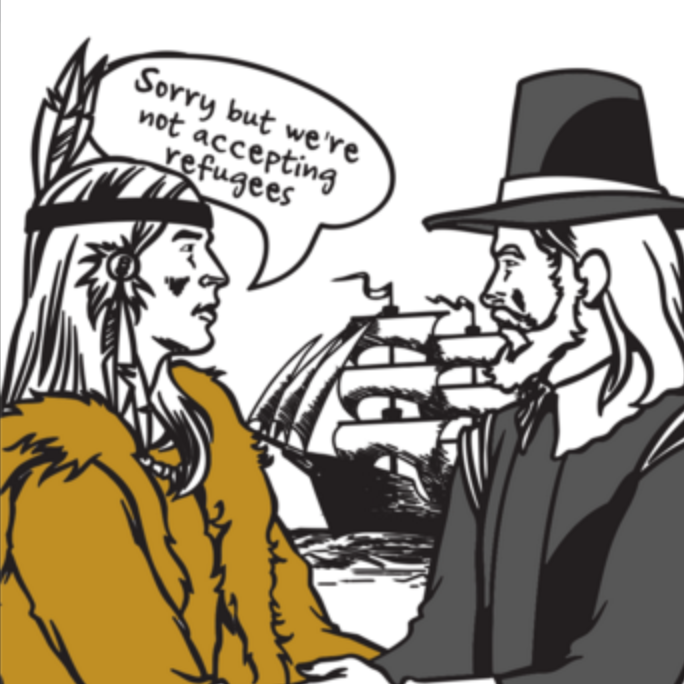
Give thanks for the Savior of the World, who hung on a cross to save us from ourselves. To save us from our sins, our terror, our fear, our anxieties. Jesus the Christ, who was a refugee himself, fleeing the death and destruction left in King Herod’s wake; died and rose again to save us all. For the love of God, found in the death and resurrection of Christ, God’s son, was spilled out for the world. It is this Grace, this Love, this Mercy of God - that we give thanks for. We give thanks tonight for the Savior of the World, who was born in squalor, fled his home with his family as refugees, and died a criminal’s death. We remember his life, and give thanks for God’s Grace that is bestowed to the whole world.

But how do we give thanks? Well, when someone gives you a gift, the proper protocol is to thank them for the gift either in person or with a card. After the hustle and bustle of big events like confirmations, graduations, weddings and funerals… Giving thanks for gifts in the form of writing cards is tradition. It’s proper protocol. We sometimes forget or put it off, but usually someone reminds us to do so. We give thanks for the gifts we’ve been given because it’s the thing to do. Because it’s nice. Because the people appreciate it. But not, because it’s required of us.

Likewise, we give our thanks to God in worship. By offering thanks in our offering; in our tithing; in our time spent with folks; in the use of our talents at church. We give thanks by being active in our world, making God’s creation better for us all. We give thanks by standing up for one another; by being a friend; by offering a shoulder to cry on; by offering a listening ear to someone in need.
The world is a scary place. When blatant racism is alive and well in the streets of Minneapolis; when the fear of the unknown, the other - permeates who we are as Americans; who we are as Christians… and fear blinds us into believing our neighbors are more harmful to us than ourselves… It’s hard to give thanks for this modern world of fear. Fear is the mind-killer.

That is where the love of Christ comes in. That is where the Peace of Christ, that surpasses all understanding, must hold refuge. It is the Peace of Christ, the Love of Christ that allows us to look across at our neighbors… and see the Face of Christ. The child of God that looks into our own eyes. That is what we must be thankful for.

The Grace of God shown forth upon the world is a beautiful thing to be thankful for; for it is this Good News, this saving Word of God that surpasses all understanding that holds us bound to the truth - that the neighbor looking into our own eyes - is no more different to us as we are to them… That the neighbor looking into our own eyes - is no less loved by God than we are loved by God.... That the neighbor looking into our own eyes - is no less a beloved child of God than we are a beloved child of God… When we look into the face of our neighbors, we are looking into the face of God.

For it is that God is incarnate in Christ Jesus. For it was that this Messiah fled his homeland in search of refuge. That our Lord, Jesus the Christ, was a refugee himself. This Good News that our Lord Jesus the Christ - who tells us to not worry about tomorrow - who tells us to consider the lilies of the field - who dies like a common criminal on a cross and rises again - began his life in squalor and fled with his family as refugees fleeing their country.

So do not worry. In a world rife with chaos, hardship, struggle, anguish and despair… God will take care of it. Let us give thanks for all that God, our Creator has given us. God gave us life, that alone we must be thankful for. But the saving living Word of God found in Christ Jesus is another beautiful thing to be thankful for. We give thanks by offering ourselves, our time, and our possessions to serve a greater purpose: to better the reign of God on Earth not because it is required of us, but because we are called by the giver of life to do so. Not because we have to, but because we should. It is this response to the Good News of Jesus Christ that betters the world around us. So there is less to fear. So there is less to worry about. A great president once said that there is ‘nothing to fear but fear itself’... “So do not worry about tomorrow, for tomorrow will bring worries of its own. Today’s trouble is enough for today.”

Give thanks to God, for God is Good. Have a Happy Thanksgiving everyone.
Amen.


Monday, November 16, 2015

The End of the World is Almost at Hand, But Not Yet: Sermon on Mark 13:1-8

This is the fifth sermon I have preached at Zion Lutheran in Amor on my internship.

Gospel: Mark 13:1-8


Grace and Peace to you from God, the Alpha and Omega, and from Jesus the Christ, Amen

"When you hear of wars and rumors of wars, do not be alarmed; this must take place, but the end is still to come."

This Gospel lesson today signifies the beginning of the end. In Jesus' own words, "This is but the beginning of the birth pangs"… The end. The culmination of all that has been. In the context of this particular text in the church year, this Gospel text is indeed the beginning of the end of the church year. Next week is the end of the church year. The end of the month is the beginning of our celebration of Advent and the beginning of a new church year. We are truly at the beginning of the end today.

In the context of the Gospel, Jesus was also at the beginning of his end. After this, Jesus and his disciples march into Jerusalem and the rest is Holy Week. But before they do that, Jesus warns his disciples that the beautiful temple with the giant stones will soon fall. And, in truth, the temple of Jerusalem did fall about 35 years later in 70 CE - sending the people of Israel into a nearly 1900 year journey through Europe, Asia, Africa and the new world looking for a new home.

Jesus warned the disciples that the temple would fall. That the world that they knew was going to be turned upside down. That buildings would fall, empires would rage, and famine would continue. Because war, war never changes. The people of Jerusalem were expecting a zealot. A military leader as their Messiah to tear down the Roman Empire. To tear down the oppression they felt under Roman leadership. Well, it would take a few hundred years more, but the Roman Empire would fall eventually. Empires come and go, but the world continues to turn. At one point, the world turned and the sun never set on the British Empire...

But times change. The world changes. And yet, it still turns. The sun will shine until it burns out. All good things must come to an end. Did you know that when one looks out at the clear night sky and looks at the stars - that some of the stars we see... aren't in existence anymore? That some of the stars that we see are so far away that their light reaching our eyeballs took millions and billions of years to travel? That even the light from our own sun takes eight minutes to reach our eyeballs? The closest star to our solar system is still four lightyears away. Which means that if that star burned out right now, we wouldn't know for another four years?

Mayflies live and die within a matter of days. Mosquitos and other bugs last at most a couple weeks. Whereas, some trees and species of marine animals live for centuries. There’s even a tree in California that is thought to be over 5,000 years old… How long life is for different creatures; different entities is all relative. The average human lifespan for people in the United States has increased dramatically in the last 100 years.

With technology and better living conditions, our lives are longer. And yet, the passage of time has remained constant. The earth rotates a full rotation every 24 hours, and the earth rotates around the sun every 365.25 occurrences of those 24 hours. This has fluctuated a little over the billions of years, but time has still marched on. And even when life on this planet ceases, when an eye for an eye finally makes the whole world blind… Time will still march on.

God was there when the world began, and God will be there when the world ends. In our lesson today, Jesus warned his disciples of the end of the world. Mark’s author was writing this gospel about the same time as Mount Vesuvius’ explosion at Pompeii, and yes, after the temple burned in Jerusalem in the late 1st century CE. The gospel writer was sharing the good news with those whose life may have been literally falling around them… but whose life would be saved by Jesus the Christ.
The Good News that even while life on Earth is fleeting, life with God is forevermore. That Good News that even though Jesus’ life on Earth would soon be ending, his death and resurrection would guarantee salvation for all. That Good News that all are saved through his death and resurrection.
So, when Mount Vesuvius, Jerusalem, and Rome burned in the first few centuries; when Berlin, Nagasaki and Hiroshima, Baghdad, New York, Kabul, London, Beirut and now Paris burned in the last century… when world ending heartache explodes onto the scene… When lives are changed forever by war, violence, and oppression… the Good News of salvation seems… not as important as what is going on now. And that’s okay.

For it is the Good News that Jesus the Christ died for us all, and saves us all from ourselves through the unending, undeserving, and unwinnable Grace, Love and Mercy of God, the Alpha and Omega, the Beginning and End of all things. It is God that saves us from ourselves, and there is absolutely nothing we can do to earn it or abuse it. There is absolutely nothing we can do to make God love us less or not save us. The salvation of the world is already taken care of. We are called to go out into the world and proclaim this Good News. We are called to go out into the world and fight for justice against oppression. Peace against violence. Love against hate. The light shines in the darkness, and the darkness does not overcome it.

The people of the world are traumatized. The world weeps for the people of Baghdad, Beirut and Paris. The world turns to point fingers at those responsible… But when will it end? When will the need to exact revenge stop? Jesus warned us of wars, of empires and of famines. Temples will fall. Buildings will fall. Empires will fall. The end of the world is at hand, but not yet.
We cannot throw in the towel. A pundit warned that this was the beginning of World War III. I think the world is tired of perpetual war. Because war, war never changes. Whether it’s with sticks and rocks, or bigger sticks and bigger rocks… The concept is all the same. As a country, we celebrated Veteran’s Day last week, and thanked all those who served in the military. And don’t get me wrong, I’m very thankful for all of you who have bravely served in our military. I just yearn for a time when our young adults no longer have to sign up to go fight other young people in the name of democracy, or freedom, or country.

Our daughters are sick. Our children are watching us. We lack one thing. Death is not the end. The end of the world is almost at hand, but not yet. The temple in Jerusalem fell, and Jesus warned his disciples it was going to happen. The world was eventually, coming to an end. But not yet. There is still hope. When enough people rise up and tell the world that enough is enough. Too much blood has been spilled to satisfy someone’s ego… When enough people realize that there is too much work to be done on this planet to sit around pointing fingers at the wrong direction. An eye for an eye eventually makes the whole world blind. We won’t have to worry about choking on our own greenhouse gases or starving ourselves when we run out of food if we continue pointing fingers.
I’ll end this sermon not with a song, but with a prayer. This prayer comes from our partners in Ministry, the Presbyterians, and I ask that you all join me in prayer.

God of mercy, whose presence sustains us in every circumstance,
in the midst of unfolding violence and the aftermath of terror and loss,
we seek the grounding power of your love and compassion.
In these days of fearful danger and division, we need to believe somehow that your kindom of peace in which all nations and tribes and languages dwell together in peace is still a possibility.
Give us hope and courage that we may not yield our humanity to fear..,
even in these endless days of dwelling in the valley of the shadow of death.
We pray for neighbors in Paris, in Beirut, in Baghdad, who, in the midst of the grace of ordinary life–while at work, or at play, have been violently assaulted, their lives cut off without mercy.
We are hostages of fear, caught in an escalating cycle of violence whose end can not be seen.
We open our hearts in anger, sorrow and hope: that those who have been spared as well as those whose lives are changed forever may find solace, sustenance, and strength in the days of recovery and reflection that come. We give thanks for strangers who comfort the wounded and who welcome stranded strangers,for first responders who run toward the sound of gunfire and into the smoke and fire of bombing sites.

Once again, Holy One, we cry, how long, O Lord? We seek forgiveness for the ways in which we have tolerated enmity and endured cultures of violence with weary resignation. We grieve the continued erosion of the fabric of our common life, the reality of fear that warps the common good. We pray in grief, remembering the lives that have been lost and maimed, in body or spirit.
We ask for sustaining courage for those who are suffering; wisdom and diligence among global and national agencies and individuals assessing threat and directing relief efforts; and for our anger and sorrow to unite in service to the establishment of a reign of peace, where the lion and the lamb may dwell together, and terror will not hold sway over our common life.

In these days of shock and sorrow, open our eyes, our hearts, and our hands to the movements of your Spirit, who flows in us like the river whose streams makes glad the city of God, and the hearts of all who dwell in it, and in You.
In the name of Christ, our healer and our Light, we pray, Amen.
http://pres-outlook.org/2015/11/a-prayer-for-paris-beirut-and-baghdad/

Monday, November 2, 2015

Death is Not the End: Sermon on John 11:32-44

This is the sermon I preached yesterday, 11/1/15 at Zion of Amor - my fourth on internship.

Revelation 21:1-6a
John 11:32-44


Grace and Peace to you from God, the Alpha and Omega, and from Jesus the Resurrection and the Life. Amen.

This sanctuary recently celebrated an anniversary. This worship space is now 20 years old, as of October. Some of you may remember when this space was built. Before this space, some of you also may have had the opportunity to worship in the previous sanctuary, where our fellowship hall is now located. I'm told that the sanctuary was dark; with the beautiful wood that covers the ceiling surrounding the sanctuary. Light gets sucked into the darkness of the wood, and has trouble reflecting much light, thus the darkness. That worship space was used as such for about 40 years, as it was built in the early 1950s. The building in which we worship has three major pieces - this 20 year old sanctuary, the 60-some year old now fellowship hall and office space, and the newest part, our three-year-old education wing. Three parts, one building.
 
Zion Lutheran Church of Amor has changed, grown, and seen much over the last 130-plus years of her existence. Before the core of this building was built, there was a previous building on this spot. You can see pictures of the previous building in a couple places in the fellowship hall. For over 130 years, people have met for worship on this patch of ground, and we're not even close to stopping. When faced with tremendous hardship, this congregation has endured, and thrived in spite of it. It is not the case in some other congregations, and some churches have indeed needed to close their doors. What they physically leave behind goes elsewhere.
 
At the Region 3 archives, nearly every congregation in Minnesota, North Dakota and South Dakota; has physical relics in the archives at Luther Seminary. Memories of years gone by, pictures, membership rolls; the archives hold pieces of history for these congregations, to one day be accessed by anyone who desires. In some file, in some drawer, in some cabinet, in the archives at Luther Seminary, there is likely stories of Zion Lutheran Church of Amor. If this church ever closes it's doors, there will be a legacy left behind for people to remember us by.
 
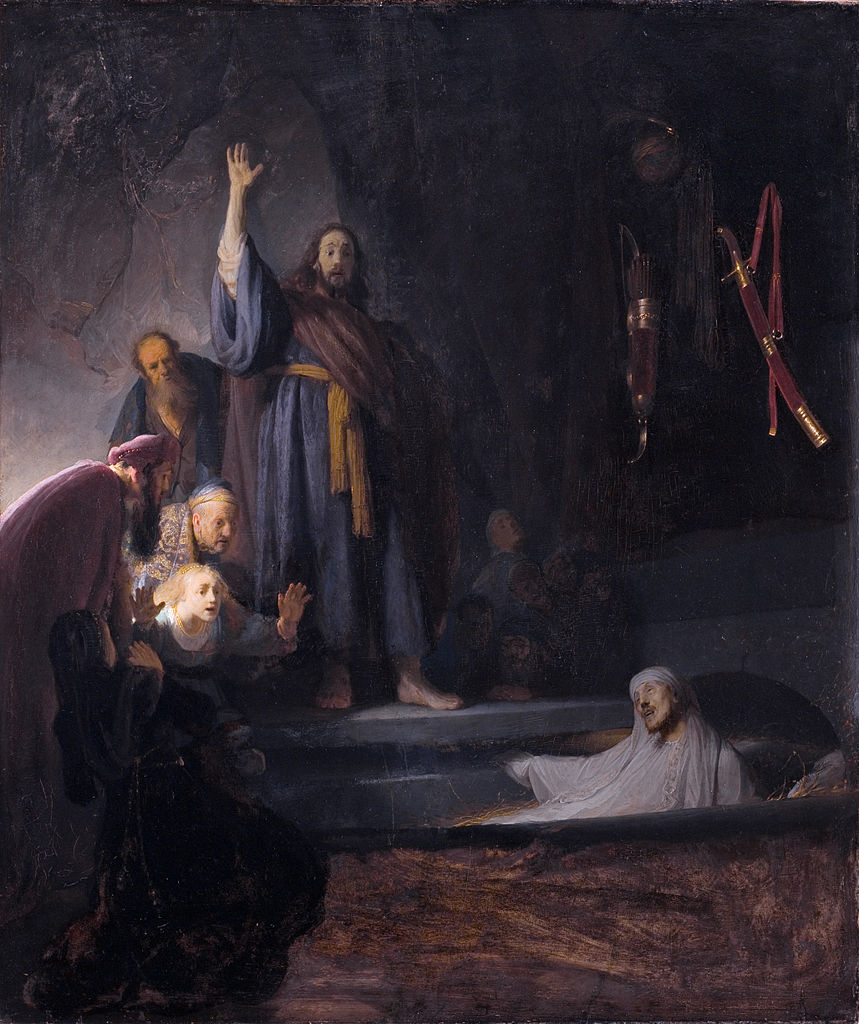
So Jesus, after hearing that his friend Lazarus was dying, stayed where he was with his disciples for a couple extra days. Lazarus died, and then Jesus went to go see the body. Lazarus' sister Mary was grieving the death of her brother, and Jesus saw her weeping. Jesus was angered to the point of tears for Lazarus' death, so the writer of the gospel then writes the shortest verse in the entire bible: 'Jesus wept'. Anger. In the original Greek, according to scholars, Jesus was angry at his friend Lazarus' death. The sting of death was real for Jesus as it is for each of us.
 
Yeah, Jesus knew Lazarus was going to die. Yeah, Jesus knew he was then going to raise Lazarus from the dead, so that people may believe in the Messiah. These realities, however, still could not keep the sting of death at bay.
 
"Then he said to me, “It is done! I am the Alpha and the Omega, the beginning and the end. To the thirsty I will give water as a gift from the spring of the water of life." (Revelation 21:6 NRSV)
The author of today's second lesson shows that God is the beginning and the end. Nothing starts before God started, and nothing ends after God ends. God is God's own bookends of God's bookshelf. God experienced death Godself in God's son Jesus the Christ. On that day, when the Savior of the World died on the cross, he would rise again on the third day and thus defeat death. Death no longer had it's sting for God. Through Christ's death and resurrection, God saved us all from death's sting. God saved us all from sin and death.
 
If there is a legacy to be left here, it is purely that: God loves and saves all of humanity from sin and death. Humanity is the only creature of God's creation that is aware of our own mortality. Even Lazarus died again. What do all of Jesus' healings have in common? They all died. Death is a reality we all must face. What's the old joke? The only sure things in life are death and taxes?

The confirmation students have learned in the last few weeks that all of us are both saint and sinner. Filled with both sin and grace. Imperfect perfection. The bible study group for the last few weeks was conversing over what it meant to be a Lutheran. One of the core elements that was emphasized over and over was this: We are already saved. Christ died on the cross to save us all long ago. It is our Lutheran identity that tells us to go out and serve in response to God's grace. No amount of good works will save us. No amount of working as hard as we can to earn that grace will save us. God's grace is unwinnable, un-earnable, un-shruggable. We all know we're going to die. God saves us from sin and that death, so it is up to us to do something with the life we are given. With the grace and salvation we're all given. It's up to us to leave a legacy behind us so others have something to remember us by.

This congregation has been on this plot of land for over 130 years, and the legacy this church has left behind in our footsteps upon this land has been grand. This congregation knows how to serve, and has served well in this area and beyond. People in Jamaica and the Philippines know of Zion. There have been 17 interns that  have served this congregation, and have this congregation to thank for improving their leadership skills. Our visitors and members hold this congregation in high importance. Whether it's the community, the people, the music, the preachers, the worship, the sense of duty, or the insistence of the Holy Spirit... our pews are warmed every week by people coming to hear the gospel proclaimed and to receive the Lord's Supper twice a month.

The legacy of Christ's resurrection is the Gospel that we proclaim and live out. The legacy left by this congregation is grand, but what about your legacy? What about the legacy of these people for whom these candles represent? What is their legacy? As we read their names aloud this morning; think of the legacy they left behind. Continue the story. Their story.

God is the beginning and the end. The Alpha and the Omega. Through God all things were made. Through God all things must end. But while we're on this earth, we can make a difference. The pain of other's deaths stays with us, and the legacy they leave behind becomes part of our story.
Our daughters are sick. Our children are watching us. We lack one thing. Death is not the end. We leave behind a legacy; a story; a monument to who we are as people. Take a walk of Amor. It won't take you very long, believe me. Take a walk and see what is left of this community. You'll pass by a few houses, a rundown old gas pump and station, and at the end of the town, past the stop sign; the cemetery. Stones with pairs of dates outline the bounds of people's existence on earth. The stones in the cemetery greatly outnumber the houses in the town, and symbolize the legacy of these small remnants of towns. In a few months, we'll hear the words, 'you are dust, and to dust you shall return'… Amor was a sprawling piece of rolling prairie once, and eventually, it may return to it.
May it be, that the pair of dates on a stone in the middle of the rolling hills and lakes, be more than a pair of dates, but a note of a life well-lived. That the pair of dates represent the expanse of time in which we made the world a better place for those around us. That we put a smile on a people's faces. That we made a difference in the lives of our family and friends. Christ died for us. Was Resurrected for us. Tasted the sting of death for us. Saves us all. Go out and live that life to its fullest; preaching the gospel and making the world a better place for us all. Leave a legacy for us all.
Amen.

Monday, October 12, 2015

We Lack One Thing: Sermon on Mark 10:17-31

This is the third sermon I've preached at Zion of Amor on my internship.

Gospel: Mark 10:17-31


Grace and Peace to you from God the Creator, and from our Lord and Savior, Jesus the Christ. Amen.

“As he was setting out on a journey, a man ran up and knelt before him, and asked him, “Good Teacher, what must I do to inherit eternal life?” Jesus said to him, “Why do you call me good? No one is good but God alone. You know the commandments: ‘You shall not murder; You shall not commit adultery; You shall not steal; You shall not bear false witness; You shall not defraud; Honor your father and mother.’” He said to him, “Teacher, I have kept all these since my youth.” Jesus, looking at him, loved him and said, “You lack one thing; go, sell what you own, and give the money to the poor, and you will have treasure in heaven; then come, follow me.” When he heard this, he was shocked and went away grieving, for he had many possessions.” Mark 10:17-31

What a way to start a day. The man who seemingly kept all the commandments that pertained to everybody else, forgot that there were other people in the world. The man was singularly focused on himself, and what he had to do to go to heaven… that he forgot about everybody else. Jesus said he lacked one thing. Was it empathy? Was it selflessness? Proper stewardship of his resources? He clearly forgot to fill out his pledge card this year… That’s what was holding him back, right?

 But seriously folks, the man lacked one thing. He had many possessions, and wept at the thought of losing them. He thought he had it made. Keeping all the commandments is hard, and he had all that he wanted. At the top of his game. He probably pulled himself up by his bootstraps and worked really hard to amass such a wealth. He probably pulled himself up by his bootstraps and kept all the commandments. He lacked one thing.

One thing. The one thing he lacked was the one thing everyone else needed. Life’s fickle that way. Life out here on the rolling prairie and lakes is fickle that way too. What is it that we lack out here in lake country? We have beautiful sunrises and sunsets over these pristine waters. We have a beautiful harvest season that has turned out quite nicely (overall) for the farmers. The last few Octobers we had our first snowfall by now. (That’s a silly thought on a day with 80 degree weather…) This fall is turning out to be quite nice out here. Our fall supper and other fundraisers went quite well. Even with tense conversation about the transition from committees to teams and the budget… the waters look pretty calm from here. Our pews have been full, the tables are fairly full after church… It’s a wonderful time to be here at Zion. What are we lacking? From the vantage point of this wonderful congregation on top of this hill, the look down on the rolling farm fields looks pretty good.

“Jesus, looking at him, loved him and said, “You lack one thing; go, sell what you own, and give the money to the poor, and you will have treasure in heaven; then come, follow me.” When he heard this, he was shocked and went away grieving, for he had many possessions.”

The view from atop this hill may look pretty good. The rest of rural Minnesota and the country may not look so rosy. In the book, Rural Communities: Legacy and Change, the authors point out that in contrast to our urban neighbors, “Rural residents tend to be poorer than urban residents. On the average, per capita income was $11,161 lower in rural areas than in urban areas in 2013, and rural Americans are more likely to live in poverty, and the rate of rural child poverty continues to increase as urban child poverty declines.” (p. 128)

What that looks like for Minnesota is that over 500,000 of our residents are living in poverty. Most of those impoverished live in rural areas. Why does this happen? Well, there are a number of factors, but the authors of this brand new book have a thought:

“In the past, miners and loggers and often farmers as well did not have high educational levels because they left school for work. However, this has changed. The interaction between educational level and type of jobs available has become a vicious cycle for many rural communities. Communities that invest heavily in education see the more educated young people leave because of lack of opportunity unless such communities work collectively to generate jobs they would like their children to have. Rural areas are losing their local schools to consolidation, which has hurt local economies without improving school effectiveness. (p. 147)

We’ve seen this cycle happen here. Right here in Amor, the school that was built only functioned as a school for a few years before the students were consolidated elsewhere. Farms are getting larger and larger, kicking smaller farms out. How many of you would consider yourself a farmer? How many of you descended from farmers? How many of you would say that your employment was impacted by farms?

Yeah. I don’t need to tell you that the world of rural America has changed in the last 50 years. Even in the last 10 years. Our families are smaller, our jobs are bigger, our commutes are longer. Rural America feels the same effects from the realities of urban areas; we just have a delay in figuring them out. This delay then causes people to get caught in the transition, and some people get left behind. The authors continue:

“Rural poverty continues to be higher than urban poverty in the United States. People living in rural areas have fewer opportunities and may have less education and poor health, which all contribute to poverty. Poverty in turn is related to poor health status. People in rural areas are somewhat more likely than those in urban areas to be subject to occupational situations detrimental to their health. Rural areas are also less likely to have the resources to invest in increasing human capital.” (p. 147)


It’s tough living out here for the impoverished. Poverty is an invisible ailment in the rural areas. There’s no one visibly living on our streets, but one doesn’t necessarily need to be homeless to be impoverished. Even if one is homeless, shelters are few and far between. So, people rely on churches and other organizations to get by. So, we respond to in kind and do what we can by donating tons of clothes to Richville, or food to the food shelves or whatever… We’re not lacking in donating. But the authors point out there at the end of that quote that we do indeed lack something. I don’t think we lack in our giving. We don’t lack in our ability to steward our resources. I think we lack the one thing that people already know we lack: ourselves. People.

Our communities and congregations thrived with the idea that there were people around to attend our schools; buy our goods; even show up to church. Our pews are full now, but other churches around us aren’t as fortunate. Our schools were larger. Our towns were larger. Our businesses were frequented more. We built knowing that there was a future for these communities. Look around. Our churches are an honest reflection of our communities.

The world is growing, but not out here. Sure, we get the influx of the summer folk out to the lakes. That sustains these lakes communities. But when a tornado tears apart a community and ruins the summer plans of resorts, how will they survive? The same is true for impoverished folks. Sure, they’re not on the streets now, but they’re living a paycheck away from having to be on the streets in some other town.

So Jesus tells a man to sell all his possessions to feed the poor. Later on in Mark, Jesus is anointed with a very expensive ointment of nard. The disciples protest and ask him why they don’t sell it to feed the poor, instead of dumping it on Jesus. Jesus then replies – and some of you may have heard this before – “For you always have the poor with you”…  (Mark 14:7a NRSV). In one instance, Jesus tells a man to sell all his possessions and feed the poor, and then later on seemingly throws in the towel.

“You lack one thing”, Jesus tells us this morning. The rural impoverished are in an invisible reality with less opportunity for them than their urban neighbors in similar circumstance. We do what we can, to a point. Are we throwing in our own towel? I’m sure the quilts we make mean the world to the impoverished of Otter Tail County. They mean the difference between a cold night and a warmer night. The clothes we donate, the food we donate, all make a difference.

Perhaps it is people that we lack. What if, it’s not only people, but perhaps willingness for our communities as a whole to give up our possessions as a whole, for the betterment of people. We influence change – to a point. Jesus makes a bold statement that it’s easier for a camel to go through the eye of a needle than for a rich person to enter heaven… The first shall be last and the last shall be first… When can we put aside our pride, our love for our own possessions… and put the last at the front of the line?

Remember what happens after Jesus tells him to sell his stuff? The man runs away crying because he had many possessions. It doesn’t say if he sells it or not. Jesus just tells us the metaphor of the camel and the needle and that the first shall be last and the last shall be first… Jesus, who fed the poor without asking if they deserved it; healed the sick without asking them to pay for it; died on the cross and rose again on the third day – to save us all – from ourselves. Our sin. Our greed. Our selfishness. Christ died on the cross and rose again to save us in spite of all of that.

We are merely human. The sin of the world is too big for us to handle. Christ handled it for us. But we can make a difference. How big that difference is, is up to us. Our daughters are sick. Our children our watching us. We are found lacking, but saved in spite of it. I don’t know what the solution is. We are the people running away crying because we have many possessions. We have it good. But I believe Christ saves us all in spite of it. It is up to us to figure out how to respond to this need, because what we’re doing can’t save us. Nothing we do saves our soul. Christ already died for us. Christ calls us to action, and there needs to come a time when we are no longer the people running away crying for our possessions, but collectively crying out for those without.

Amen.

Monday, September 21, 2015

Our Children Are Watching Us: Sermon on Mark 9:30-37

This is my second sermon preached at Zion Lutheran of Amor on my internship.

Wisdom 1:16-2:1, 12-22
James 3:13-4:3, 7-8a
Mark: 9:30-37


Grace and Peace to you from God the Creator, and from the Son of Humanity, Jesus the Christ, Amen

“He sat down, called the twelve, and said to them, “Whoever wants to be first must be last of all and servant of all.” Then he took a little child and put [them] among them; and taking [them] in his arms, he said to them, “Whoever welcomes one such child in my name welcomes me, and whoever welcomes me welcomes not me but the one who sent me.” (Mark 9:35-7 NRSV)

This week we have a Gospel text that is similar to the last one I preached on – Jesus is hiding from the people again (never seeming to get that vacation ‘Up Nort’). The disciples meet him in a random house and Jesus says more cryptic things. Asking why they’re arguing. Asking why they think someone is better than the other. And we have a child again. Uffda.

Well, Jesus takes this moment of hiding to teach his disciples about equality, and finds a random child that just happens to be in the random house they find themselves in to use as a teaching moment. Our preschoolers are getting their bibles from Zion this morning. Preschoolers are sponges. Sam is a sponge. Sam picks up on things that Tiffany and I don’t understand how he figures out, or remembers, or hears… Not only can they learn from us, we learn from them.

Children are innocent, blank pages on which we write upon. They learn from us, TV, other kids; the world around them. They soak up so much. Life for us, and for them, is what we make of it. We can only guide, goad, and prod so much. Children have to learn on their own. We can’t open their head and deposit information, but through education and patience, they learn. Even at a young age, children are difficult to redirect at times. Once they hear ‘bad words’ they know them. And then they want to say them. Sam tells us that he wants to be 100 so he can be old enough to say bad words. Then we tell him he can certainly wait until he’s 100 to say bad words. Children are innocent in most things, but as they get older, the innocence fades away, and the realities of this world start to wear on them.

“for if the righteous man is God’s child, he will help him, and will deliver him from the hand of his adversaries.” (Wisdom 2:18 NRSV)

Our first lesson may be strange to you. It comes from the Wisdom literature, which is found in the set of books we generally don’t have in our bibles. The set of books is called the Apocrypha or the deuterocanonical books. Catholics have them, but Martin Luther found these set of books unnecessary in the grand theme of the bible, so he left them out when he translated the books of the bible into the people’s tongue. These deuterocanonical texts don’t always appear in the lectionary (what we use to give us our texts every week), but when they do, I like to use them because it is so rare to see them. However, I might have used a bit more caution and actually read what I was asking to be put in the bulletin. This text is a bit… different. (to use a Minnesotan phrase)…

Children are considered righteous, blameless, until a certain point… When that point is – is different in different situations. We Lutherans baptize infants and occasionally adults. Other Christians baptize older children or adults – when they reach an ‘age of reason’, which is usually about 15 or 16 or later... Between the ages of 12 and 17 is when rites of passage happen for most people in the world. Jews have Bat and Bar Mitzvahs; Latina Christians have Quinceañeras as a coming of age rite. Some tribes of Native Americans have Sun Dances as a rite of passage for their young men. For most Americans, we give 15 and 16 year olds driver’s licenses when they pass a couple tests. Catholics and Mainline Protestants confirm their teenagers in their faith. Most Americans graduate high school around the age of 18. These are rites of passage in our world where we determine that children have passed the age of innocence into the world of young adulthood…

So, when a young man builds a clock, brings it to school and gets arrested for his brilliance, the country reels and gives a double-take. When a boy is shot because he is wearing a hooded sweatshirt. When a boy is shot because his toy gun looks real. When a boy is shot because he’s in the wrong part of town… And then we start to see the underpinnings of the sick daughters I talked about last time. It’s not because of these simple reasons at all. Children make inventions all the time and show them off in class. Children wear hooded sweatshirts all the time. Children have toy guns, walk in different parts of town. This isn’t what makes our daughters sick. Racism. Classism. What happened to the innocent children? Is it because they look different? Sound different? Speak a different language?

What children are we welcoming in Christ’s name? What children are we turning away?
Christ told his disciples that, “Whoever welcomes one such child in my name welcomes me, and whoever welcomes me welcomes not me but the one who sent me.” (Mark 9:37 NRSV)

Jesus is using a child as a teaching moment. His disciples were just arguing about which one of them was better than the other. Jesus uses the innocence of a child; the humility of a child; the unlikeliness of a child; the unworthiness of a child – to make a point.  “Whoever wants to be first must be last of all and servant of all.” (Mark 9:35 NRSV)

Children were the last of all, on par with slaves in those days. Zion’s bible study group has been going through Paul’s letter to the Philippians for the last couple weeks. Two weeks ago, we went through what is commonly known as the Christ Hymn. One of the earliest known hymns written about Christ. In the Christ Hymn, Paul writes “Let the same mind be in you that was in Christ Jesus, who, though he was in the form of God, did not regard equality with God as something to be exploited, but emptied himself, taking the form of a slave, being born in human likeness.” (Philippians 2:5-7a NRSV)

Children were unlikely to survive through adulthood. Jesus therefore holds children in high regard, using them as teaching moments a few times throughout the Gospels. According to Paul, Jesus humbled himself to the point of a slave. Children were regarded as having about the same worth as a slave. Children were the lowest common denominator next to slaves. Who are the lowest common denominators in our world? In our state? In our community? What children are we welcoming in Christ’s name? What children are we leaving behind because of one reason or another?

Christ, who embraced a child for a teaching moment; hung out with tax collectors; healed the untouchable; spared the life of a prostitute… Christ frequently got in the face of the ruling class and showed the people what Grace, Love, and Mercy truly look like. Christ, who told his disciples for the third time in this text that he was going to die… would soon walk into Jerusalem and face his fate. Jesus, who sat amongst his friends who were fishermen, tax collectors, and the unpopular and had dinner with them. Even the man who was about to turn him over to the authorities was welcome at the Last Supper. Jesus knew who he was hanging out with. It wasn’t the best of the best, but the lowest of the low. Jesus would soon face trial in front of all the people, and die on a cross, just like everyone else. Dying on a cross was commonplace, and Jesus died among criminals. Surrounded by his humble friends, family, and the lowest common denominator of criminals, Jesus died for us all. Jesus died to save us all from ourselves. True Grace, Love and Mercy, given to all, was bestowed upon the world that day.

For we live in a broken world, as part of a broken humanity. The children of this world are in need of our attention. We cannot let the evils of this world be written on their blank slate because of our brokenness; our unwillingness to do anything about this broken world. When the image of a little Syrian boy washed up on the beach makes the world take another double take… We have to remember that our seemingly adult problems affect children too. Our sin; our brokenness; our realities of this world… How many children does Jesus have to put in our face before we cry out in anguish?

God calls each and every one of us to look upon the face of the lowest of the low, and embrace them. Welcome them in Christ’s name; in God’s name. For we are all unique. We are all made in the image of God, for the glory of God. Each and every one of us. No matter the scars we have or the wounds we carry. We live in a broken world, but broken things can be fixed, all with the right amount of Grace, Love and Mercy (and a little duct tape) that we receive and then respond to in kind.

Last time I closed with Bob Dylan. This week, I’ll close you out with words of my favorite band, Pink Floyd:

No more turning away
From the weak and the weary
No more turning away from the coldness inside
Just a world that we all must share
It's not enough just to stand and stare
Is it only a dream that there'll be
No more turning away?

Our daughters are sick. Our children are watching us. Don’t turn away from them. Embrace them and welcome them in the name of Jesus; in the name of God. For we are all children of God, born in the image of God, and formed to be people of God.

Amen.

Tuesday, September 8, 2015

Our Daughters Are Sick: Sermon on Mark 7:24-37

This is my first sermon preached on my internship at Zion Lutheran Church of Amor. I had my Service of Beginning on Sunday, and family there to watch and support. With a difficult text, it was fun to figure out how to preach it in a new setting, but figure it out, I did... methinks.

Mark 7:24-37


Grace and Peace to you from God our Creator, and from the Healer of our every ill, Jesus the Christ, Amen

Jesus, after having a long hard journey to the land of the Gentiles, needed rest. He needed rest and proceeded to hide away from the crowds that followed him. He was a popular guy, this Jesus. Healing people here, feeding people there, teaching everywhere… he had quite the following. But after a while, even the Son of God needs some rest. He seemingly never gets it. No summer vacations for this guy. No lake cabin ‘up nort’ to come up to. Even when he goes home he doesn’t really rest. So, needing some time away, he travels to the land of the Gentiles to escape for a while. Slinking away, he gets to a house and hides. Apparently he wasn’t very good at ‘Hide and Seek’, because a woman with a sick kid found him rather quickly. Not merely a woman, but a Greek woman, from Syria. The other. A woman from a different land with a sick kid was asking for healing. Jesus didn’t know who this woman was; and he refused to heal her. He outright denies her, calls her a nasty name, and tells her that God’s healing is only for the right people – and she wasn’t it.  

            She tells him that even the wrong people get the leftovers. Even the ‘other’ gets the garbage. When you were a kid, and didn’t eat all of your food, how many times were you told as you were tossing your uneaten food in the garbage, “Hey, there are starving kids in Africa…” I hate to be the bearer of bad news, but – Hey, there are starving kids in your own backyard.

            So Jesus agrees that she’s right about this, and heals her daughter, just because this woman was strong enough to stand up to the inherent power difference. She knew she wasn’t Jewish. She knew Jesus could heal her daughter, and told him off. Her daughter was healed because she told Jesus off. Her daughter was healed… because she had the knowledge that the leftovers wasn’t enough. She stood up to an old, tired tradition… And advocated for her daughter.

            Getting work done can be very messy and scary. Putting on our big people pants can be difficult in the morning. When you look into the mirror every morning, you look at the person that people see. People look at you, and see the person staring at you in the mirror. Some days, it can be hard being that person. Maybe you’re fat, you’re ugly; you have too much grey hair, not enough hair, too much facial hair, not enough facial hair, too tall, too short… let’s face it, we’re imperfect beings in a culture that demands perfection.

            It may not seem like that around here, where life seems to pass us by on the lake. In our serene morning glimpses of sunrises over the water; in our causal conversations about the weather, sports, church goings on… The realities of the world seem distant. We don’t have people on the streets begging for change. We don’t have people marching in the street shouting for racial equality. People die from accidents, illness, injuries, old age… People aren’t murdered in our streets. When it does happen; when human remains are found 20 miles from here… It’s a scary thing. We’re not used to that. We love our quiet lives away from all of that. That’s why most of us are here, are we not? We’re a hearty bunch, us Minnesotans. We survive the coldest winters by either sticking around or seeking warmer climates. We survive the hottest, stickiest summers by cooling off in our lakes or sitting in our air conditioned-central aired houses. We are a hearty people.


            We are proud of our state. We are proud of being able to withstand the harsh climate, just to make a living out of the soil or live out our days in these beautiful homes on these pristine lakes. We are a proud people, because we are able to stand up to what the world throws at us. Even when floods tear apart the Fargo-Moorhead area, or avian flu destroys millions of turkeys and chickens, or tornadoes rip through our communities, we hold on to what we have because we are a strong, proud, and hearty people. Our ancestors braved this wilderness so that we could live our lives protecting what they left for us. When adversity comes our way, we withstand the blow.

            We stand up in the face of reality, and we say no. So when a change to the standard order happens, the things we’re used to standing up to… don’t make sense anymore… we fall into disarray.
 
            We are a proud people, but we are a stubborn people. This resistance to change is inherent to the core of our being. We withstand so much, why should we budge any more than we have to? Like Pastor Jim preached on last week, we have our traditions, and we hold on to them. But there are times when traditions that seem tired, or useless… need to change. But we are a strong, hearty people, and we will stand up for a fight.

            Our daughters are sick. There are problems in this world, in this state, in this community… that need to be rectified. There are people in this community that don’t have enough to eat at night; people who struggle with their identity, in fear of judgment or retribution. There are people suffering silently with mental health problems; people with physical ailments that go unnoticed. We live in a world that demands perfection, for we are a hearty stubborn people. We are a humble people. We don’t want people to know we have problems, because we don’t want to know people have problems in their lives. That is what I mean by this world demanding perfection. Our houses are kept clean, just in case people come over. Our churches are pristine and kept up. Yes, sometimes they leak or fall apart, but for the most part, our churches are kept in order. We fear other people’s thoughts on our problems. We fear other people knowing about our problems. When our children do adequate in school, we demand perfection out of them. Their grades can always be higher. Their sports performance can always be better.

            Why do we do this? Survival. Survival and tradition. We do these things to maintain our way of life. We want to keep our legacy alive. When the Washington Post calls a county in Minnesota the worst county in the country, we cry out in anguish and pain. We have such pride for Minnesota. We stand up for one another, no matter what. We advocate for one another.

            But when new Minnesotans come into our state, we’re wary. When the Hmong, Laotian, Bosnian, Latino and Somali immigrants come into our community, we’re wary of change. We have to redefine who we stand up for. The sooner we start seeing every Minnesotan as a beloved child of God; the sooner we start seeing every person as a beloved child of God; the sooner our daughters can be healed.


            For this Jesus who healed a Syrian woman’s daughter, and a deaf man by spitting in his face, heals us all. This Jesus, who told his disciples to not tell anyone about these miracles, would soon understand his calling, and fate. Jesus would soon understand that he was the Christ, the Messiah sent from God to save humanity from itself. For this Jesus would soon face death on a cross, on a lonely hill, surrounded by criminals, the other, the forgotten… Jesus the Christ would die on that hill to save us all from ourselves. The undeniable, unshakable, unwinnable Grace that was bestowed to all flowed out of Jesus that day, so all may know God’s love, grace and mercy. It is in response to that Grace that we are called to bestow our own grace, love and mercy upon our neighbors, no matter their lot in life.

            We have a strong sense of community in this state of ours. Read the response to the Washington Post article posted on Zion’s facebook page. I’ve posted it on my office door too. The author talks about his mistake in calling Red Lake County the worst place to live. He noticed the strong bonds we have for one another, and the strong sense of civic duty we have for things. ‘Minnesota Nice’ was true for him that day, and it’s true for us too.

            So when power stands in our way, we have a duty for our sick daughters to stand up for them. We have a calling to stand up to those who oppress us and our neighbors. For we are a hearty people. We can withstand the blow when adversity hits us. We know what the crumbs taste like, because our ancestors survived on crumbs to carve a life out for us in this beautiful state of ours. We honor their legacy by continuing to offer other, new Minnesotans the same chance at a better life. We have it good out here. If it takes a little push back now and then, we must remain vigilant and strong for our neighbors. Our daughters are sick, but through the Grace, Love and Mercy we fight for, they can be made well again.

I leave you with words from one of Minnesota’s children; Robert Zimmerman, better known as Bob Dylan. He wrote Blowin’ in the Wind in 1962, and his words still ring true today.

Yes, and how many years can a mountain exist,
Before it's washed to the sea
Yes, and how many years can some people exist,
Before they're allowed to be free?
Yes, and how many times can a man turn his head,
And pretend that he just doesn't see?
The answer, my friend, is blowin' in the wind
The answer is blowin' in the wind.

            Let’s not leave it blowin in the wind for too long folks. Our daughters are sick. Fight for them. Stand up for them. Live for them.


Amen. 

Monday, June 29, 2015

Peacefully Still in the Storms of Our Lives: Sermon on Mark 4

I preached this sermon last week, on June 21 at First Lutheran in Morris. I grew up in that congregation and community. As part of my summer studies, I'm doing an independent study on Morris in relation to how local rural/small town congregations can be the church for those on the margins of rural communities. This sermon is the first in my sermon series for this community. More shall be written, though not all will be preached.

Job 38:1-11
Psalm 107:1-3, 23-32
2 Corinthians 6:1-13
Mark 4:35-41

Grace and Peace to you from God our Refuge, our Savior from our worst storms, and the Spirit who guides us home, Amen

Change. Growth. Progress. Transition. Adaptation. Transformation. Why did the chicken cross the road? To get to the other side of course. Why did Moses and the Israelites walk across the Sea of Reeds? To get to the other side of course. Why did Jesus and his disciples get in a boat? To get to the other side of course. Why did Christopher Columbus sail the ocean blue in 1492? To get to the other side of course. Why did 2 pastors and area parents jump in vans full of kids and drive halfway across the country? I don’t know, really. I don’t know why anyone would do such things…

And why is it, that a church sanctuary can quickly become anything but a sanctuary? I don’t know the answer to that one either… But I do know the answer to this one: why did a young carpenter from the town of Bethlehem die on a hunk of wood nearly 2000 years ago? To get to the other side of course. To get to the other side of life, so that God could conquer death. So that God, could conquer death and save us all… So that all may live, God’s Son, Jesus the Christ died on a hunk of wood, nearly 2000 years ago.

Before all of that however, Jesus climbed in a boat with his friends, and took a nap. Jesus, the once and future King of Glory, took a nap. So, his friends sailed the boat across the lake, and why were they doing this again? To get to the other side of course. Gotta check you’re still paying attention, ya know. The disciples were steering the boat, going about life, when a giant storm brewed right on top of them, and the disciples feared for their lives. Remembering that the Teacher they brought along with them was snoring away in the stern of the boat, they woke him up and exclaimed, “Hey, don’t you care that we’re about to die here…” Jesus bolted up, spoke to the water and said, “Peace! Be still!”. The wind quit, the waters calmed, and they got to the other side.


When the world was literally crashing down on them in this dramatic storm, they called out to the only person they could: Jesus. Jesus, the Savior of all, saved the disciples in the boat that day, and calmed the storm.

“Then they cried to the Lord in their trouble, and he brought them out from their distress;
he made the storm be still, and the waves of the sea were hushed. Then they were glad because they had quiet, and he brought them to their desired haven.” (Psalm 107:28-30)

For those of you who don’t know who I am, I’m Jon Rundquist, and I bring greetings to you from Luther Seminary in Saint Paul. Your continued prayerful and financial support keep my wife Tiffany and our growing family afloat in the storms of seminary life. I want to take this moment to thank you all for that support, as we look forward to starting my Pastoral Internship at Zion Lutheran Church of Amor, Minnesota in the fall.

We will be moving later this summer to a nice house north of Battle Lake, but in that move, it will require changes to our lives. Tiffany will begin to slowly transition out of her position of a social worker, and once we move, to that of a full-time stay-at-home parent. My status of student will lessen to a degree, as my upcoming new role as Pastoral Intern will take precedence over my student life, though I will continue to take classes online while on my internship. Our son Sam had his final day of daycare last week, and as he spends his days with me for the remainder of the summer, he is looking forward to living in the new house and attending his new preschool. Moving is difficult, a pain even… but it comes with its rewards of a fresh start somewhere new.


There are people that I see regularly that I know I probably won’t see again. I’ve already said a few goodbyes to some International Students as they go on with their studies. People that have impacted my life, as much I as I hope I’ve impacted theirs. Moving is rough, and most of us have probably done it a few times. Moving is one of those changing, transitional, and transforming periods in our lives, where the need to, well, To get to the other side… of course is… a necessary rite of passage.

Job knows a thing or two about transition and change. In a twist of divine justice, Job loses his children, his animals and everything he owns. He also nearly loses his life. The book of Job is a tale of Job losing these important pieces of his life, and spending a majority of the book lamenting and conversing with God about his toils. Then in Chapter 38, the chapter we read from this morning, God turns the tables on him. God reminds Job that it is not Job that causes the world to exist as it does, but God. It is God that, “laid the foundation of the earth… determined its measurements… and prescribed bounds for it.” It is God that was, is, and will be there in the darkest of our storms, and the happiest of our joys. God was there before the lights were turned on, and will be there after the lights go out. Back to poor Job, at the end of the story, Job gets back his family, his livestock and everything he owned, twicefold. For undergoing the immense hardship, Job survived for a time and got everything back. Job had the roughest of life’s transitional periods, but he made it through.


“We have spoken frankly to you…; our heart is wide open to you. There is no restriction in our affections, but only in yours. In return—I speak as to children—open wide your hearts also.” (2 Corinthians 6:11-13)

Paul writes that invitation to us all – “open wide your hearts also…” As part of my summer’s studies, I was here in Morris this week trying to get at the question – What can a small Minnesotan rural congregation do for those on the margins of our society? To ask it better, what can First Lutheran do for the impoverished, the minority, the differently-abled, the sick, the elderly, and the immigrant? I’m speaking frankly to you, now, as Paul did to the Corinthians. There are roughly 3-500 Latina immigrants living in Stevens County these days. Assumption Catholic Church next door has Saturday evening mass in Spanish. Morris Evangelical Free has a full-time Latino pastor that leads services in Spanish on Sunday nights. Faith Lutheran has held events for Latina organizations. How is First Lutheran welcoming of our Latina neighbors? What outreach has First Lutheran done to our Latina neighbors? What have you personally done to welcome your neighbors?

Don’t hear this as me telling you to fill these pews. Don’t hear this as me telling you the church is dying and we need new life in this church. That is not what I am saying. Well, what am I saying then? I’m saying that we are the disciples in the boat, and First Lutheran has yet to set sail. As Chris wrote in the newsletter this past month, this congregation needs a communal project to work on, to bring people together in unity. First Lutheran needs an identity, beyond being the big church next to the courthouse, and home to many of us for many years.

This congregation raised me, formed me, supported me, confirmed me, sent me to seminary, and helps sustain me at seminary. This congregation and community have been my home. First Lutheran has been home to many of us for many years. For some, the walls in this building speak volumes to the great times we’ve had, to the sad times we’ve had. These walls are our home.

Now it’s time to let this home belong to others as well. What use is a courtyard if it’s locked and fenced off? What are your visions for this congregation? What are your dreams? This is not about survival, but revival. This is not about holding on to traditions, but starting new ones. Jesus and his disciples got into the boat and set sail, why again? To get to the other side of course! (Had to make sure you were still with me again…) (Hold on, I’m almost done…)

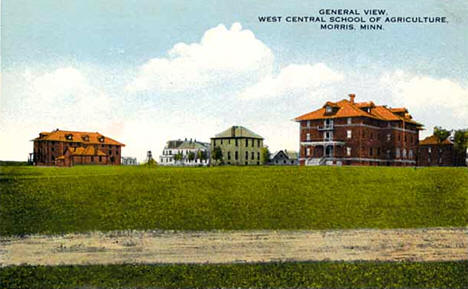
Morris has a vibrant history, filled with the realities of mashing seemingly disparate communities together. From the town’s beginnings where Swedes, Norwegians, Germans, Irish and Swiss came together on this patch of ground to make new lives out of the soil. From these farms came community, churches, schools, identity. Lutherans came together and formed this congregation. Trinity Lutheran in Alberta is celebrating its 100th Anniversary today. We celebrated that many years ago. First Lutheran has its name because it was the first Lutheran congregation in Morris to offer English services. The common language brought people together, and together this congregation had an identity. Later on, the Indian boarding school became the West Central School of Agriculture. In the 1960’s, my Great-Uncle Herb Croom helped bring the University of Minnesota to Morris, where the University has lived and thrived to this day, becoming one of the best liberal arts colleges in the country.


Morris is the town that it is, because of the communities it has brought together. Morris is what it is, because people desiring a growing community came together in a boat, and set sail together. Sure there were storms along the way. What change doesn’t happen without its death-inciting storms along the way? All along, in every merging of realities, in every new identity formed, God was there to rebuke the storms, saying “Peace. Be Still.” In every transition henceforth, in every growth-inducing measure, in every neighbor you welcome to your table, God will be there to quiet the storms in your heart.

In the ultimate quieting of the storms, Jesus hung on a cross to die, so that all of life’s storms could be quieted. So that all are saved by God’s saving grace, in our most troubling times. When the wind and the waves are at their strongest, God will be there to be your sanctuary. When even sanctuaries are no longer sanctuaries, God is still there, in the chaos, in the sadness, in the brokenness. Racism persists to this day, and the tragedies of last week and the last few years have proven that this country is still broken, but not irreparable. Over 150 years have passed since the abolishment of slavery, and we have a black man as president.

The transition from institutional slavery to a black president has been a very hard battle; a very strong storm, but God was, is and will be there to calm the storm. We have not capsized as a nation yet. We have a long way to get to the other side, but forming community right here, in Morris, Minnesota is one way to stem the evil tide of racism. Show Minnesota what forming community in a rural small town looks like. Show the United States what forming community with your Latino neighbors looks like. Extend the welcome to your neighbors, so that all may truly be welcome. God is there to quiet the storm when you hit it. Are you ready to set sail?

Amen.