Gospel: John 1:1-18
Grace and Peace to you from God our Creator, and from our Newborn Messiah, Jesus the Word made flesh, Amen
Happy New Year and Merry Christmas! Again!
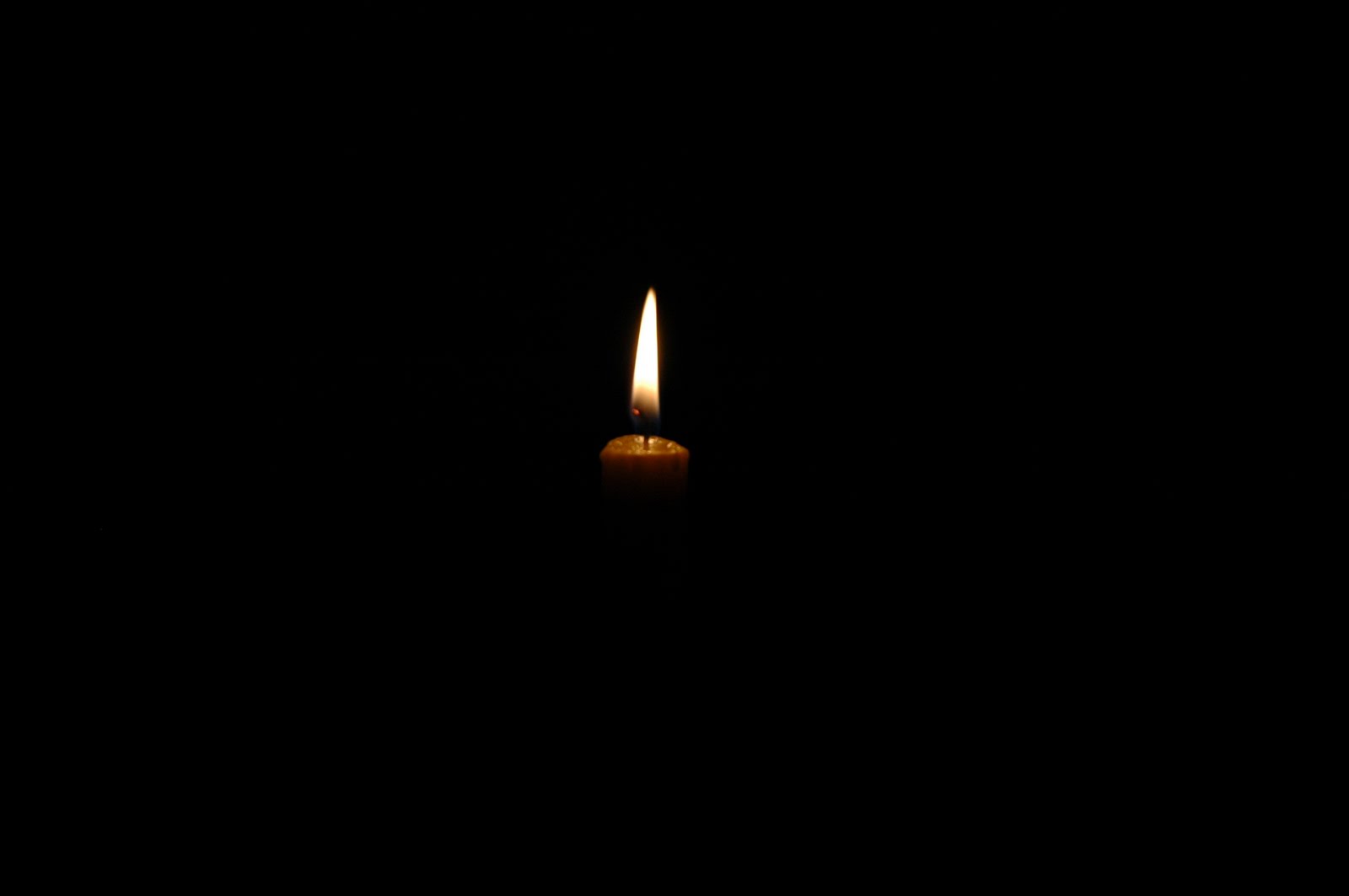
That’s right, we’re still celebrating Christmas. It just never ends does it… The Christmas trees are still up, the Christmas candle is still over there. If last week and today are the closest I get to preaching Christmas sermons, that’s alright with me.
For those of you who might be confused as to what the Gospel has to do with Christmas, let me at first say that there are only two birth narratives of Jesus - one in Matthew, and one in Luke. Only twice do we hear the combined story we know so well. The Christmas story from the Gospel of John however… shows a different side of Christmas. One, more nuanced and poetic. This Gospel doesn’t have the manger, or the stable, or the inn, or magi or shepherds or even angels… This Christmas story is about God. God incarnate in Jesus, even though Jesus is not explicitly named.
How poetic to write about someone without even naming them. Metaphor after metaphor, the Gospel’s author perfectly intertwines the notion of a savior and God’s impact in Creation and the creation of Jesus. That Jesus is mentioned as the Word, as the Light, as God and Word made flesh…
This passage of scripture is known as the Prologue to John - written as a basis of what is going on in the Gospel. Shining through the darkness… Grace upon grace… These elements are what the entire Gospel is about. The word Grace is never uttered by Jesus, and is only mentioned here four times, right here in the Prologue. Scholars believe that this is the author’s attempt at showing that the Gospel itself is the incarnation of Grace - that Jesus the Messiah; whom John the Baptizer points to… Is the Grace upon Grace busting through the darkness into the light. The Gospel tells of the ministry of Jesus, and his bestowing Grace upon the world through his ministry and death.
There is a recent song written by the hard rock band Disturbed that sings something intriguing about this concept of light and darkness… The end of the chorus to this song is, “Sometimes darkness can show you the light”...
If you think about it, the song’s writers have a good thought there worth exploring. One could look at it as in the case of folks who unfortunately get cancer, but then beat it - I’ve seen people have different outlooks on life when they have faced death and beat the cancer. But does it take the ultimate darkness to show us the light of our lives? Does it take death to show us life? The Gospel lesson hearkens back to the Creation story both in the first verse by mentioning ‘In the Beginning’ - a very clear correlation… But also how God created light out of darkness - to separate the light from the darkness. The light came from the darkness.
Darkness is an absence of light. Without light, there is only darkness. One cannot bring darkness into light, but only take away light to welcome the darkness. God created everything out of nothing; light out of darkness; substance out of absence. Christ is the light that shines into the darkness.
A couple weeks ago, we celebrated the observance of Santa Lucia, or LOOSHA, and I had mentioned that the observance was a way of bringing light into the darkness of the winter solstice. Christmas is too, an observation of bringing light into darkness. So too are the celebrations of Hanukkah and Kwanzaa. Heck, we even borrowed the advent wreath and Christmas tree from the pagans…
We can’t stand the dark. There are people who suffer from Seasonal Affective Disorder who truly need to see sunlight, whether real or artificial, to survive winters. There’s an old Ray Bradbury short story, All Summer in a Day, where the main characters are living on the planet Venus. This was written in 1954, long before we knew what the surface of Venus looked like, but according to the short story, Venus was a planet of constant rainstorms. The sun only came out for one hour every seven years. (Minnesota is cloudy for most of the year, but it’s not as bad as that…) The story’s main character, Margot, had moved from Earth five years prior to the story, and was the only child in her class who knew what the sun looked like. The other children were jealous of her knowledge of the sun, and when that fateful day when the sun was about to shine finally arrived… The other children locked poor Margot in a closet. The teacher ushered every child outside to catch the sunshine, but forgot about Margot. Margot, who hadn’t seen the sun in over five years, was locked in the closet while the other children in her class were outside enjoying the sunshine. When the hour was up, and the rain started to pour again, the children all ran inside, and finally let Margot out of the closet.
And yet, going back to the song lyric, ‘sometimes darkness can show us the light’... According to the short story, do you think the sun was even more appreciated by the children on Venus more than it was on Earth?
I can honestly say, that I appreciate the spring a lot more when the winter is harsh. When a mild winter like we’re having right now happens, spring just kinda fades into view, as if the temperatures just kinda gradually get warmer. It’s almost like we don’t earn spring. With this global climate shift causing heavy rains, even tornadoes in Texas; massive fires out west this summer, huge drought conditions in California, and now with all the soil exposed in California from the drought… With the impending huge amounts of rain that have the possibility of falling on California and causing mudslides rather than nourishment… The weather is weird these days. The world is gradually getting warmer, and climates aren’t as they were. Weather isn’t as it’s supposed to be. Northern Minnesota was blessed to have a white Christmas, but southern Minnesota wasn’t as lucky. There was a time a couple weeks ago when the coldest part of the country was in Arizona. Arizona. You know, the place where everybody goes to get away from the cold.
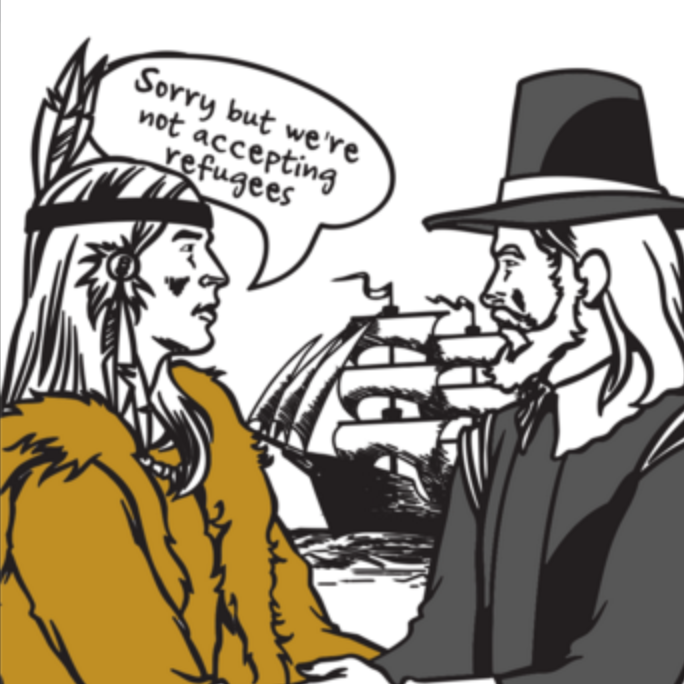
Things are not as they should be. Weather is turned upside down. We’re having national debates as to when it’s okay to ignore the basic principles of the United States. We’re having national debates as to when it’s morally acceptable to kill innocent teenagers. We’re having national debates… over the most divisive of issues. People are at each other’s throats; people are dying… over whether or not it’s okay to discriminate against an entire class of people…
There are echoes, over and over again, over past events. From the reconstruction of America after the Civil War, to Jim Crow, to the Holocaust, to the American Internment of the Japanese, to the Civil Rights Movement, to Vietnam, to the Berlin Wall… To 9/11… There are echoes of past events; past darkness… That we already took care of. We already fought that darkness. There was already light shone in that darkness.
The light shines in the darkness, and the darkness did not overcome it. There was a man sent from God, whose name was John. He came as a witness to testify to the light, so that all might believe through him. He himself was not the light, but he came to testify to the light. The true light, which enlightens everyone, was coming into the world. He was in the world, and the world came into being through him; yet the world did not know him. He came to what was his own, and his own people did not accept him. But to all who received him, who believed in his name, he gave power to become children of God, who were born, not of blood or of the will of the flesh or of the will of man, but of God. And the Word became flesh and lived among us, and we have seen his glory, the glory as of a father’s only son, full of grace and truth. (John 1:5-14 NRSV)
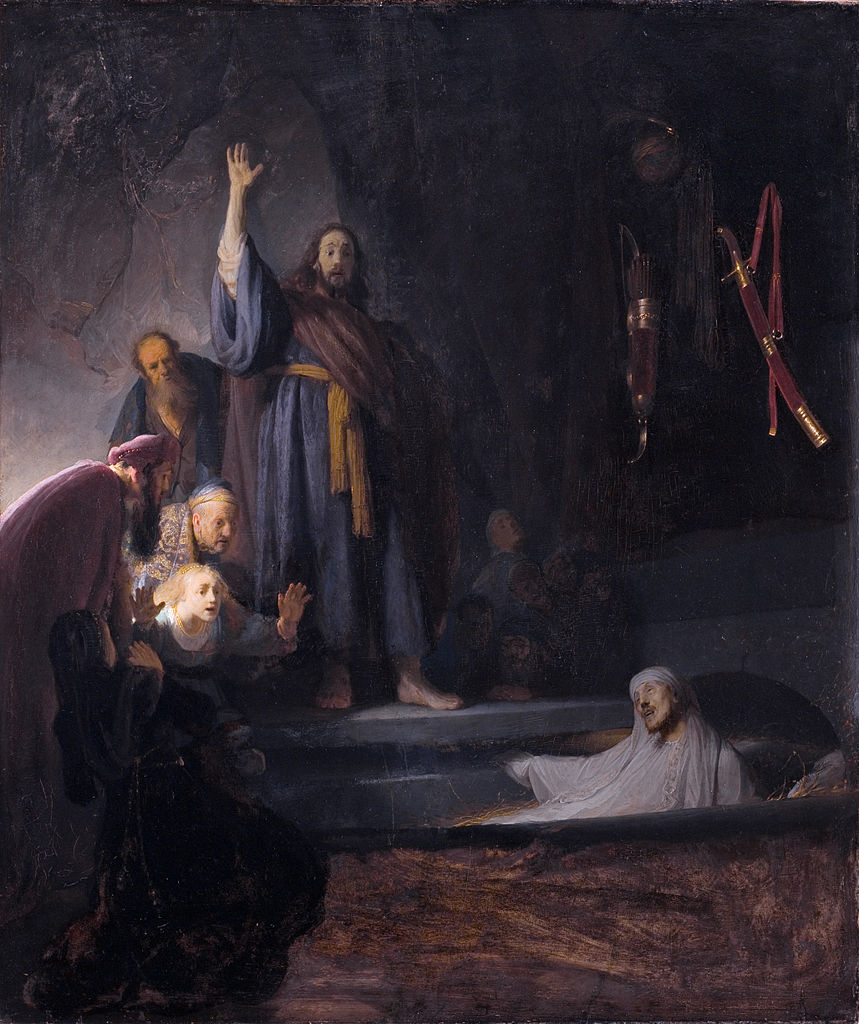
The Word became flesh, was not accepted by his own people, and died on a cross. The Savior of the World, of us all, died on a cross to save us all from ourselves. From our own seemingly impenetrable darkness. Jesus the Christ was born in a manger low, and hung on a cross to die. He died on that cross one night, and a few days later, rose again to save the world from the deepest darkness; death itself. Jesus the Christ saved us all from death for eternal life with him; the brightest light shines in the deepest darkness. Jesus separates us all from that darkness; for Jesus is the Light of the World. Through the Grace upon Grace bestowed to us all by God Godself, we are rescued from our darkness. This last year seemed quite dark in many ways, but yet, as we heard on Christmas;
The people who walked in darkness
have seen a great light;
those who lived in a land of deep darkness—
on them light has shined. (Isaiah 9:2 NRSV)
The prophet spoke to us on Christmas, and speaks to us looking back at last year. All we can do is hope for a better year this year. Perhaps last year’s darkness has shown us the light for next year. Perhaps the Light of Christ, the Love of Christ, the Peace of Christ, which surpasses all understanding; will shine forth upon the world and show the nations that light is brighter when it’s shared. That hope is brighter when it’s shared. That love… is better when it’s shared. I hope you all have a wonderful new year this year, and once again, Merry Christmas.
Amen.