Monday, March 21, 2016

Palm Sunday Sermon 2016

Here is my sermon from yesterday, Palm Sunday. We celebrated Palm Sunday only, and I'm preaching Maundy Thursday as well.

Gospel: Luke 19:28-40


Blessed is the king who comes in the name of the Lord! Peace in heaven, and glory in the highest heaven! 

Grace and Peace to you from God our Creator, and from our Lord and Savior, Jesus the Christ
Amen

It’s Palm Sunday! The beginning of Holy Week. The culmination of what was and what is to come. It’s the final transition, the final turning point as we tread with Jesus, down from the mountain, down through the 40 days of wandering, and into the final push to Jerusalem. And what a fine day it was. The Pharisees told Jesus to turn down the volume. Don’t let the disciples call you “king”. Don’t march in here, looking all kingly-like… It’s almost Passover. It’s not a time to celebrate like this. It’s going to make a big mess, you celebrating and parading like this. You’re wrecking all of those coats… Or palms… or whatever… 

Jesus says, even if they were quiet… the stones would still be singing. Even if the disciples stopped, the crowd quit yelling and celebrating, even if all the coats weren’t on the ground and people stopped shouting… The stones would still be shouting. 

For me, even more than the image of Jesus riding on a colt, fulfilling Zechariah’s prophecy, into Jerusalem and on to his eventual destination… The image of a silent crowd and the stones shouting… that’s a powerful image to me. 

Maybe it’s my sci-fi upbringing, maybe it’s odd, and I like odd things… It’s out of place in the scheme of the Gospels. All four Gospels have Jesus’ entry into Jerusalem, but only John mentions palms. The other three, including today’s version from Luke - say coats were laid at Jesus’ feet. Yet, we call this Palm Sunday. This image of the stones shouting, only appears in the Gospel of Luke. 
We’ve heard this story before. We know that Jesus goes into Jerusalem in a crowd of joy, but by the end of the week, it’s a different story. We’ll leave the different story until later this week, but I want to point out that this story is not unknown to us. 

From Jesus parading into Jerusalem, to football players entering the field, to political leaders entering a stadium full of people… those that do great things, win the heart of the people around them. And to each their own, and however people measure greatness, their hero is welcomed into the arena with raucous applause and adoration. The story of welcoming the hero, not knowing how the week will end, or the game will end, or the campaign will end, or the term will end… We’ve seen it played out before. 

We each have our heroes. Each of us have people in mind when I say the word, hero. Perhaps it’s Superman, or Wonder Woman, or Martin Luther King Jr., or Jane Goodall, or Rosa Parks, or Beyonce, or the guy down the street. Maybe it’s one of the political candidates, or the current president. Whoever it is, we each have our heroes. We listen to them, we follow them, we sometimes even want to be them. We can be heroes, just for one day, right?

They walk into an arena, and the crowd goes wild. You cheer, you get giddy, you hope to take a picture… Maybe even with them. The noise is above normal levels. You get caught up in the moment. The thrill of seeing your hero walk in… the overwhelming joy is flowing… 

So the Pharisees tell Jesus to turn down the volume. Quit making so much noise. Quit making a big deal out of this. Jesus tells them, that even if they stopped… Even if the disciples all quieted down, and the celebrations stopped… The stones would still be shouting. No matter what you think you can do, the story is already in motion. The movement, the revolution, the love… is already flowing throughout. The message of God’s love for all… was already made known. Jesus knew his time on earth was limited, and told his disciples a few times that this was going to happen. Even if the savior of the world was going to die… This was bigger than him. This was bigger than the disciples. Even the stones would be shouting. 

Put a candle to a piece of metal, and soon enough, the metal will get hot. Take the candle away, and the metal will retain some of the heat. Heat food on the stove, take the food off, and put it on your plate. That food will still be hot. The energy of the heat produced is transferred from the heat source, to the object. Sound is transferred from the subject delivering the sound, to a receiving subject. The sound of my voice is transferring from my vocal chords, through my mouth, and into your ears. Through the technological advances we’ve made over the last 200 years, sound can be recorded and played again. On LPs, 45’s, records, 8-tracks, cassette tapes, CDs, Mp3s and so on… Sound can be heard, transferred, recorded, and transferred again. 

The things we do, or say… can have a lasting impression on people, and sometimes, the things we do or say can be recorded and heard again. Tiffany’s grandparents used to argue, and while they were arguing, one would record the other to prove what they were saying, to use as evidence in a later argument. 

Music is recorded, and can make lasting impressions on people. Movies and television shows are recorded, and definitely make lasting impressions on people. My office is filled with evidence of this. One of my favorite shows is Star Trek, and in so many ways, Star Trek has made a lasting impression on people, science and so on. Seriously, part of the reason we have cellphones and personal computers - is because of Star Trek. The first space shuttle that was used to test the technology of reusable space vehicles… was named the Enterprise, which is directly connected with the starship’s name on Star Trek. That tradition is continued today, when just a couple weeks ago, scientists at NASA developed a vision of what a vehicle that could travel faster than light-speed could look like… and they named it the IXS Enterprise.

The things we do or say… may have lasting impressions on people. To where, quite figuratively, even stones really do keep shouting. When the leaders of the world promote a nature of respect; when leaders promote kindness, and visions of a brighter future… When leaders of the world reflect the nature of Christ, of all of their heroes, that they look up to… Progress can be made. Progress between human being and human being, where we look upon each other as God looks at us - as God’s children, each uniquely created and divinely loved. Each of us deserving of respect, kindness, and love. Each of us knowing that the other person looking at us, is equally deserving of respect, kindness, and love. 

Jesus, walking into Jerusalem, knowing his ultimate demise is soon upon him, is accosted by the Pharisees to quiet the disciples down. He tells them that this is beyond him or the disciples, and what’s done is done. Jesus knows that he will soon face the cross, and face his purpose. All of his teaching, healing, demon-expelling, feeding, walking and talking ministry… comes down to this. The ultimate expression of grace, love, and mercy, poured out for all of us. His impending death weighs heavy on his mind, but he knows that it’s beyond him. His purpose is beyond him. His life… His death… It’s all for a greater purpose, and even inanimate objects know it. This thing that was started long before there was a manger… is coming to an abrupt end soon. And this end… is only the beginning. 

         This end is only the beginning of better things to come. So this march into Jerusalem, over coats or palm branches is the beginning of the end for Jesus, but only the start to a greater beginning for all of God’s children. For all of us. 

        When our heroes, our leaders point to a better place, spreading words of love, respect and kindness - there is hope for all of us to have a better life on this earth. There is hope that the life we lead will be a better life lived, for all of us. So when the demagogues of this world show that something beyond love, kindness and respect are a way of leading… When people stand in front of large crowds professing hatred, appealing to the darker sides of humanity… The darker sides of our history can be repeated. 

        We must act on love for our fellow members of humanity, not hate. Love for our neighbor, love for our God… This message will continue on Thursday, but let me leave you with this… 
Our world, our history is filled with images of Good vs. Evil, Light vs. Darkness, Love vs. Hate… There’s usually one final act, one last moment when the protagonist, the good guys swoop in and save the day. In our Christian story, that final act comes this coming weekend. Growing up, most of you had the story of the Allies saving the day in Berlin and Hiroshima and Nagasaki. A very present reality of good vs. evil. Very clear representation. The first World War was a good example of that as well, but if we go further in history, to the Civil War… Here in the North, we have a different story of that war than the people in the South do. Or before that even, with the Revolutionary War… 
But as we look back on history, the divisions between good and evil blur a little bit. Britain is our best ally in the world. The southern United States are just as American as we are. The United States imprisoned it’s own citizens during the second World War. Korea and Vietnam weren’t so cut and dry for the American people, the Gulf War and the tours in Iraq and Afghanistan, and now ISIS… 
The lines between good and evil, light and darkness… have been blurred. You can see what the impact of this blurring of lines has done to popular culture. The two new superhero movies this summer, both Batman v Superman and Captain America: Civil War, pit groups of superheroes against each other, Both groups are supposed to be the ‘good guys’... The Hunger Games and even the newest Star Wars movie… The lines between what was right and wrong in the world aren’t so clean cut anymore. 

        And we’re uncomfortable with that. The story of our hero marching into Jerusalem, knowing his fate and telling the Pharisees that nothing can stop the love from spreading… We have to cling to that. The Good News of Jesus Christ is the ultimate story of Good conquering Evil, and according to Verl this past Tuesday, it’s the single greatest thing to ever happen in history. 

When so much in this world tugs on us, divides us, and the lines between what is right and wrong blur… The chaos we feel inside us is our own mind trying to wrap our heads around being okay with the grey. Being okay with how other people live, love, look, act, believe…  Somewhere in all the chaos, in all the grey, in all the messiness of life… We have to hold on to the message of Jesus Christ - that God loves you. God loves you so much, that God’s son was sent on in through the gates of Jerusalem, to conquer Evil for your Goodness. Your uniqueness. Your embodiment of God’s love. 

If, in all the blurriness of life, we seek the love, and disregard what we think is right or wrong, we can remember the love of God, and look forward to the culmination of Holy Week with an open mind, and a willingness to see each other for who we are. When we celebrate this weekend, remember who all of this is for. If you need a reminder, I’ll see you on Thursday. 
Amen. 


Monday, February 29, 2016

Repent! Sermon on Luke 13:1-9

Grace and Peace to you from God our Creator, and from our Lord and Savior Jesus the Christ
Amen

My sermon for Feb. 28, 2016 - Lent 3

Gospel: Luke 13:1-9


         Repent. Repentance. As defined by Rolf Jacobson in his book Crazy Talk: A Not-So-Stuffy Dictionary of Theological Terms, Repentance is “The change in a person’s behavior that follows recognition of having sinned and immediately precedes further sinning.”
     
         I have a good friend, actually the best man at our wedding, who was raised in a conservative anabaptist-leaning faith. According to the church elders, in order to become a member of this church; in order to be baptized… one has to repent of all their sins before submitting to a believer’s baptism. Here in the ELCA, we usually baptize infants, but occasionally we do baptize adults. In the case of infants, we have the parents and sponsors promise that they renounce the forces of evil, likewise when they’re adults, we ask them the same question. But there is no literal repentance involved. In my good friend’s church, he had to pretty much tell everyone he ever had contact with, as far as he could remember, that he was repenting for his sins, any wrongdoing he had ever done to them.
And that, is how we became the best of friends. I had hung out with him a few times, but it was sitting in the back corner of 7th grade biology together… when he asked for my forgiveness. I was confused, as I wasn’t sure he’d ever done anything to me, but he asked for my forgiveness. He explained his church and his quest to find repentance from everyone… and rather than saying sure and moving on… I wanted to know more.

        Why was he seeking repentance… what biblical reasoning had he for it… What was it about his church that was different than mine? So, every day in science class, and afterward, we’d have discussions on religion. He had a different faith than mine, but it didn’t matter. I wanted to know more. I showed him what I could about my understanding of Lutheranism, and he told me about his church. And ever since, he’s been my right hand man.

          Jesus tells the people that bad recent events have killed many folks who didn’t repent, and thus, perished in the disasters. Repent, or perish like the rest of them. Then he tells a parable about a fig tree that doesn’t bear fruit. The fig tree had been barren for a couple years, and rather than cut down the tree after a couple years… the gardener tells the owner to leave it for one more year. Then we’ll see what happens.

         Do something different, or be cut down like the fig tree. Sounds very doom and gloom eh? And yet, I think he’s got a point.

         There’ve been a few members here who have talked about family members struggling with the disease of addiction. Addiction hits all walks of life, including some who have stood up in this pulpit. It’s a messy, destructive thing, and it’s not always alcohol or drugs. Sometimes it’s gambling or gaming or sex or sports… Sometimes, it’s invisible. People can hide their addiction well. And then, some people can’t.

         And even when it’s invisible, it still affects everyone around the addict. Destructive addiction creates a ripple effect around the addict. Hopefully, it doesn’t create too much harm, but it definitely can, and does.

        This country has a varied history with addiction. From offering soda drinks with real cocaine and other drugs, to experimenting and creating our own drugs, to prohibition and outlawing both alcohol and drugs. Before the 1964 Surgeon General’s report on smoking, everyone smoked cigarettes and it was recommended by doctors. Alcohol, while a legal vice, is very destructive in mass quantities, yet can have some health benefits in small quantities. Every sports game you watch on television is full of commercials for beer or liquor, both on and off the field. Marijuana, while federally illegal, is legal to own and use in a few states, and to use medically in a lot more states including this one.

        I’m not advocating for any usage here, but what I’m trying to get at, is this country has a fascination with addiction. Those undergoing treatment for their addiction, and recovering from their addiction, may find the world we live in, difficult to cope with. A recovering alcoholic may see all the commercials on TV for beer and liquor, and think otherwise. We have a fascination with addiction.
But when the addiction takes hold, and life becomes a service to the addiction, where everything in life revolves around the addiction… That’s where people need to repent, and change where they’re headed, before they perish. Before they kill someone or themselves. While it may sound harsh, like this is the most ‘law’ you’ve heard coming out of my mouth, but repenting of the sin of addiction, before it destroys lives, is not all that harsh at all, for that is where the gospel is found.

       The Good News is that God loves us even when we are at our deepest and darkest depths of addiction or pain. Even when we feel like there is no way of escaping it, God is there right beside us.

         Let me make this clear, there is absolutely nothing you can ever do that will separate you from God, that will ever void the Grace, Love and Mercy that is bestowed to all. Christ’s message of repentance is simply this: change from the destruction, and live a better life. While in the depths and darkness of addiction, one may feel separated from God, like one is going through hell, like everyone else is going through hell… But God shows up.

       While in the deepest darkness of our own sin, whatever it is, addiction or not… repenting, changing our sinful behavior, whatever it is, saves us from ourselves. It is the knowledge that our Savior, our Christ, our Messiah died on a cross to save us from the torment of our own sins, knowing that the love of Christ, the Grace of God was poured out for us all on that day. That no matter what we do, how we sin, whatever we think our sin is… No matter what we think someone else’s sin is… God saves us all from ourselves, our own pattern of sin, our own sinful nature.

       So, repenting means to change. Change positively. So that the world outlook goes better for both you and the rest of the world. A shedding of the sins you own up to. At least, an attempt to do so.
My good friend repented to everyone he knew. He asked for forgiveness for all that he thought he had done to people, and he was ready to be baptized. But then, after nearly finishing the race, events happened, and he was no longer in the race. He stopped attending church as often, and fell out of place. Out of sorts. I can’t remember what it was, but church wasn’t as important to him as he had planned, so he just stopped going.

       The act of repenting had changed him alright, but maybe not the way the church was intending. But I think life can be like that. We repent of our ways, we change how we go about doing things, and sometimes, the new way doesn’t turn out like we planned. We start out trying to reform in some way, and end up headed a different direction.

Sometimes it takes a few tries. Folks with addictions don’t always go through rehab and are sober on the first try. It may take a few tries. The fig tree hadn’t produced fruit the first year, or the second year… But there’s hope for the third. There’s hope for that next try.

We do and say terrible things sometimes. We all do. And, whether it’s in the moment or afterward, we know it too. For some of us, the shame and guilt of disappointing someone can be a lot to bear. It’s helpful to release the pain in the shame, and talk about it. Repent. Ask for forgiveness from the someone you may have disappointed. When we repent, and change our ways, it’s not for God’s benefit, but for our own and others around us.

For it is by the love of God, poured out through the Grace of God, by the death of the Son of God, that saves us all from ourselves. That even when we repent of our sins, change our ways and become even more fabulous than we were before, there is still absolutely nothing that you could ever do to make God love you more or less. God’s grace is poured out for all. Through the waters of baptism we are called and named Children of God. Through the bread and wine… We are reminded of God’s grace present in Christ’s blood and body. We are participants in God’s grace present in the sacraments. We are compelled, called, but not required to act, because of the grace, and in spite of the world which holds us back. In spite of our sin holding us back, we are called to better our lives, and the lives of everyone around us, better for us all. To live out the promise of God’s reign on earth. And Jesus is with us, every step of the way.
Amen.

Monday, February 8, 2016

It's Time to Get Off the Mountain - Transfiguration Sunday Sermon

Part Two of my short two-part sermon series on Love and Service. Transfiguration Sunday 2016.


Grace and Peace to you from God our Creator, and from our Lord and Savior Jesus the Christ,
Amen

Epiphany is the season of light. Over the last few weeks, we have explored Jesus’ coming out stories. Jesus declaring to the world, that he is the Messiah. He is the Savior of the World. He is the One called to die for all. He is the one to bring light into darkness. Love into Hate. Hope into Fear. Hope that the world, might see a new dawn. A new dawn beaming with Light. Light, for the World.

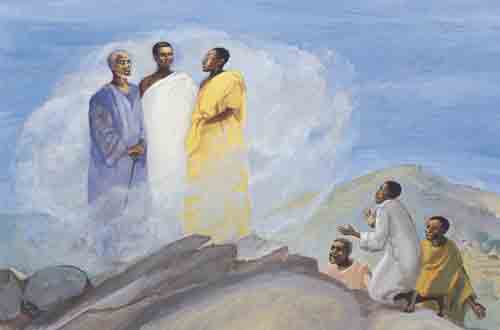
Jesus is the Light of the World, and today’s Gospel is God declaring, once and for all, that Jesus is God’s Son, the Chosen One. Flanked on both sides by prophets of old, both Moses and Elijah, Jesus is bathed in light; glowing in God’s presence. The three disciples gathered there to watch, want to hang out. Peter, that old rock… Peter wants to stay, put up tents, and watch the glory that is this time. Jesus is flanked by the superstars of old, and Peter wants to bask in the awesomeness of this moment. This was happening, and this was happening NOW. Peter wants to sink it all in, but God declares to the world that Jesus is God’s son. the Chosen One, and Peter misses out. Peter, James, and John… miss out on this awesome moment to see the Justice League, the Avengers, the X-Men… These superheroes of young and old… just hang out and talk.

What an amazing sight, and God cuts it short. For a fleeting moment, the disciples see the true Light from God, and the prophets of old to guide Jesus on his way… For this Light, is fleeting, and Jesus knows what he has to do. This is the moment, when Jesus comes down from the mountain, into darkness.

Into Darkness. Jesus and the disciples come down off the mountain; away from the overpowering Light from God, into the darkness of their reality. Into the darkness of ministry. Into the messiness, the complicatedness, the nitty-gritty task… of bringing Light into this darkness.

Last week, I preached about the Love of God poured out for all. I preached that there are people both in Jesus’ time and in this reality we call life, that are in the shadows, on the margins of society; whether discriminated against based on their race, gender identity or expression, religion, sexual orientation, wealth or whatever… There are, in the shadows, people with whom the society in which we live forgets about.

I told you that these realities are what they are, and even if we are a small town and community in rural Minnesota… They certainly affect us too. I ended last week’s sermon, with a narrative of how our Scandinavian ancestors made their home here, and how we knew this story to be our own, and our heritage. This was our story. But it was not the story of everyone else in this state. That there are those in this state, and even this community, with a different story, and their story, their reality, was equally as valid as ours. That God’s love for them, was equally valid as it is for us.

Jesus and his disciples go down the hill and into the darkness that is real life. Peter wants to hang out on the mountaintop to live in the awesomeness of that moment, but it was fleeting, and it was time to get to work.

So, they enter the town and are greeted by a great crowd, and a father tells them that his boy is sick. His boy is possessed with a spirit, and when the disciples try to help, they are unsuccessful. Jesus yells at his disciples, scolding them for not learning from the mountaintop. Jesus pulls out the spirit, and the boy is saved.

And all were astounded at the greatness of God… Lent is fast upon us. Beginning on Wednesday and continuing on through the Vigil of Easter, the time for reflection and Soup Suppers will be here. The darkness of the season, the storm before the calm, the anticipation of the Gospel of Easter… is fast upon us. Today is the last Sunday of Epiphany, and a literal shift in the seasons of the church. A shift, a change, progression…

We shift our minds from the glory of God, to anticipation of the cross. The remembrance of Jesus walking in the desert for 40 days in a whirlwind of temptation. We shift our minds from Light, into darkness.

Darkness that we know what is coming. Even if the disciples continue over and over throughout the Gospels to ignore the reality that their friend is going to die, we know this to be true. We know, and it is our Christian identity to know that the Savior of the World, the Messiah, the Anointed One, is going to die. We know that during this time of darkness and anticipation, that the eventual end of Lent, is the death of our Savior on the cross. A death, that was like any other for a criminal of his stature. A death on a cross, on yet another hill, to save us all, from ourselves. It is this death, and his eventual resurrection, that is our Christian hope. Our truth. Our light through the darkness. That even though we know that our Messiah dies, we know what comes afterward. We know the Good News.

The Good News that even if death has come, it cannot win the day. Even though the shadow of death is long, that the Light of Christ shines through it.

So, as we look toward Lent, and this time of reflection and anticipation; as we talk about how Jesus was changed, how his ministry shifted into knowing his mission in the world and going out and doing work… I want to ask you a favor.

During this season of Lent, I’m going to put a box outside my office door. I want as many of you, who are able and willing, to ponder this question with me. What is the darkness that you see in our community, in our patch of God’s green… well, snow-covered… Earth. What are the struggles you see this community struggling with, the darkness, the pain, the sorrows… What are the shadows of our reality that you see needing a Light to be shone… What are the realities that you know of, that aren’t being addressed in our community. What are the needs, the desires of the community that you see that are in need of attention?

I’ll let you define your own definition of darkness, but I want Zion to consider, what it is that this community around us, needs? What are we lacking? What are the realities that are missing in this area? What people need welcoming, to be reminded that we are Minnesota Nice. Where can the Light of Christ shine upon this area, to show that all are welcome to bask in the Light? I encourage you to think on these ideas during our Lenten journey together. The first sermon I preach after Easter, I will compile the results, and share with you what Zion has figured out.

Jesus calls us to be transformed, transfigured before God, and to come down off the mountain, and get to work. Get to work showing the Light to the world, so that all may know the warm embrace of God. The Love of God. The Love of God that knows no bounds. Peter wanted to make structures to celebrate the arrival of the prophets. Peter wanted to hangout, in the world of newness and light; in the glory of God.

The People of Zion have done great things in this community. The People of Zion continue to do great things in this community, shining the Light of Christ wherever you go. God calls us to get off the mountain, and get to work. In many ways, we have done amazing work in this community, and even globally. Amazing work. A community is never done growing. We are never done growing. As long as we look forward, with an eye to improving the world around us, to bettering the reign of God around us, so that all might share a seat at the table. As long as we look toward coming down the mountain, and shining the light into the darkness of our world, life will continue to grow. New seeds will be planted. New structures built. Lives changed. Hearts opened to see the glory of God shine through their deepest darkness.

Jesus was up there with Moses and Elijah. With God shining down on God’s Son, God shows us that we are never alone. We are working alongside great people. We are working in a long line of great people. We have our heritage of harrowing stories of survival and prosperity. Our ancestors carved out a living out of this soil, this patch of land we call the United States. We follow in the footsteps of amazing people, and stand on the shoulders of giants. We are never alone. We journey together into Lent with our heads held high, knowing that together, we have done and will continue to do beautiful things.
Amen.

Monday, February 1, 2016

It's About Love. - Sermon on Luke 4:21-30

My second sermon of 2016 at Zion Lutheran of Amor

Epistle - One Corinthians 13:1-13
Gospel - Luke 4:21-30


Grace and Peace to you from God our Creator, and from our Lord and Savior, Jesus the Christ, Amen

Other than a select few of you, I would suppose that most of you have moved away from where you grew up. Even if you moved away and came back, at one point or another, I’m thinking that most of you have the experience of moving away. Most of us have a sense of what it feels like to leave what you knew so well, and uproot yourself or your family to a new place. A new locale. A new school, a new job. Some of you might have gone away to college, or the service. Something called you away from home.

Home. It’s where the heart is; it’s where the heart wants to be. I considered, and still probably do consider Donnelly my hometown. So far, it’s where I’ve lived the longest. And yet, I’ve called many other places home. Each of us have a place we call home. Maybe it’s your home right now. Maybe it’s this church. We feel grounded in the place we call home. It’s truly where our heart is.

Jesus returns home in last week’s Gospel, and today’s Gospel is the second half to that story. Jesus returns home and it’s almost like he never left. The people still think he’s the carpenter’s boy. They’ve heard of his miracles in Capernaum, but don’t witness any while he’s there. They’re amazed at his reading of Isaiah, and wary of what he does with it. He points out that there are people that we forget about, and it’s not the people in his hometown. It’s not everybody else. There are people in his world; the blind, oppressed, poor and lame… that the people forget about.

Maybe they’re not held to the same standard as everyone else. Maybe these people are hurting, and are not taken care of. Maybe people blame them for their lot in life. It’s their own fault they’re poor, oppressed, blind and lame. Jesus points out that these forgotten people, are in need of salvation as well. They are in need of his ministry as well. They are in need of God’s love as well.

God’s love. Most of you have probably heard today’s second lesson. It is the quintessential wedding text. Why not? It’s about love, after all. It’s also a continuation from last week’s texts. Last week, Pastor Jim pointed out that we are all part of the Body of Christ. All of us use the gifts that God has given us. All of us are brought together by Christ, and the greatest gift that God gives us: God’s love. It is God’s love that breaks the bonds of division. It is God’s love that brings us together. Where there is neither Jew nor Greek, but we are all people of God. Through the waters of baptism, we are called and named children of God. It’s love. Love that is poured out for us.

This is true in our own world today. Entire populations of people are discriminated against because of their skin color. Because of who they love. Because of the money they make. Because of their gender expression or identity. In the name of whatever power they wish to hold over people; the Bible, the Constitution, the Country… People are discriminated against, and Jesus is there now, just he was then, telling us that all are deserving of God’s love. All are welcome at God’s table.

Paul wrote in his first letter to the Corinthians that Love - Love is the greatest gift that is given to us by God. Whatever we think we might know about people. Whatever we might think we know about what is going on in people’s lives, that makes them unworthy of whatever we want to withhold from them. Whatever we think we might know about what someone wrote about in the Constitution or the Bible or wherever… It is love that conquers all. Love that goes beyond knowledge. Love that goes beyond supposition, discrimination, prejudice, and hate. In the words of Paul, “Love is patient; love is kind; love is not envious or boastful or arrogant or rude. It does not insist on its own way; it is not irritable or resentful; it does not rejoice in wrongdoing, but rejoices in the truth. It bears all things, believes all things, hopes all things, endures all things. Love never ends. But as for prophecies, they will come to an end; as for tongues, they will cease; as for knowledge, it will come to an end. For we know only in part, and we prophesy only in part; but when the complete comes, the partial will come to an end.” 
(1 Corinthians 13:4-10 NRSV)

Love. Not hate. It was hate that drove Jesus out of his own hometown that day. It was hate that drove Jesus to the cross another day. Hate for the good news. Hate for the idea that everyone is special in God’s eye. The idea that everyone is loved, by the same God that loved God’s son. It’s that old verse from John that everyone seems to memorize. For God so loved the world… not just Nazareth. Not just Jerusalem. Not just Israel. Not just the West. Not just the United States… the world.

Why is this idea of a God that loves all… so offensive, so wrong, so despising… that people were willing to throw Jesus off a cliff? What is it about mentioning the forgotten ones, even saying that a select group of people, ‘those people’... aren’t worth mentioning, or worth focusing on…

This idea that God loves even the people who weren’t like everyone else that Jesus was speaking to… Jesus cures the sick, feeds the hungry, heals the injured, provides ministry to the Gentiles, prostitutes and tax collectors… shows the people that even the ones they’d rather not worry about… are deserving of his grace. God’s grace. God’s love. The unwinnable, unattainable, unwavering grace that God bestowed to all, through the death and resurrection of God’s son, Jesus the Christ. The death and resurrection of the Messiah that saves us all. From ourselves. Our sin. Our hatred. Our blindness. Our selfishness. Our complacency.

God’s love was poured out for us on the cross, and God is the one calling us to spread the message of God’s love to the world.

I was asked this week… So what? What can we do about it? What can we do about the realities that are happening in our world right now? In our own community? We’re a small community in rural Minnesota. Things are the way they are, because it’s the way it’s been. I’m going to explore this question with you more next week, as we look toward the Transfiguration of Christ and the transition into Lent, but let me leave you with this…

At some point, most of us will leave the home we know, and travel to a new reality. Most of our ancestors, probably came from the same general part of the world. Whatever land they came from, they probably didn’t go back. They probably left home… and looked toward a new life for themselves, on the shores of this great country. Not knowing what they’d see when they got there, they boarded the boats, and traveled across the treacherous seas with many other people. Many other people, who likely didn’t all speak the same language. All together in the same boat, these people of different backgrounds, headed to different destinations. Our Scandinavian ancestors all pretty much settled in the same general area of the United States. They settled in the same place, because they grouped together with similar languages, similar customs, similar religion.

They formed communities. Named them after their homeland. (Amor for instance, supposedly comes from the town in Sweden, Mora - but there was already a town in Minnesota named Mora, so they switched the A around and Mora became Amor…) They named their churches after their hometown or their region. These churches became the center of communities, just as they were in their homeland. They spoke the language of their homeland in church. They spoke the language of their homeland at home.

Our ancestors made a home for themselves that was very much like their home that they came from. Over the years, their native tongues were outlawed in public spaces, including churches, so churches soon offered services in English. Schools taught English. Homes gradually became English speaking, and the world around them, could speak the same language in church. The world around them, spoke English.

We know this history, because this is our history. Our way of life. Our way of life passed down from generation to generation. This is our heritage.

Now, understand, that this is not the heritage of everyone else. This is not necessarily the heritage of everyone in here. This is definitely not the heritage of everyone in this state. Jesus is telling the people of his hometown, that there are people in his world that don’t have the same experience as everyone gathered. There are people who don’t experience life as they do. Jesus tells them that they are equally deserving of love, as everyone there is. Equally deserving of his ministry. Because the prophets of old did it. Because Jesus himself did it. Because we must do it. Minnesota has a long history of neighbor welcoming neighbor. No matter their background. No matter their heritage. No matter their current reality. Love one another. As God loves you.

Amen

Monday, January 4, 2016

Sometimes Darkness Can Show You the Light: Sermon on John 1

My first sermon of the New Year at Zion Lutheran of Amor

Gospel: John 1:1-18


Grace and Peace to you from God our Creator, and from our Newborn Messiah, Jesus the Word made flesh, Amen
Happy New Year and Merry Christmas! Again!

That’s right, we’re still celebrating Christmas. It just never ends does it… The Christmas trees are still up, the Christmas candle is still over there. If last week and today are the closest I get to preaching Christmas sermons, that’s alright with me.

For those of you who might be confused as to what the Gospel has to do with Christmas, let me at first say that there are only two birth narratives of Jesus - one in Matthew, and one in Luke. Only twice do we hear the combined story we know so well. The Christmas story from the Gospel of John however… shows a different side of Christmas. One, more nuanced and poetic. This Gospel doesn’t have the manger, or the stable, or the inn, or magi or shepherds or even angels… This Christmas story is about God. God incarnate in Jesus, even though Jesus is not explicitly named.

How poetic to write about someone without even naming them. Metaphor after metaphor, the Gospel’s author perfectly intertwines the notion of a savior and God’s impact in Creation and the creation of Jesus. That Jesus is mentioned as the Word, as the Light, as God and Word made flesh…

This passage of scripture is known as the Prologue to John - written as a basis of what is going on in the Gospel. Shining through the darkness… Grace upon grace… These elements are what the entire Gospel is about. The word Grace is never uttered by Jesus, and is only mentioned here four times, right here in the Prologue. Scholars believe that this is the author’s attempt at showing that the Gospel itself is the incarnation of Grace - that Jesus the Messiah; whom John the Baptizer points to… Is the Grace upon Grace busting through the darkness into the light. The Gospel tells of the ministry of Jesus, and his bestowing Grace upon the world through his ministry and death.

There is a recent song written by the hard rock band Disturbed that sings something intriguing about this concept of light and darkness… The end of the chorus to this song is, “Sometimes darkness can show you the light”...


If you think about it, the song’s writers have a good thought there worth exploring. One could look at it as in the case of folks who unfortunately get cancer, but then beat it - I’ve seen people have different outlooks on life when they have faced death and beat the cancer. But does it take the ultimate darkness to show us the light of our lives? Does it take death to show us life? The Gospel lesson hearkens back to the Creation story both in the first verse by mentioning ‘In the Beginning’ - a very clear correlation… But also how God created light out of darkness - to separate the light from the darkness. The light came from the darkness.

Darkness is an absence of light. Without light, there is only darkness. One cannot bring darkness into light, but only take away light to welcome the darkness. God created everything out of nothing; light out of darkness; substance out of absence. Christ is the light that shines into the darkness.

A couple weeks ago, we celebrated the observance of Santa Lucia, or LOOSHA, and I had mentioned that the observance was a way of bringing light into the darkness of the winter solstice. Christmas is too, an observation of bringing light into darkness. So too are the celebrations of Hanukkah and Kwanzaa. Heck, we even borrowed the advent wreath and Christmas tree from the pagans…

We can’t stand the dark. There are people who suffer from Seasonal Affective Disorder who truly need to see sunlight, whether real or artificial, to survive winters. There’s an old Ray Bradbury short story, All Summer in a Day, where the main characters are living on the planet Venus. This was written in 1954, long before we knew what the surface of Venus looked like, but according to the short story, Venus was a planet of constant rainstorms. The sun only came out for one hour every seven years. (Minnesota is cloudy for most of the year, but it’s not as bad as that…) The story’s main character, Margot, had moved from Earth five years prior to the story, and was the only child in her class who knew what the sun looked like. The other children were jealous of her knowledge of the sun, and when that fateful day when the sun was about to shine finally arrived… The other children locked poor Margot in a closet. The teacher ushered every child outside to catch the sunshine, but forgot about Margot. Margot, who hadn’t seen the sun in over five years, was locked in the closet while the other children in her class were outside enjoying the sunshine. When the hour was up, and the rain started to pour again, the children all ran inside, and finally let Margot out of the closet.

And yet, going back to the song lyric, ‘sometimes darkness can show us the light’... According to the short story, do you think the sun was even more appreciated by the children on Venus more than it was on Earth?

I can honestly say, that I appreciate the spring a lot more when the winter is harsh. When a mild winter like we’re having right now happens, spring just kinda fades into view, as if the temperatures just kinda gradually get warmer. It’s almost like we don’t earn spring. With this global climate shift causing heavy rains, even tornadoes in Texas; massive fires out west this summer, huge drought conditions in California, and now with all the soil exposed in California from the drought… With the impending huge amounts of rain that have the possibility of falling on California and causing mudslides rather than nourishment… The weather is weird these days. The world is gradually getting warmer, and climates aren’t as they were. Weather isn’t as it’s supposed to be. Northern Minnesota was blessed to have a white Christmas, but southern Minnesota wasn’t as lucky. There was a time a couple weeks ago when the coldest part of the country was in Arizona. Arizona. You know, the place where everybody goes to get away from the cold.

Things are not as they should be. Weather is turned upside down. We’re having national debates as to when it’s okay to ignore the basic principles of the United States. We’re having national debates as to when it’s morally acceptable to kill innocent teenagers. We’re having national debates… over the most divisive of issues. People are at each other’s throats; people are dying… over whether or not it’s okay to discriminate against an entire class of people…

There are echoes, over and over again, over past events. From the reconstruction of America after the Civil War, to Jim Crow, to the Holocaust, to the American Internment of the Japanese, to the Civil Rights Movement, to Vietnam, to the Berlin Wall… To 9/11… There are echoes of past events; past darkness… That we already took care of. We already fought that darkness. There was already light shone in that darkness.

The light shines in the darkness, and the darkness did not overcome it. There was a man sent from God, whose name was John. He came as a witness to testify to the light, so that all might believe through him. He himself was not the light, but he came to testify to the light. The true light, which enlightens everyone, was coming into the world. He was in the world, and the world came into being through him; yet the world did not know him. He came to what was his own, and his own people did not accept him. But to all who received him, who believed in his name, he gave power to become children of God, who were born, not of blood or of the will of the flesh or of the will of man, but of God. And the Word became flesh and lived among us, and we have seen his glory, the glory as of a father’s only son, full of grace and truth. (John 1:5-14 NRSV)

The Word became flesh, was not accepted by his own people, and died on a cross. The Savior of the World, of us all, died on a cross to save us all from ourselves. From our own seemingly impenetrable darkness. Jesus the Christ was born in a manger low, and hung on a cross to die. He died on that cross one night, and a few days later, rose again to save the world from the deepest darkness; death itself. Jesus the Christ saved us all from death for eternal life with him; the brightest light shines in the deepest darkness. Jesus separates us all from that darkness; for Jesus is the Light of the World. Through the Grace upon Grace bestowed to us all by God Godself, we are rescued from our darkness. This last year seemed quite dark in many ways, but yet, as we heard on Christmas;

The people who walked in darkness
    have seen a great light;
those who lived in a land of deep darkness—
    on them light has shined. (Isaiah 9:2 NRSV)

The prophet spoke to us on Christmas, and speaks to us looking back at last year. All we can do is hope for a better year this year. Perhaps last year’s darkness has shown us the light for next year. Perhaps the Light of Christ, the Love of Christ, the Peace of Christ, which surpasses all understanding; will shine forth upon the world and show the nations that light is brighter when it’s shared. That hope is brighter when it’s shared. That love… is better when it’s shared. I hope you all have a wonderful new year this year, and once again, Merry Christmas.
Amen.

Monday, December 28, 2015

Humanity of Jesus: Sermon on Luke 2:41-52

Last sermon of 2015 for the community of Zion Lutheran in Amor

Gospel: Luke 2:41-52


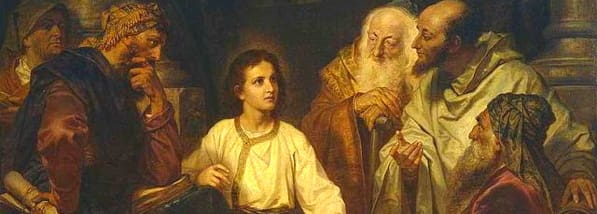
There was a print of this painting hanging in the basement of First Lutheran in Morris
I never understood the significance of it until now....


Merry Christmas!

I usually don’t start out with a story about myself, and ultimately, it’s not a story about me. It’s a story, actually, about my son, Sam. You’ll figure out why I’m telling this story in a minute. We were living in St. Paul the last few years, and two Februarys ago, Sam was almost two. We were visiting a large Methodist church watching a friend preach, and before the service, we were given a tour of this large, magnificent church. So, during the service, the three of us sat off to the side while Sam calmly played with the toys next to us. The service was nice, my friend preached a beautiful sermon, and after the service, we got a chance to congratulate him on his sermon. We had just finished talking, and noticed Sam was no longer with us after the conversation. Sam was gone.

In a large, urban Methodist church, in which we’d never been before, Sam was gone. I don’t know how many of you have misplaced children for an extended period of time before, but Tiffany and I were scared. Frightened. We knew Sam was adventurous, but after spending what seemed like an eternity checking all the offices, the sanctuary and the upstairs area, we knew Sam wouldn’t venture stairs by himself. At less than two years old. A 23-month old child wouldn’t venture down the stairs, would he? Panicked at what a young toddler could do going down strange stairs could mean… We hurried down the stairs. Down the long winding hallways of this large Methodist church, there he was. In the nursery, calmly playing with toys like nothing was wrong. There was our Sam, playing with toys he’d remembered about from the tour before. There was our Sam, doing what came naturally to him: being adventurous and playful.

So also was Jesus doing only what came naturally to him. Jesus was out and about in the world, learning from the teachers and asking questions. Where else would he be but with the people? Jesus spends the majority of his ministry out and amongst the people. Jesus wasn’t a monk locked away studying, but learning and teaching amongst the people. Jesus was the long-awaited newborn King, but he didn’t rule from a lofty throne high upon a tall tower. Jesus lived, learned, and taught with people just like him. For Jesus was entirely human. Unequivocally, 100% Human. What better way to show the humanity of Jesus than to show Jesus as a small child, disobeying his parents by staying behind.

This is the only mention of this story in all of the Gospels. Only the author of Luke wrote about Jesus’ childhood. In Mark and John, we start right away with Adult Jesus. Matthew and Luke are the only Gospels that mention the story of the Nativity. And Luke is the only Gospel that mentions Jesus as a child.

Jesus’ humanity is shown here with Jesus as a child disobeying his parents, and being a typical inquisitive child. In Mark, Jesus calls a little girl a racial slur. In John, he takes out a whip and starts tossing a whip around in anger. Heck, he even cries when his friend Lazarus dies. The Humanity of Jesus is something that is difficult to understand; difficult to grasp; difficult to figure out. Jesus is God. Jesus is Human. Jesus is both. Jesus was born of a woman, but yet is the Son of God. He’s perfectly imperfect.

Why, do you think, is it difficult for us to rationalize Jesus as a fallible human being? Why is it difficult to rationalize any important person as a fallible human being? Celebrities, as high and lofty as they seem to be, up and away from everyone, are still human. They have affairs, divorces, diseases, and even bathroom breaks. They struggle with mental health issues, addiction, and injuries. They break the law, get away with it, and get on with their lives. They fight for the same causes we do, and fight against the same causes we fight against. They stand for values that we value, or values we don’t. The veil is lifted, and suddenly, they’re more human than they originally seemed.
That goes for all of us as well. We’re all human beings. We’re all fallible. We all screw up occasionally. We all have little quirks who make us who we are. We have mental health issues, physical ailments, the general wear and tear of the body. I have to say... I’ve learned more about the human eye from talking with folks here with glaucoma and macular degeneration, than I have ever. Uffda. It’s one of those body parts we definitely take for granted. Sight is one of those senses that we take for granted until we start to lose it.

Time… Time is one of those things that we take for granted. I’m younger than some of your grandchildren, and yet the passage of time has always fascinated me. You wait and wait and wait for a day to arrive, and suddenly, before you know it, it’s here. Screaming in your face at 3 in the morning. Then it’s walking, and talking, and running, and jabbering, and endless conversations and questions. Oh the questions.

We take humanity for granted. When the realities of humanity stare us in the face, and we’re awestruck by them. It’s still Christmas, and we want the baby boy child to stay in the manger. We want that effervescent glow of Christmas to continue. For the star to still hang over us. For the shepherds to keep watch. For the angels to sing out their angelic choruses. We keep the Christmas tree up forever it seems. When I was growing up, we sometimes kept the tree up until Good Friday, or even Easter. We don’t want to let go of that feeling.

We don’t want the harsh realities of humanity to creep in. We don’t want to read on in the Gospel of Matthew that Herod slaughtered children looking for Jesus. It’s hard for us to move on from the manger in the stable. It’s hard for us to realize that the Savior born that night in Bethlehem; the long awaited Savior of the World, in the form of a child… would one day disobey his parents and lose himself amongst those in the temple. This little child wrapped in swaddling clothes and laid in a manger… would one day have a dinner with his friends. A dinner, where even his friends didn’t want to rationalize that this Messiah friend they knew, was about to go to his demise. This Emmanuel, God Incarnate, would have to face a fate destined only for the worst of criminals, the lowest of the low… That one night, the long-awaited Messiah would hang on a cross, and die… to save us all… from ourselves. That one bright and cheery morning soon thereafter, the baby boy child who was once wrapped in swaddling cloths, would shed his burial robes and rise again, to save us all. That the undeniable Grace, Love, and Mercy that comes from God, shone like the Sun that morning, breaking through the bonds of our sin to bring salvation to all.

That even despite our humanity; that even despite our brokenness; our fear and anxieties… Jesus the Christ died for us and saves us all. This Truth, this Good News - is hard for us to grapple with. That the realities of sin and death are nothing for the power of God’s Love. That the realities of humanity, and the brokenness of this world… Are right up God’s alley. For God was made human through the life of Jesus Christ. The Emmanuel. God understands the brokenness, and is right there with us in the thick of it. God is with us in the manger, in the temple, at the Last Supper, at the Cross, and after the grave. God’s humanity springs forth and shows up in the darkest of places. Even when temporarily misplacing a child, when all the fears rush forth in your head of all the darkest of scenarios… God is with us. God is with you.

So the end of the year is fast approaching. Another year, another leap year for that matter... is fast upon us. Christmas is still with us for a  few more days, and you have my permission to leave the tree up for as long as you want. As we look back on the year here at Zion, in our community, in our state, nation and world… think of ways God was present with you and your life. Think of the times in which God felt distant, like God was missing somewhere else for an extended period of time… You know where God was, is, and will be. Right where God should be. God is with you. No matter what.

Amen.

Monday, December 14, 2015

What Then Should we Do?: Sermon on Luke 3:7-18

This is my sermon for Lucia Sunday at Zion Lutheran of Amor


Gospel: Luke 3:7-18

Grace and Peace to you from God our Creator, and from Jesus the coming Messiah, Amen

“What then should we do?” Take what you have too much of, and give it to those who don’t. Take the abundance, and provide to the scarcity. For the Son of God is coming to level the playing field. The Messiah, the Savior of the World; is coming to turn the world on it’s head. The mighty shall be made low. The wheat will be separated from the chaff; the fruitless tree will be cut down. Jesus the Christ is coming, and he will save us all from ourselves.

From our selfishness, our bigotry, our pain, our sorrow, our broken selves. John the Baptizer stands there in the wilderness; the Good News of Jesus Christ having bypassed all the rulers of the land, even the high priests in the temples. The Good News came to a wild man out in the Wilderness. On the banks of the river Jordan, the Good News came to John the Baptizer. A man of the common folk. John the Baptizer, stands there in the wilderness, and proclaims the Good News. One who is related to the Messiah, but is not the Messiah. John the Baptizer calls out to the people to give of their plenty to those who have none. All are equal in Christ Jesus,  but for those living on the bottom of the equation, life's not so equal.

Of the 58,000 or so residents residing Otter Tail County, around 12% of the county’s residents live at or below the poverty line. While this county has a higher poverty rate than the state average of 11%, we have a low unemployment rate of only 3%. Minnesota’s unemployment rate and poverty rates, are both in the lowest 10 of the country. Our neighbor, North Dakota has the lowest unemployment rate at 2.8%.

So, we have jobs. We have people working those jobs, and yet we have a higher than state average poverty rate. There’s a disconnect there, and I’m not entirely sure what the disconnect means. Sure, we have seasonal employment, but I don’t think that’s the nature of the discrepancy. This conversation has been going on in my head for some time now, but the idea is the same - poverty is a reality that needs to be addressed, and everyone knows it. We’re taught, whether implicitly or explicitly, on purpose or on accident - from a young age that there are entire groups of people that we ignore or discriminate against.

Whether by race, creed, religion, wealth, gender identity or sexual orientation - we’re  taught from a young age that there are people different from us, and they are to be feared. Each generation has their token group, but otherness has scared us from the beginning of humanity. It is this otherness that keeps us at bay. Away from the knowledge of the other. So we keep them at arm’s length. Whether symbolically or proclaiming to the entire nation that an entire group of people is not welcome in our country… Otherness scares us.

While this theme of otherness being feared has been a constant since the dawn of humanity - the overarching theme of God telling us to get over ourselves has also been there. From the story of Cain and Abel - to Pharaoh fearing the Israelites to Moses sending the scouts into the Promised Land, only for the scouts to feel like grasshoppers to the people already residing there - to the story of Christmas and Herod fearing children… Otherness has been feared and God tells us to get over it. To embrace difference. To love one’s neighbor, just as God loves us. According to Jesus, that is the greatest commandment.

And yet, we persist. We keep the world’s harsh realities at bay, because we don’t want to disturb the life we have. We don’t want to know. We bury our heads in the sand and we hide. Maybe we’ll throw a dollar or two at it and hope that it goes away. Maybe we’ll close our church doors, and only allow certain people to come worship; to come to the table; to sit with us. We fear the unknown. The poet, Ralph Waldo Emerson postulated that “What we fear of doing most is usually what we most need to do.”

I’ve told this story a couple times in different places, but in January I sat across the table from Senator John Marty, the son of a prominent Lutheran scholar and brother of a Lutheran pastor in Iowa. He is a champion of fighting for impoverished Minnesotans, and on that day in January, told me the story of the 2006 legislative session. The Minnesota Legislature passed a Legislative Action to End Poverty by 2020 that year. That wasn’t the big ticket item in the legislature that year. At the same time, the legislature was engaged in talks about building Target Field, where the Minnesota Twins play. In one of the discussions, Senator John Marty stood up and plainly asked why we had to wait until 2020 to end poverty, when we could just ask the owners of the Minnesota Twins to end it for us right then and now… Crickets. The discussion continued without even getting that a thought.

The answers are staring us in the face. God calls us to love one another, and yet, we’d rather talk about why the other isn’t deserving of love. God calls us to clothe and feed the impoverished. We’d rather talk about how hard it would be to do anything about poverty. God calls us to welcome our neighbor. We’d rather talk about why they want to harm us.

This country was founded on welcoming the neighbor. My ancestors, our ancestors, were all welcomed here at one point. We have different ancestors from different parts of the world, and yet, here we are.

Here we are celebrating an Italian Catholic saint from 4th century Sicily because it’s a Swedish Lutheran tradition and most of the congregation is more Norwegian than anything… Talk about multiculturalism. Think about that: Here we are, in the middle of the United States of America, celebrating the life and service of a young girl from 4th century Sicily, more than 1700 years after she died. Saint Lucy, or Santa Lucia, or Loosha as we refer to her; lived in Syracuse in the late 3rd century. According to legend, she refused to marry a pagan, as she was Christian and didn’t want a life of indentured servitude to her pagan husband, and gave all of her dowry to the poor. A girl of noble birth, of wealth and status; gave most of what she had to serve the poor. She was martyred in 304 CE. Then, as the years went on, her story struck a chord with the hungry Swedes in Varmland Sweden, and since the 16th century, Lutheran Swedes have celebrated the arrival of a young girl providing food for the hungry. This day, the 13th, was once considered the darkest night of the year, and the image of a young girl with light around her head bringing food to the hungry - bringing light to their darkness - became a beautiful symbol that Swedish Lutherans held onto.

So John the Baptizer stood there on the banks of the Jordan, proclaiming the good news that the Messiah was coming, and he was coming to level the playing field. The Messiah was the light in the darkness. John told the crowds of people to give from their plenty to feed the less fortunate. Lucia took from her dowry and fed the hungry. Bringing light into the darkness.

Jesus is the Light that shines through the darkness. Through the fire and the flames we carry on. Jesus, this Light of the World, that shines for all of us - was born in the lowest of low places, and died on the highest tree around. Jesus, the Savior of the World, died and rose again, to save us all, from ourselves. From our bigotry, our selfishness, our hatred, our ignorance, our darkness, our shame. Jesus the Christ saves us all, by the Grace of God. This unimaginable Grace, Love and Mercy that does not, will not, and cannot end.

That is the Good News that John was shouting in the wilderness. That is the Good News that we each proclaim each day. There is so much darkness in the world, but Jesus shines through it. God’s Light shines through the darkness of this world, and shows us the way. Jesus is the Way, the Truth, and the Life. We respond to this Grace, Love, and Mercy by doing exactly as God calls us to do - to welcome our neighbor with open arms. To love our neighbor as God loves us. To clothe and feed the impoverished, as God has clothed and fed us. God calls us for a life of service to our fellow human being. It’s in the music of the season. In a few weeks, we give of ourselves to our family, our friends, and our neighbors. We continue a tradition of providing joy in the form of Christmas gifts. We continue a tradition of providing light where there is darkness. Abundance where there is scarcity.

What then should we do? Love our neighbor. Feed the hungry. Clothe the naked. Welcome them in with open arms. Proclaim the Good News of the awaited Messiah.

Amen.