Monday, May 9, 2016

Unity and Identity: Sermon on John 17:20-26

Sermon for the last Sunday in the Easter season. First Sunday of two services.

Gospel: John 17:20-26


Grace and Peace to you from God our Creator, and from our Lord and Savior, Jesus the Christ, Amen

“Why aren’t you Christian?”, someone says to me. “I’m Lutheran,” I say… and I of course know I’m Christian… but for some folks, it’s not that simple. For some folks, the idea of a denomination is silly. Why would a religion divide itself on lines that don’t need division? Well, why do we baptize babies? Why do we commune every baptized Christian instead of only members of our church? Why do we have an empty cross instead of Jesus up on there? Why do we have an altar up here? Because there are lines in the sand that need to be made to distinguish ourselves. To identify ourselves. As it says in the United States’ Declaration of Independence, “We hold these truths to be self-evident…” We hold these realities as identifying principles. We draw these lines because this is how we differentiate ourselves, and claim our uniqueness. We are Lutheran. We are members and participants in a worship of a congregation which claims itself as a member of the Evangelical Lutheran Church of America. For some people, none of that says the word Christian. “Why aren’t you just Christian?”, they ask. “I am”... I say… but what does that really mean?

People may not know what the usefulness of denominations is. In that case, I like to have them imagine a tree, like a family tree. As we are all part of the same Christian family tree. Then, I like to pull out a piece of paper, draw a bunch of lines on it, and point out that all these other denominations are part of the same tree that says Christian. We all hold certain truths to be self-evident. Those creeds we say every Sunday? Those are ways in which we claim our Christian identity. The wine and bread we consume every couple Sundays? Those are ways in which we claim our Christian identity. The practice of pouring water on babies and other folks’ heads? Those are ways in which we claim our Christian identity… That cross behind us… That is our cross to bear. Our reminder of the resurrection. Of the promise. Of the hope of a new life to come.

Right before the passion narrative, Jesus is praying with his disciples for the life of the church - past, present, and future. That the Church in which is about to form because of his death and resurrection and God’s grace… will be unified. But, then in the course of human history is divided, but in essence, still unified. First off though, there it is, right there. What Jesus is doing right there in the text - that is something that holds all Christians together. Christians pray. This prayer echoes Jesus’ earlier prayer to his father, the prayer we call the Lord’s Prayer. Christians pray the Lord’s prayer in many forms, many languages. Of all the churches in all the world… Christians pray. Christians celebrate life together in worship and service to others. Christians remember the life of their Messiah. Christians pray.

Prayer is a powerful thing. Prayer is a unifier in the room, when all other points of unity are out the window, prayer brings people together. Now, there are some denominations that don’t allow others to pray for them. Some don’t allow women to pray. But usually, prayer is a unifier. In our fellowship hall, there are old Swedish Psalmboks. Prayer unites us in the present, all around the world, in different languages and in different contexts. Prayer unites us with our ancestors. Prayers are throughout the bible, not only in the New Testament.

For all of human history, we have had a need to thank the Creator, ask for presence from the Creator, and pray for hope from the Creator. For all of human history, we have known there are things beyond our comprehension, beyond our skillset, beyond our knowledge, that only the Creator of the universe can possibly understand or deal with. The need to ‘Let Go, and Let God…’ has been, and will continue to be a constant need for humanity. Prayer unites us with the past, present, and future Church.

So, what does the future Church, look like? As I stated in the beginning of this sermon, some people have a hard time recognizing that any name other than Christian… can be Christian. Any denomination, division, or way of expressing ourselves… other than the word, Christian… is a denomination, division and way of expressing ourselves… too far.

For instance, I’m a human being, as much as you and every other human being on this planet, is exactly that. A human being. We can all unite on the fact of our existence. That we have blood running through our veins, with a heart or other medical device pumping that blood… and a brain on top of our shoulders. We all experience humanity differently, and yet, we are all indeed, human. We have different words that describe us, different ways of expressing ourselves. We own these words, know these words, and gain power from these words.

Likewise, I love music. I play guitar, occasionally piano (by ear, but after a while… it starts to hurt) and I can rightfully call myself a musician. I have musicality. It is a God-given talent that I can share by using my God-given voice or a guitar, or maybe other instruments. I love music. This love is part of my identity, my existence. Singing or playing guitar… is a way of expressing that love. That part of my identity. By expressing that part of my identity, I can hold power by calling myself a musician. I gain acceptance in some circles. Other people may enjoy my presence as a musician, one of the expressions of all that make me a human being. I do not stop being a human being by calling myself a musician. I am both. I can be both. You can too. All of us have words that describe who we are as human beings. That make us unique. That help us express that very holy expression of God-given existence. And all of us are necessary as different parts of the body of Christ.

Some of us have professions - words that ‘profess’ our jobs, our vocations, our callings as human beings. When meeting people for the first time, usually the second piece of information, after the first words of our expression - our names - usually the second piece is what we do. Well, we do lots of things. We live, we breathe, we work, or we don’t work. What people mean when they ask what you do - is what your profession is. What do you profess as a reason for existing on this planet we call home?

Some of you are celebrating Mother’s Day today, while others may celebrate Father’s Day in a month. Some of you are or were teachers, lawyers, farmers, bankers… whatever words we use to describe ourselves, we are all united in Christ, by Christ’s love. Whether we are musicians, or not. Whatever words you use to describe yourself, you are still you. In the words of Dr. Seuss, “Today you are You, that is truer than true. There is no one alive who is Youer than you.”

We use words that help describe how we interact in this world with each other. And, for some on this planet, we use the word Christian. We profess, as Christians, that we know of a man who lived a long time ago, named Jesus of Nazareth. Jesus, the Son of God and Son of Humanity… lived on this earth - preached, taught, helped, healed, fed, served, walked, suffered, died… and rose again. Christians across the globe can agree with all of those core realities. This Jesus, the Christ, the Messiah - died, and rose again three days later, to save us all, from ourselves. That man that lived so long ago - died for you and me, to save us all from ourselves through the Grace, Love, and Mercy of God…

We can profess, as Lutherans - one of those words we use to describe ourselves - That there is a God that loves you, me, and everyone. God loves us, and there is absolutely nothing that we can ever do to stop God from loving us. We can profess as Lutherans that the Word is a living Word - one that was inspired from God, and informs our daily lives to this day, and for the world to come.

Jesus was praying with his disciples before his death that the world he lived in, the Church that was to be formed with him, and the words of unity in which he spoke - would hold true for all of time. That all of us, as human beings, as Christians, could come together under the truth of his death and resurrection. There may be points of disagreements between denominations, or even with people inside denominations, or even the same congregation, or even families. There may be lines that divide us, and ultimately, that’s okay. We have words that describe who we are, how we feel about things, that allow us to interact with the world. Words give power to people, movements, ideas. Jesus the Christ is the Savior of the world, and we describe our profession of that faith in him as Christian. We are Christians. Whatever other word you use to describe your faith, does not discount the ability that you believe in the truth of God’s son crucified and risen.

It is this truth we profess as Christians, and it is this truth that Jesus is asking us to unite around. For we are all in one mission. To show and live out the grace, love, and mercy of God through Christ. That is our calling as Christians. That is our cross to bear. That is how we identify. That is how we must live out our lives, in service to God and to one another. In the words of Martin Luther, This is most certainly true. Amen.

Monday, April 4, 2016

There's Something to be Said for that Locked Door: Sermon on John 20:19-31


Grace and Peace to you from God our Creator, and from our Lord and Savior Jesus the Christ, Amen

“Marley was dead: to begin with. There is no doubt whatever about that. The register of his burial was signed by the clergyman, the clerk, the undertaker, and the chief mourner.  Scrooge signed it: and Scrooge's name was good upon 'Change, for anything he chose to put his hand to.  Old Marley was as dead as a door-nail.
Mind!  I don't mean to say that I know, of my own knowledge, what there is particularly dead about a door-nail.  I might have been inclined, myself, to regard a coffin-nail as the deadest piece of ironmongery in the trade.  But the wisdom of our ancestors is in the simile; and my unhallowed hands shall not disturb it, or the Country's done for.  You will therefore permit me to repeat, emphatically, that Marley was as dead as a door-nail.”

That’s how Charles Dickens’ A Christmas Story starts. Dickens writes that to begin the story, so you know, without a doubt, that Marley was dead. As a door-nail. Allow me to then remind you that just like Marley was dead, Jesus was dead.

The disciples saw him die. His mother watched him die. A roman soldier watched him die, and because of his death, the soldier came to believe. Jesus was dead. As a door-nail. The disciples knew this to be true, and fearing for their own lives, they hid in the upper room, where they shared their last meal together.

So, knowing that Jesus was dead… knowing that the door was locked… There was Jesus, staring at them. From beyond the grave, through the locked door… There was Jesus. No knocking, no ding-dong ditching, no doorbell, heck, not even broken door-nails… But a living, breathing Messiah in their midst.

The disciples, fearing the worst from anyone who would come through that door… knowing that their friend was dead, their Messiah… came in through the door and said, Peace be with you. Don’t worry. There is nothing to fear. See, even my hands and side have holes in them. I’m the real deal.

He gave them peace again, then breathed the Holy Spirit on them. But someone was late getting to the party. Thomas, dear Thomas… didn’t believe the disciples when he finally arrived. No way could Jesus appear again. So, a week later, he did exactly that. Thomas stuck his fingers in the holes in Jesus, and cried out, “My Lord and my God”...

Jesus replied, “Blessed are those who have not seen, and yet have come to believe…”
We have a tradition in the Lutheran church, and we continued in that tradition today. We generally baptize infants. Infants, with no capacity to understand the death and resurrection and the saving grace of God… are welcomed into God’s family, called and named children of God. The parents and sponsors make promises on behalf of the child to raise them in the Christian faith, so that may come to believe. And being a pastor’s kid… Who knows what’ll happen.

The disciples hid in fear of their lives… Fear that if they were caught, having hung around with the man who did all the amazing things, they might lose their lives.

I think we still do that. We still hide away, whether behind locked doors, or in homes far away from the dangerous places, so as to avoid the danger. We avoid the dark places of life, because we fear it.

And what’s not to fear? We watch the news, and we have to turn away because of all the horrible things that happen to people every day. We fear what’s out there. We fear who’s out there. We fear the direction our country is headed into. Fear - is a powerful emotion.

Jesus comes through the locked door and says, “Peace be with you…” A black man, Jamar Clark was shot and killed by police last fall in Minneapolis, and the courts found no fault with the police officers who shot him… and the people rally to protest. The black community fears for their lives because of institutional and systemic racism.

We fear the other. We fear the unknown. We fear the truth. There are legislative bills across the country, including in Minnesota, trying to outlaw the use of bathrooms for people who identify as transgender, because the lawmakers writing these bills fear an unknown fear. They fear incidents that have never happened before… because they need to fear something. Never mind that transgender folks now have to fear for their lives if they wish to use a restroom in these states that actually pass these bills.

Jesus comes through the locked door and says, “Peace be with you…” There’s something to be said for that locked door. Both times Jesus appears to the disciples, the doors are closed and locked. Jesus transcends the barrier between the disciples and the real world. Jesus comes in, and tells the disciples to have peace, show peace, and give peace to those who sin. Peace in forgiving the sins of any and all.

When we baptize, we believe that the sin of the world, the sin that we all are born with, the sin that all of us deal with, is washed away in the waters of baptism. God forgives us of all of our sins. In the bread and wine in which we share, communally, we are reminded of the grace that God freely bestows on all of us. The grace that saves us all from ourselves. The grace of God that was poured out from God in Jesus’ death on the cross, and the resurrection of our Savior three days later… Grace. Forgiveness. Love. Hope. Peace.

Jesus came through the locked door and said, “Peace be with you…”

There was a box outside my office during Lent, in which Zion was asked to find the darkness in this community and shine a light on it. Find some goodness that we can spread. Find something to do about the darkness that we see. Find the voices that we’re missing.

Three responded, which is better than no responses at all. One was someone felt a ‘lack of respect’. Another pointed out the need to focus on the population of differently-abled folks that have a 30% rate of poverty, three times the state’s average of the general population. The last response I received was a suggestion that in serving our Battle Lake neighbors, rather than serving Lenten soup suppers ourselves, we look to serving all of Battle Lake with suppers that welcome the rest of the community, other than our members. The note adds that a missing voice in this congregation… is that of the poor. The people with lower incomes. The message points out that the income disparity in this county is a significant factor, certainly in the vicinity of Zion.

            Lastly, the note adds that we talk about working with the poor, but do very little with or for them. That the people that populate our pews, are mostly those who wouldn’t consider themselves poor.

            Of the three responses, all of which are equally valid, the last one kinda ties them all together. Serving our neighbor shows respect for those we serve, and that includes our differently-abled and poverty-stricken neighbors. When called upon, Zion has served our neighbors beautifully, and you can see that in the response to Mission Jamaica and the Jamaican family that recently relocated to Fargo. Zion responds and serves our neighbor when called upon. And we do a mighty fine job of it.

            And, believe it or not, I believe that is because Zion turns the fear, and turns it on itself. When Wadena had it’s tornado, we feared for the wellbeing of our neighbors, and Zion stepped in and helped. When Pastor Jim started taking trips with Mission Jamaica, Zion members feared for the wellbeing of the Jamaicans they served, and made the area a better place for those they served. When the family from Jamaica relocated to Fargo in need of better employment, Zion feared they would be without furniture and furnishings, so Zion responded well, and the family had a completely furnished apartment to come home to. Zion does well when we see the fear, name the fear, and respond to it with the generosity and overflowing love we have for each other.

            When we fear and do nothing, we stay behind locked doors waiting for the fear to go away on it’s own. When we fear and name that fear, grasp that fear and work to conquer that fear together, so there is nothing left to fear… Jesus comes in through the locked doors, beyond what we feel is safe… and says, “Peace be with you…”.

            When we go beyond the locked doors, when we embrace the fear, conquer it, we make the world a better place, just as Ebenezer Scrooge did in A Christmas Carol. Fear is a powerful emotion, someone said it’s the mind-killer. Someone said that fear itself… is the only thing we need to fear.

            If we let our lives be run by fear, we won’t do anything. However, if we conquer our fears, let Jesus break through our locked doors of our own potential, then maybe Peace will truly be with us all. Maybe the Peace of God, which passes all understanding, that is with us in our baptism, will be with us until the end. Imagine the peace infants feel, not knowing anything to fear except the lack of their parents existence when they leave the room…


            May Jesus walk through our locked doors, open our minds to new possibilities, and help us all to conquer our fears to live with each other in love, as God names us all, in the waters of our baptisms, calls us God’s own. Amen. 

Friday, March 25, 2016

Maundy Thursday Sermon: John 13:1-17, 31b-35


Grace and Peace to you from God our Creator, and from our Lord and Savior, Jesus the Christ, Amen

Love. It’s about Love. It’s always been about love. It will always be about love. Jesus sits down and has a meal with his friends. His last meal, with his friends. He knew where he was going. He knew what he was doing. He got up, during the meal, and washed the feet of his friends. Paul references a famous hymn in his letter to the Phillipians. He says that Jesus humbled himself, in the form of a slave… On that night, Jesus humbled himself in the form of a slave and washed his friends’ feet, all of them, even the feet of the one who was to betray him. Even Judas. And, even if Peter protested, even if Peter always protested.

The man was about to die. He knew he was on his way to be killed, the man who was to betray him was in the room with him, eating with them, and yet… Jesus still washed his feet. Washing feet was reserved for the slaves, for the people lower than low to wash the feet of the houseguests, because they were all walking around in sandals, and one’s feet would surely need a good washing.

Jesus, representing the lowest of the low, showing the disciples what humility looks like, serves his friends with food, and then service. Jesus shows them what love is. Then he tells the disciples a New Commandment - that you LOVE one another, as Jesus, as God - loves you. By showing your love for one another… that is how people will know that we are of Christ.

Like the old camp song goes… And they’ll know we are Christians by our love, by our love, yes they’ll know we are Christians by our love… 

But how do we show this love? A man who lived his life preaching, teaching, feeding and healing all who crossed his path, showed us how to love all who need love the most. The forgotten ones. The lowest of the low. The beaten and downtrodden.

Love is coming down to their level, getting in the muck, in the fogginess, in the messiness of life and showing others what love is. It’s getting down on your hands and knees and humbling yourself before God, doing the work that no one else wants to do. It’s being there, right alongside them in their hurt, their pain, their suffering, and dwelling among them. Taking a walk in their shoes.

For Lent, I’ve asked the people of Zion to give me suggestions as to where we see the darkness of this community, and where the Light of Christ can be shown to all of the people in the shadows. The missing voices in our community. I’ve asked Zion to confront the darkness, and shine a light on the problems we see in our community, so that as a congregation and community, we could bring some hope and love to this community.

I’ll share the responses to those questions after Sunday, and you can certainly add more to the box until then. It’s still Lent, after all.

Love is shown best, when we look beyond whatever wrong we feel has been done. Love is shown best when we look at each other as God sees us: as God’s children, equally deserving of love as everyone else, for all of us are children of the Holy One. All of us are loved, and can show love, and are called to love one another, as Christ, as God… loves us.

Love is when you acknowledge the hurt, the pain and suffering of your neighbor, and talk with them, be with them, dwell with them. Even if they don’t look like you, talk like you, walk like you, love like you, believe like you… You are called to love your neighbor as yourself. Love your neighbor as God loves you.

        God’s love is unconditional. God’s love looks beyond what people think is wrong based on what they read or hear. God’s love looks beyond the barriers people put on each other. God loves you. Period. Not only is God’s love unconditional; God’s love is irrevocable. There is absolutely nothing you can ever do to ever cause God to stop loving you. That is what divine love looks like.

Now, we’re not God. We’re not perfect beings. We sin. We harm. We take for granted our own privilege. We cannot possibly give selfless love to everyone we meet. We cannot possibly show our love to everyone we meet. We are merely human.

But - if we hold on to the truth, that God loves us, no matter what. That Christ got on his hands and knees to show love to his friends, and even the man who betrayed him… Selfless love is an aspirational thought that we can hold onto, but knowing that we will always fall short to the glory of God. We will always fall short, and sinning is truly part of our human nature.

And that, don’t you see? That is the ultimate expression of God’s love. That knowing that we’re going to sin; knowing that we keep on sinning; knowing that even in our quest to be better people, we sin… Knowing that as imperfect as we are…

Christ got on his hands and knees, and washed the feet of his friends. Christ was betrayed, beaten, and nailed to a cross… for you. For all of you. For all of us. That beyond what we will ever do, ever say, or ever fail to do or say… Christ was nailed to that cross… for you.

Love. It’s about love. It’s always been about love. From the moment time began until time runs out… From Moses and the Israelites being led out of Egypt to the Promised Land to Jesus hanging on the cross… It’s always been about love.

Remember the love that Christ has shown you. Remember your Savior who died for you. Remember that Christ, when you see people not being welcomed, loved for who they are. Who they love. What they look like. That person not being welcomed, loved, embraced for who they are... Remember that they have that same God that loves them too. That same Christ who went out of his way to show his love for the outcast… That same Christ that died for you, died for them too.

Every person has the same right to the same inalienable rights that you possess, based solely on God’s love for them. For you. For all.

In a world divided by words of hatred and bigotry… In a world rocked by yet another terrorist attack in a set of terrorist attacks across the globe… Love. It’s about love. It’s always been about love.

It’s about seeing the love of Christ poured out for all, in his death on the cross, in anticipation of our Easter to come… It was love that Christ shared with his friends that night. Love that Christ shared with the world on the next night. Love that awaits us all, through the unwinnable, unattainable, unshakable grace poured out for us all… to save us all from ourselves.

Amen.

Monday, March 21, 2016

Palm Sunday Sermon 2016

Here is my sermon from yesterday, Palm Sunday. We celebrated Palm Sunday only, and I'm preaching Maundy Thursday as well.

Gospel: Luke 19:28-40


Blessed is the king who comes in the name of the Lord! Peace in heaven, and glory in the highest heaven! 

Grace and Peace to you from God our Creator, and from our Lord and Savior, Jesus the Christ
Amen

It’s Palm Sunday! The beginning of Holy Week. The culmination of what was and what is to come. It’s the final transition, the final turning point as we tread with Jesus, down from the mountain, down through the 40 days of wandering, and into the final push to Jerusalem. And what a fine day it was. The Pharisees told Jesus to turn down the volume. Don’t let the disciples call you “king”. Don’t march in here, looking all kingly-like… It’s almost Passover. It’s not a time to celebrate like this. It’s going to make a big mess, you celebrating and parading like this. You’re wrecking all of those coats… Or palms… or whatever… 

Jesus says, even if they were quiet… the stones would still be singing. Even if the disciples stopped, the crowd quit yelling and celebrating, even if all the coats weren’t on the ground and people stopped shouting… The stones would still be shouting. 

For me, even more than the image of Jesus riding on a colt, fulfilling Zechariah’s prophecy, into Jerusalem and on to his eventual destination… The image of a silent crowd and the stones shouting… that’s a powerful image to me. 

Maybe it’s my sci-fi upbringing, maybe it’s odd, and I like odd things… It’s out of place in the scheme of the Gospels. All four Gospels have Jesus’ entry into Jerusalem, but only John mentions palms. The other three, including today’s version from Luke - say coats were laid at Jesus’ feet. Yet, we call this Palm Sunday. This image of the stones shouting, only appears in the Gospel of Luke. 
We’ve heard this story before. We know that Jesus goes into Jerusalem in a crowd of joy, but by the end of the week, it’s a different story. We’ll leave the different story until later this week, but I want to point out that this story is not unknown to us. 

From Jesus parading into Jerusalem, to football players entering the field, to political leaders entering a stadium full of people… those that do great things, win the heart of the people around them. And to each their own, and however people measure greatness, their hero is welcomed into the arena with raucous applause and adoration. The story of welcoming the hero, not knowing how the week will end, or the game will end, or the campaign will end, or the term will end… We’ve seen it played out before. 

We each have our heroes. Each of us have people in mind when I say the word, hero. Perhaps it’s Superman, or Wonder Woman, or Martin Luther King Jr., or Jane Goodall, or Rosa Parks, or Beyonce, or the guy down the street. Maybe it’s one of the political candidates, or the current president. Whoever it is, we each have our heroes. We listen to them, we follow them, we sometimes even want to be them. We can be heroes, just for one day, right?

They walk into an arena, and the crowd goes wild. You cheer, you get giddy, you hope to take a picture… Maybe even with them. The noise is above normal levels. You get caught up in the moment. The thrill of seeing your hero walk in… the overwhelming joy is flowing… 

So the Pharisees tell Jesus to turn down the volume. Quit making so much noise. Quit making a big deal out of this. Jesus tells them, that even if they stopped… Even if the disciples all quieted down, and the celebrations stopped… The stones would still be shouting. No matter what you think you can do, the story is already in motion. The movement, the revolution, the love… is already flowing throughout. The message of God’s love for all… was already made known. Jesus knew his time on earth was limited, and told his disciples a few times that this was going to happen. Even if the savior of the world was going to die… This was bigger than him. This was bigger than the disciples. Even the stones would be shouting. 

Put a candle to a piece of metal, and soon enough, the metal will get hot. Take the candle away, and the metal will retain some of the heat. Heat food on the stove, take the food off, and put it on your plate. That food will still be hot. The energy of the heat produced is transferred from the heat source, to the object. Sound is transferred from the subject delivering the sound, to a receiving subject. The sound of my voice is transferring from my vocal chords, through my mouth, and into your ears. Through the technological advances we’ve made over the last 200 years, sound can be recorded and played again. On LPs, 45’s, records, 8-tracks, cassette tapes, CDs, Mp3s and so on… Sound can be heard, transferred, recorded, and transferred again. 

The things we do, or say… can have a lasting impression on people, and sometimes, the things we do or say can be recorded and heard again. Tiffany’s grandparents used to argue, and while they were arguing, one would record the other to prove what they were saying, to use as evidence in a later argument. 

Music is recorded, and can make lasting impressions on people. Movies and television shows are recorded, and definitely make lasting impressions on people. My office is filled with evidence of this. One of my favorite shows is Star Trek, and in so many ways, Star Trek has made a lasting impression on people, science and so on. Seriously, part of the reason we have cellphones and personal computers - is because of Star Trek. The first space shuttle that was used to test the technology of reusable space vehicles… was named the Enterprise, which is directly connected with the starship’s name on Star Trek. That tradition is continued today, when just a couple weeks ago, scientists at NASA developed a vision of what a vehicle that could travel faster than light-speed could look like… and they named it the IXS Enterprise.

The things we do or say… may have lasting impressions on people. To where, quite figuratively, even stones really do keep shouting. When the leaders of the world promote a nature of respect; when leaders promote kindness, and visions of a brighter future… When leaders of the world reflect the nature of Christ, of all of their heroes, that they look up to… Progress can be made. Progress between human being and human being, where we look upon each other as God looks at us - as God’s children, each uniquely created and divinely loved. Each of us deserving of respect, kindness, and love. Each of us knowing that the other person looking at us, is equally deserving of respect, kindness, and love. 

Jesus, walking into Jerusalem, knowing his ultimate demise is soon upon him, is accosted by the Pharisees to quiet the disciples down. He tells them that this is beyond him or the disciples, and what’s done is done. Jesus knows that he will soon face the cross, and face his purpose. All of his teaching, healing, demon-expelling, feeding, walking and talking ministry… comes down to this. The ultimate expression of grace, love, and mercy, poured out for all of us. His impending death weighs heavy on his mind, but he knows that it’s beyond him. His purpose is beyond him. His life… His death… It’s all for a greater purpose, and even inanimate objects know it. This thing that was started long before there was a manger… is coming to an abrupt end soon. And this end… is only the beginning. 

         This end is only the beginning of better things to come. So this march into Jerusalem, over coats or palm branches is the beginning of the end for Jesus, but only the start to a greater beginning for all of God’s children. For all of us. 

        When our heroes, our leaders point to a better place, spreading words of love, respect and kindness - there is hope for all of us to have a better life on this earth. There is hope that the life we lead will be a better life lived, for all of us. So when the demagogues of this world show that something beyond love, kindness and respect are a way of leading… When people stand in front of large crowds professing hatred, appealing to the darker sides of humanity… The darker sides of our history can be repeated. 

        We must act on love for our fellow members of humanity, not hate. Love for our neighbor, love for our God… This message will continue on Thursday, but let me leave you with this… 
Our world, our history is filled with images of Good vs. Evil, Light vs. Darkness, Love vs. Hate… There’s usually one final act, one last moment when the protagonist, the good guys swoop in and save the day. In our Christian story, that final act comes this coming weekend. Growing up, most of you had the story of the Allies saving the day in Berlin and Hiroshima and Nagasaki. A very present reality of good vs. evil. Very clear representation. The first World War was a good example of that as well, but if we go further in history, to the Civil War… Here in the North, we have a different story of that war than the people in the South do. Or before that even, with the Revolutionary War… 
But as we look back on history, the divisions between good and evil blur a little bit. Britain is our best ally in the world. The southern United States are just as American as we are. The United States imprisoned it’s own citizens during the second World War. Korea and Vietnam weren’t so cut and dry for the American people, the Gulf War and the tours in Iraq and Afghanistan, and now ISIS… 
The lines between good and evil, light and darkness… have been blurred. You can see what the impact of this blurring of lines has done to popular culture. The two new superhero movies this summer, both Batman v Superman and Captain America: Civil War, pit groups of superheroes against each other, Both groups are supposed to be the ‘good guys’... The Hunger Games and even the newest Star Wars movie… The lines between what was right and wrong in the world aren’t so clean cut anymore. 

        And we’re uncomfortable with that. The story of our hero marching into Jerusalem, knowing his fate and telling the Pharisees that nothing can stop the love from spreading… We have to cling to that. The Good News of Jesus Christ is the ultimate story of Good conquering Evil, and according to Verl this past Tuesday, it’s the single greatest thing to ever happen in history. 

When so much in this world tugs on us, divides us, and the lines between what is right and wrong blur… The chaos we feel inside us is our own mind trying to wrap our heads around being okay with the grey. Being okay with how other people live, love, look, act, believe…  Somewhere in all the chaos, in all the grey, in all the messiness of life… We have to hold on to the message of Jesus Christ - that God loves you. God loves you so much, that God’s son was sent on in through the gates of Jerusalem, to conquer Evil for your Goodness. Your uniqueness. Your embodiment of God’s love. 

If, in all the blurriness of life, we seek the love, and disregard what we think is right or wrong, we can remember the love of God, and look forward to the culmination of Holy Week with an open mind, and a willingness to see each other for who we are. When we celebrate this weekend, remember who all of this is for. If you need a reminder, I’ll see you on Thursday. 
Amen. 


Monday, February 29, 2016

Repent! Sermon on Luke 13:1-9

Grace and Peace to you from God our Creator, and from our Lord and Savior Jesus the Christ
Amen

My sermon for Feb. 28, 2016 - Lent 3

Gospel: Luke 13:1-9


         Repent. Repentance. As defined by Rolf Jacobson in his book Crazy Talk: A Not-So-Stuffy Dictionary of Theological Terms, Repentance is “The change in a person’s behavior that follows recognition of having sinned and immediately precedes further sinning.”
     
         I have a good friend, actually the best man at our wedding, who was raised in a conservative anabaptist-leaning faith. According to the church elders, in order to become a member of this church; in order to be baptized… one has to repent of all their sins before submitting to a believer’s baptism. Here in the ELCA, we usually baptize infants, but occasionally we do baptize adults. In the case of infants, we have the parents and sponsors promise that they renounce the forces of evil, likewise when they’re adults, we ask them the same question. But there is no literal repentance involved. In my good friend’s church, he had to pretty much tell everyone he ever had contact with, as far as he could remember, that he was repenting for his sins, any wrongdoing he had ever done to them.
And that, is how we became the best of friends. I had hung out with him a few times, but it was sitting in the back corner of 7th grade biology together… when he asked for my forgiveness. I was confused, as I wasn’t sure he’d ever done anything to me, but he asked for my forgiveness. He explained his church and his quest to find repentance from everyone… and rather than saying sure and moving on… I wanted to know more.

        Why was he seeking repentance… what biblical reasoning had he for it… What was it about his church that was different than mine? So, every day in science class, and afterward, we’d have discussions on religion. He had a different faith than mine, but it didn’t matter. I wanted to know more. I showed him what I could about my understanding of Lutheranism, and he told me about his church. And ever since, he’s been my right hand man.

          Jesus tells the people that bad recent events have killed many folks who didn’t repent, and thus, perished in the disasters. Repent, or perish like the rest of them. Then he tells a parable about a fig tree that doesn’t bear fruit. The fig tree had been barren for a couple years, and rather than cut down the tree after a couple years… the gardener tells the owner to leave it for one more year. Then we’ll see what happens.

         Do something different, or be cut down like the fig tree. Sounds very doom and gloom eh? And yet, I think he’s got a point.

         There’ve been a few members here who have talked about family members struggling with the disease of addiction. Addiction hits all walks of life, including some who have stood up in this pulpit. It’s a messy, destructive thing, and it’s not always alcohol or drugs. Sometimes it’s gambling or gaming or sex or sports… Sometimes, it’s invisible. People can hide their addiction well. And then, some people can’t.

         And even when it’s invisible, it still affects everyone around the addict. Destructive addiction creates a ripple effect around the addict. Hopefully, it doesn’t create too much harm, but it definitely can, and does.

        This country has a varied history with addiction. From offering soda drinks with real cocaine and other drugs, to experimenting and creating our own drugs, to prohibition and outlawing both alcohol and drugs. Before the 1964 Surgeon General’s report on smoking, everyone smoked cigarettes and it was recommended by doctors. Alcohol, while a legal vice, is very destructive in mass quantities, yet can have some health benefits in small quantities. Every sports game you watch on television is full of commercials for beer or liquor, both on and off the field. Marijuana, while federally illegal, is legal to own and use in a few states, and to use medically in a lot more states including this one.

        I’m not advocating for any usage here, but what I’m trying to get at, is this country has a fascination with addiction. Those undergoing treatment for their addiction, and recovering from their addiction, may find the world we live in, difficult to cope with. A recovering alcoholic may see all the commercials on TV for beer and liquor, and think otherwise. We have a fascination with addiction.
But when the addiction takes hold, and life becomes a service to the addiction, where everything in life revolves around the addiction… That’s where people need to repent, and change where they’re headed, before they perish. Before they kill someone or themselves. While it may sound harsh, like this is the most ‘law’ you’ve heard coming out of my mouth, but repenting of the sin of addiction, before it destroys lives, is not all that harsh at all, for that is where the gospel is found.

       The Good News is that God loves us even when we are at our deepest and darkest depths of addiction or pain. Even when we feel like there is no way of escaping it, God is there right beside us.

         Let me make this clear, there is absolutely nothing you can ever do that will separate you from God, that will ever void the Grace, Love and Mercy that is bestowed to all. Christ’s message of repentance is simply this: change from the destruction, and live a better life. While in the depths and darkness of addiction, one may feel separated from God, like one is going through hell, like everyone else is going through hell… But God shows up.

       While in the deepest darkness of our own sin, whatever it is, addiction or not… repenting, changing our sinful behavior, whatever it is, saves us from ourselves. It is the knowledge that our Savior, our Christ, our Messiah died on a cross to save us from the torment of our own sins, knowing that the love of Christ, the Grace of God was poured out for us all on that day. That no matter what we do, how we sin, whatever we think our sin is… No matter what we think someone else’s sin is… God saves us all from ourselves, our own pattern of sin, our own sinful nature.

       So, repenting means to change. Change positively. So that the world outlook goes better for both you and the rest of the world. A shedding of the sins you own up to. At least, an attempt to do so.
My good friend repented to everyone he knew. He asked for forgiveness for all that he thought he had done to people, and he was ready to be baptized. But then, after nearly finishing the race, events happened, and he was no longer in the race. He stopped attending church as often, and fell out of place. Out of sorts. I can’t remember what it was, but church wasn’t as important to him as he had planned, so he just stopped going.

       The act of repenting had changed him alright, but maybe not the way the church was intending. But I think life can be like that. We repent of our ways, we change how we go about doing things, and sometimes, the new way doesn’t turn out like we planned. We start out trying to reform in some way, and end up headed a different direction.

Sometimes it takes a few tries. Folks with addictions don’t always go through rehab and are sober on the first try. It may take a few tries. The fig tree hadn’t produced fruit the first year, or the second year… But there’s hope for the third. There’s hope for that next try.

We do and say terrible things sometimes. We all do. And, whether it’s in the moment or afterward, we know it too. For some of us, the shame and guilt of disappointing someone can be a lot to bear. It’s helpful to release the pain in the shame, and talk about it. Repent. Ask for forgiveness from the someone you may have disappointed. When we repent, and change our ways, it’s not for God’s benefit, but for our own and others around us.

For it is by the love of God, poured out through the Grace of God, by the death of the Son of God, that saves us all from ourselves. That even when we repent of our sins, change our ways and become even more fabulous than we were before, there is still absolutely nothing that you could ever do to make God love you more or less. God’s grace is poured out for all. Through the waters of baptism we are called and named Children of God. Through the bread and wine… We are reminded of God’s grace present in Christ’s blood and body. We are participants in God’s grace present in the sacraments. We are compelled, called, but not required to act, because of the grace, and in spite of the world which holds us back. In spite of our sin holding us back, we are called to better our lives, and the lives of everyone around us, better for us all. To live out the promise of God’s reign on earth. And Jesus is with us, every step of the way.
Amen.

Monday, February 8, 2016

It's Time to Get Off the Mountain - Transfiguration Sunday Sermon

Part Two of my short two-part sermon series on Love and Service. Transfiguration Sunday 2016.


Grace and Peace to you from God our Creator, and from our Lord and Savior Jesus the Christ,
Amen

Epiphany is the season of light. Over the last few weeks, we have explored Jesus’ coming out stories. Jesus declaring to the world, that he is the Messiah. He is the Savior of the World. He is the One called to die for all. He is the one to bring light into darkness. Love into Hate. Hope into Fear. Hope that the world, might see a new dawn. A new dawn beaming with Light. Light, for the World.

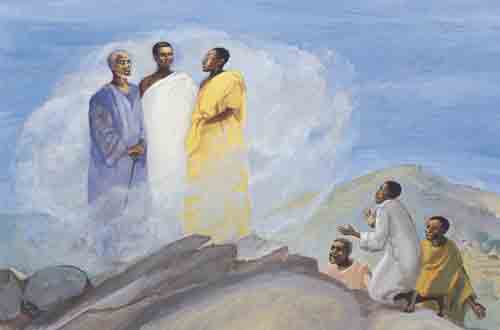
Jesus is the Light of the World, and today’s Gospel is God declaring, once and for all, that Jesus is God’s Son, the Chosen One. Flanked on both sides by prophets of old, both Moses and Elijah, Jesus is bathed in light; glowing in God’s presence. The three disciples gathered there to watch, want to hang out. Peter, that old rock… Peter wants to stay, put up tents, and watch the glory that is this time. Jesus is flanked by the superstars of old, and Peter wants to bask in the awesomeness of this moment. This was happening, and this was happening NOW. Peter wants to sink it all in, but God declares to the world that Jesus is God’s son. the Chosen One, and Peter misses out. Peter, James, and John… miss out on this awesome moment to see the Justice League, the Avengers, the X-Men… These superheroes of young and old… just hang out and talk.

What an amazing sight, and God cuts it short. For a fleeting moment, the disciples see the true Light from God, and the prophets of old to guide Jesus on his way… For this Light, is fleeting, and Jesus knows what he has to do. This is the moment, when Jesus comes down from the mountain, into darkness.

Into Darkness. Jesus and the disciples come down off the mountain; away from the overpowering Light from God, into the darkness of their reality. Into the darkness of ministry. Into the messiness, the complicatedness, the nitty-gritty task… of bringing Light into this darkness.

Last week, I preached about the Love of God poured out for all. I preached that there are people both in Jesus’ time and in this reality we call life, that are in the shadows, on the margins of society; whether discriminated against based on their race, gender identity or expression, religion, sexual orientation, wealth or whatever… There are, in the shadows, people with whom the society in which we live forgets about.

I told you that these realities are what they are, and even if we are a small town and community in rural Minnesota… They certainly affect us too. I ended last week’s sermon, with a narrative of how our Scandinavian ancestors made their home here, and how we knew this story to be our own, and our heritage. This was our story. But it was not the story of everyone else in this state. That there are those in this state, and even this community, with a different story, and their story, their reality, was equally as valid as ours. That God’s love for them, was equally valid as it is for us.

Jesus and his disciples go down the hill and into the darkness that is real life. Peter wants to hang out on the mountaintop to live in the awesomeness of that moment, but it was fleeting, and it was time to get to work.

So, they enter the town and are greeted by a great crowd, and a father tells them that his boy is sick. His boy is possessed with a spirit, and when the disciples try to help, they are unsuccessful. Jesus yells at his disciples, scolding them for not learning from the mountaintop. Jesus pulls out the spirit, and the boy is saved.

And all were astounded at the greatness of God… Lent is fast upon us. Beginning on Wednesday and continuing on through the Vigil of Easter, the time for reflection and Soup Suppers will be here. The darkness of the season, the storm before the calm, the anticipation of the Gospel of Easter… is fast upon us. Today is the last Sunday of Epiphany, and a literal shift in the seasons of the church. A shift, a change, progression…

We shift our minds from the glory of God, to anticipation of the cross. The remembrance of Jesus walking in the desert for 40 days in a whirlwind of temptation. We shift our minds from Light, into darkness.

Darkness that we know what is coming. Even if the disciples continue over and over throughout the Gospels to ignore the reality that their friend is going to die, we know this to be true. We know, and it is our Christian identity to know that the Savior of the World, the Messiah, the Anointed One, is going to die. We know that during this time of darkness and anticipation, that the eventual end of Lent, is the death of our Savior on the cross. A death, that was like any other for a criminal of his stature. A death on a cross, on yet another hill, to save us all, from ourselves. It is this death, and his eventual resurrection, that is our Christian hope. Our truth. Our light through the darkness. That even though we know that our Messiah dies, we know what comes afterward. We know the Good News.

The Good News that even if death has come, it cannot win the day. Even though the shadow of death is long, that the Light of Christ shines through it.

So, as we look toward Lent, and this time of reflection and anticipation; as we talk about how Jesus was changed, how his ministry shifted into knowing his mission in the world and going out and doing work… I want to ask you a favor.

During this season of Lent, I’m going to put a box outside my office door. I want as many of you, who are able and willing, to ponder this question with me. What is the darkness that you see in our community, in our patch of God’s green… well, snow-covered… Earth. What are the struggles you see this community struggling with, the darkness, the pain, the sorrows… What are the shadows of our reality that you see needing a Light to be shone… What are the realities that you know of, that aren’t being addressed in our community. What are the needs, the desires of the community that you see that are in need of attention?

I’ll let you define your own definition of darkness, but I want Zion to consider, what it is that this community around us, needs? What are we lacking? What are the realities that are missing in this area? What people need welcoming, to be reminded that we are Minnesota Nice. Where can the Light of Christ shine upon this area, to show that all are welcome to bask in the Light? I encourage you to think on these ideas during our Lenten journey together. The first sermon I preach after Easter, I will compile the results, and share with you what Zion has figured out.

Jesus calls us to be transformed, transfigured before God, and to come down off the mountain, and get to work. Get to work showing the Light to the world, so that all may know the warm embrace of God. The Love of God. The Love of God that knows no bounds. Peter wanted to make structures to celebrate the arrival of the prophets. Peter wanted to hangout, in the world of newness and light; in the glory of God.

The People of Zion have done great things in this community. The People of Zion continue to do great things in this community, shining the Light of Christ wherever you go. God calls us to get off the mountain, and get to work. In many ways, we have done amazing work in this community, and even globally. Amazing work. A community is never done growing. We are never done growing. As long as we look forward, with an eye to improving the world around us, to bettering the reign of God around us, so that all might share a seat at the table. As long as we look toward coming down the mountain, and shining the light into the darkness of our world, life will continue to grow. New seeds will be planted. New structures built. Lives changed. Hearts opened to see the glory of God shine through their deepest darkness.

Jesus was up there with Moses and Elijah. With God shining down on God’s Son, God shows us that we are never alone. We are working alongside great people. We are working in a long line of great people. We have our heritage of harrowing stories of survival and prosperity. Our ancestors carved out a living out of this soil, this patch of land we call the United States. We follow in the footsteps of amazing people, and stand on the shoulders of giants. We are never alone. We journey together into Lent with our heads held high, knowing that together, we have done and will continue to do beautiful things.
Amen.

Monday, February 1, 2016

It's About Love. - Sermon on Luke 4:21-30

My second sermon of 2016 at Zion Lutheran of Amor

Epistle - One Corinthians 13:1-13
Gospel - Luke 4:21-30


Grace and Peace to you from God our Creator, and from our Lord and Savior, Jesus the Christ, Amen

Other than a select few of you, I would suppose that most of you have moved away from where you grew up. Even if you moved away and came back, at one point or another, I’m thinking that most of you have the experience of moving away. Most of us have a sense of what it feels like to leave what you knew so well, and uproot yourself or your family to a new place. A new locale. A new school, a new job. Some of you might have gone away to college, or the service. Something called you away from home.

Home. It’s where the heart is; it’s where the heart wants to be. I considered, and still probably do consider Donnelly my hometown. So far, it’s where I’ve lived the longest. And yet, I’ve called many other places home. Each of us have a place we call home. Maybe it’s your home right now. Maybe it’s this church. We feel grounded in the place we call home. It’s truly where our heart is.

Jesus returns home in last week’s Gospel, and today’s Gospel is the second half to that story. Jesus returns home and it’s almost like he never left. The people still think he’s the carpenter’s boy. They’ve heard of his miracles in Capernaum, but don’t witness any while he’s there. They’re amazed at his reading of Isaiah, and wary of what he does with it. He points out that there are people that we forget about, and it’s not the people in his hometown. It’s not everybody else. There are people in his world; the blind, oppressed, poor and lame… that the people forget about.

Maybe they’re not held to the same standard as everyone else. Maybe these people are hurting, and are not taken care of. Maybe people blame them for their lot in life. It’s their own fault they’re poor, oppressed, blind and lame. Jesus points out that these forgotten people, are in need of salvation as well. They are in need of his ministry as well. They are in need of God’s love as well.

God’s love. Most of you have probably heard today’s second lesson. It is the quintessential wedding text. Why not? It’s about love, after all. It’s also a continuation from last week’s texts. Last week, Pastor Jim pointed out that we are all part of the Body of Christ. All of us use the gifts that God has given us. All of us are brought together by Christ, and the greatest gift that God gives us: God’s love. It is God’s love that breaks the bonds of division. It is God’s love that brings us together. Where there is neither Jew nor Greek, but we are all people of God. Through the waters of baptism, we are called and named children of God. It’s love. Love that is poured out for us.

This is true in our own world today. Entire populations of people are discriminated against because of their skin color. Because of who they love. Because of the money they make. Because of their gender expression or identity. In the name of whatever power they wish to hold over people; the Bible, the Constitution, the Country… People are discriminated against, and Jesus is there now, just he was then, telling us that all are deserving of God’s love. All are welcome at God’s table.

Paul wrote in his first letter to the Corinthians that Love - Love is the greatest gift that is given to us by God. Whatever we think we might know about people. Whatever we might think we know about what is going on in people’s lives, that makes them unworthy of whatever we want to withhold from them. Whatever we think we might know about what someone wrote about in the Constitution or the Bible or wherever… It is love that conquers all. Love that goes beyond knowledge. Love that goes beyond supposition, discrimination, prejudice, and hate. In the words of Paul, “Love is patient; love is kind; love is not envious or boastful or arrogant or rude. It does not insist on its own way; it is not irritable or resentful; it does not rejoice in wrongdoing, but rejoices in the truth. It bears all things, believes all things, hopes all things, endures all things. Love never ends. But as for prophecies, they will come to an end; as for tongues, they will cease; as for knowledge, it will come to an end. For we know only in part, and we prophesy only in part; but when the complete comes, the partial will come to an end.” 
(1 Corinthians 13:4-10 NRSV)

Love. Not hate. It was hate that drove Jesus out of his own hometown that day. It was hate that drove Jesus to the cross another day. Hate for the good news. Hate for the idea that everyone is special in God’s eye. The idea that everyone is loved, by the same God that loved God’s son. It’s that old verse from John that everyone seems to memorize. For God so loved the world… not just Nazareth. Not just Jerusalem. Not just Israel. Not just the West. Not just the United States… the world.

Why is this idea of a God that loves all… so offensive, so wrong, so despising… that people were willing to throw Jesus off a cliff? What is it about mentioning the forgotten ones, even saying that a select group of people, ‘those people’... aren’t worth mentioning, or worth focusing on…

This idea that God loves even the people who weren’t like everyone else that Jesus was speaking to… Jesus cures the sick, feeds the hungry, heals the injured, provides ministry to the Gentiles, prostitutes and tax collectors… shows the people that even the ones they’d rather not worry about… are deserving of his grace. God’s grace. God’s love. The unwinnable, unattainable, unwavering grace that God bestowed to all, through the death and resurrection of God’s son, Jesus the Christ. The death and resurrection of the Messiah that saves us all. From ourselves. Our sin. Our hatred. Our blindness. Our selfishness. Our complacency.

God’s love was poured out for us on the cross, and God is the one calling us to spread the message of God’s love to the world.

I was asked this week… So what? What can we do about it? What can we do about the realities that are happening in our world right now? In our own community? We’re a small community in rural Minnesota. Things are the way they are, because it’s the way it’s been. I’m going to explore this question with you more next week, as we look toward the Transfiguration of Christ and the transition into Lent, but let me leave you with this…

At some point, most of us will leave the home we know, and travel to a new reality. Most of our ancestors, probably came from the same general part of the world. Whatever land they came from, they probably didn’t go back. They probably left home… and looked toward a new life for themselves, on the shores of this great country. Not knowing what they’d see when they got there, they boarded the boats, and traveled across the treacherous seas with many other people. Many other people, who likely didn’t all speak the same language. All together in the same boat, these people of different backgrounds, headed to different destinations. Our Scandinavian ancestors all pretty much settled in the same general area of the United States. They settled in the same place, because they grouped together with similar languages, similar customs, similar religion.

They formed communities. Named them after their homeland. (Amor for instance, supposedly comes from the town in Sweden, Mora - but there was already a town in Minnesota named Mora, so they switched the A around and Mora became Amor…) They named their churches after their hometown or their region. These churches became the center of communities, just as they were in their homeland. They spoke the language of their homeland in church. They spoke the language of their homeland at home.

Our ancestors made a home for themselves that was very much like their home that they came from. Over the years, their native tongues were outlawed in public spaces, including churches, so churches soon offered services in English. Schools taught English. Homes gradually became English speaking, and the world around them, could speak the same language in church. The world around them, spoke English.

We know this history, because this is our history. Our way of life. Our way of life passed down from generation to generation. This is our heritage.

Now, understand, that this is not the heritage of everyone else. This is not necessarily the heritage of everyone in here. This is definitely not the heritage of everyone in this state. Jesus is telling the people of his hometown, that there are people in his world that don’t have the same experience as everyone gathered. There are people who don’t experience life as they do. Jesus tells them that they are equally deserving of love, as everyone there is. Equally deserving of his ministry. Because the prophets of old did it. Because Jesus himself did it. Because we must do it. Minnesota has a long history of neighbor welcoming neighbor. No matter their background. No matter their heritage. No matter their current reality. Love one another. As God loves you.

Amen