This is my sermon that I preached at Svea Evangelical Lutheran Church, yesterday. Erik was off on his adventures, so he had asked me to preach.
Sirach 24:1-12
Wisdom 10:15-21
Ephesians 1:3-14
John 1:1-18
Grace
and Peace to you from God, the Creator of all things; and The Light of the
World, Jesus the newborn Christ. Amen.
The light shines in the
darkness, and the darkness did not overcome it. There was a man sent from God,
whose name was John. He came as a witness to testify to the light, so that all
might believe through him. He himself was not the light, but he came to testify
to the light. The true light, which enlightens everyone, was coming into the
world.
Our Gospel this morning tells of
John in the wilderness, who in our text a couple weeks ago was the voice crying
out in the wilderness calling for the Messiah, and today’s Gospel text is right
before that one. Jesus the Christ is whom John is calling out for; is pointing
towards. John is pointing towards the Man who was to become our Light; our
Savior. The Gospel writer’s poetic description of the Word, of Light, and
ultimately about God; speaks volumes in the short sentences held within. Christ
is our Light. Christ is the Word made flesh. Christ is our Emmanuel, God is
with us; God Incarnate.
The author of the Wisdom literature
read this morning talks about how Wisdom was that which brought the Israelites
out of Egypt, and guided them along their way. Wisdom became their savior. As
Jews living before the time of Jesus, this was their way of interpreting God’s
power. Most bibles on our shelves at home and in our pews don’t have the two
non-New Testament texts read for us today. Sirach and the Wisdom literature
come from a set of texts known as the Apocrypha or Deuterocanonical books. When
Martin Luther was translating the Bible, he noticed that these books were
written in Greek, not in the original Hebrew, and decided to leave them out of
the Bible given to the common people. Roman Catholics consider these and other
books canon, or on the same authority as found in the rest of the Old
Testament. Orthodox Christians have an even larger canon with even more books.
Protestants, having taken the basis of their doctrine from Luther and other
reformers, don’t consider these books to have the same weight as the other
texts found in our Old Testament, but find them useful in understanding
context.
Today’s text from the Wisdom
literature makes reference to, as looking at the text through the lens of
Christ, the coming of the Messiah; our Savior, Jesus the Christ. Looking at the
text through this lens, we as Christians might see that Christ was the guide of
the Israelites. God Incarnate was the starry flame through the night, in the
darkness of their despair, guiding them to the Promised Land.
The Light shines in the darkness,
and the darkness did not overcome it. It’s been pretty dark out there. While
the solstice has passed, and the days are indeed getting longer, it still gets
dark before most folks have supper. Some people go to work in the dark, and
come home when it’s dark. Way up north, around the Arctic Circle, people only
have a few hours or less of daylight these days. Due to the lack of sunlight in the winter,
some people have Seasonal Affective Disorder; causing them to require
artificial sunlight for them to emotionally make it through their day. At
Luther Seminary’s library, there’s a special part of the library for those with
Seasonal Affective Disorder to get their sunlight. People with fair skin use
tanning beds more often in the winter to get that ‘winter glow’. The rest of us
Scandinavian Minnesotans just blend into the snow piles.
We have problems with the dark. Have
you ever gone out, late at night, in the middle of nowhere, and just
appreciated the dark? With too much darkness, your eyes try to adjust to the
limited light. We need light to appreciate the color around us. Without light,
color just disappears. Like an old black and white movie, when the darkness
surrounds us, color isn’t easily distinguished by our eyes. We see what we need
to, if we can, and our eyes don’t bother with the color. When we take pictures,
and there isn’t enough light for the lens to pick up, the subject of the photo
loses the color as well.
Without light, life loses its color.
Without light, life isn’t quite as vibrant.
How’s Christmas going for you? Yes,
according to the Church Calendar, we’re still celebrating Christmas.
Technically, Christmas goes until January 6th. There are 12 days of
Christmas, and no, I’m not giving you 11 pipers piping, as today is the 11th
day of Christmas. Tuesday is Epiphany, or Three Kings Day, and is the
celebration of the Magi visiting Christ. Thus, Epiphany is the celebration of
when the Magi are shown God’s existence through the birth of a child. God
Incarnate was made known to the Gentiles at that moment, and thus the day is
known as Epiphany, or Theophany. Christ was made known to the Magi at that
moment, which some scholars say was years later, after Jesus’s birth.
Christmas, beyond being 12 days
long in the Church Calendar, is a two month long mad dash to the shopping malls
and Targets to buy enough gifts for everyone. Even before trick or treating
your way through your neighborhood, you start to notice stores hanging red and
green decorations up in the back corners, just waiting for all the spiders and
witches to be bought up at rock bottom prices. Christmas is a two month long
marathon of radios sneaking in the occasional ‘Jingle Bells’ and ‘Let it Snow’
between the Garth Brooks and Bruce Springsteen. Once the turkey is on the table
on Thanksgiving, it’s a ‘No-holds-barred’ race to the shopping malls and
Targets again – to score on even better deals for the Pre-Black Friday sales.
Black Friday doesn’t even mean anything anymore if stores were open on
Thanksgiving anyway.
So, Black Friday came and went, and
the stores found out that opening on Thanksgiving wasn’t as profitable anyway,
and Black Friday wasn’t as great as it had been in years prior, and stores were
even more packed in the days leading up to Christmas Day. Once Christmas Day
happened, I’m sure many of you were relieved to finally reach that day.
Finally, all of your hard work paid off. Finally, the looks on your relative’s
faces when they opened your gifts were worth the wait and the gifts you spent
your hard-earned money on. Finally, you were able to open the boxes under the
tree with YOUR name on them. And once you faked the smile at receiving the same
tie or pair of socks you did last year, you knew that Christmas was over. The
gifts were given, you saw the smiles on your relatives, opened your own gifts
and cleaned up the wrapping paper. Maybe you waited until the next day, or even
until New Years, but you took the Christmas tree down. You put it in the box or
threw it to the curb or hauled it to the dump (or the town dumpster in the
parking lot?).
Christmas is over for most folks,
and that’s fine. I was frankly tired of hearing the same 12 songs on the radio
and in the stores anyway. We still have our Christmas tree up, but only because
I don’t want to bother putting it away. Our family growing up would
occasionally keep the tree up until halfway through Lent. No matter how you
celebrated it, where you celebrated it, or how long you are celebrating it, it
was a time you were waiting for.
Christmas, no matter what time of
year it is, is a time to be waited for. We even have a season in the Church
Calendar for the anticipation, known as Advent. Easter falls on a different
date every year, but you know exactly when Christmas is. If you wanted to, you
could count exactly how many days it would be until Christmas. There are even
websites you can access that tell you the very same thing.
The Jews who wrote the Sirach and
Wisdom texts were waiting for the Messiah to come on Christmas. The hope of the
Messiah was their light in the darkness. The hope, the waiting, the
anticipation of Christmas is our light in the darkness. Christmas, for us
Christians is a bright, shining light; symbolized best by the Christmas tree
and the Star of Bethlehem, which tops most Christmas trees. December is the
darkest time of year, and the Winter Solstice is the darkest day of the year.
Hanukkah, Kwanza, Christmas, and the celebration of the Solstice all bring light
to this time of darkness.
We as Christians celebrate Christmas
not only for the presents and family gatherings, but with the knowledge that
the Christ child that was born on Christmas was destined to live a life full of
teachings, blessings and miracles. This Christ child would eventually become
the wounded Christ, the dying Christ, and the Redemptive Christ on Calvary. The
Redemptive Christ that would die for all of us. The Redemptive Christ; God
Incarnate; that saves us all from our sins; so that we all may live, free from
the darkness of this world.
I leave you with a popular Christmas
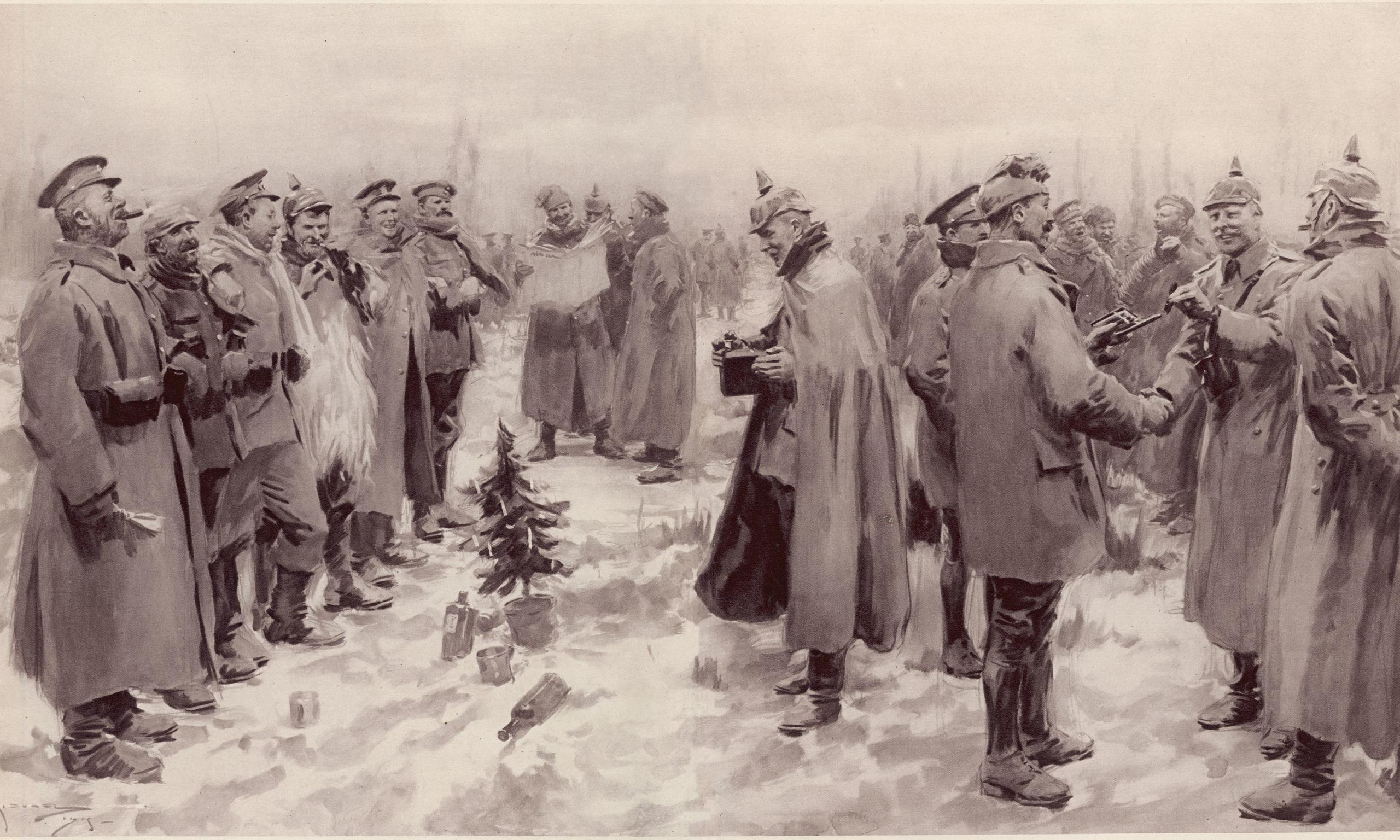
story many of you may have heard before. It was the Christmas of 1914, and the
‘War to End All Wars’ was waging throughout Europe. In some trenches along the
Western Front, all became quiet that Christmas on the Western Front, as men who
had shot at each other for weeks, stopped shooting. No Man’s Land became a land
of everyone joining in song around the celebration of Christmas. Germans,
British and French soldiers came together to exchange food, gifts, and
souvenirs. Supposedly, even games of soccer broke out. That Christmas, the
light of Christ shone out through the darkness of war into the hearts of those
soldiers.
Christ, be our light this day. Shine through
our darkness today and every day. Merry Christmas. Amen.

No comments:
Post a Comment