My second sermon preached at Lutheran Church of Christ the Redeemer. Preached on July 22-23, 2017
Epistle: Romans 8:12-25
Gospel: Matthew 13:24-30
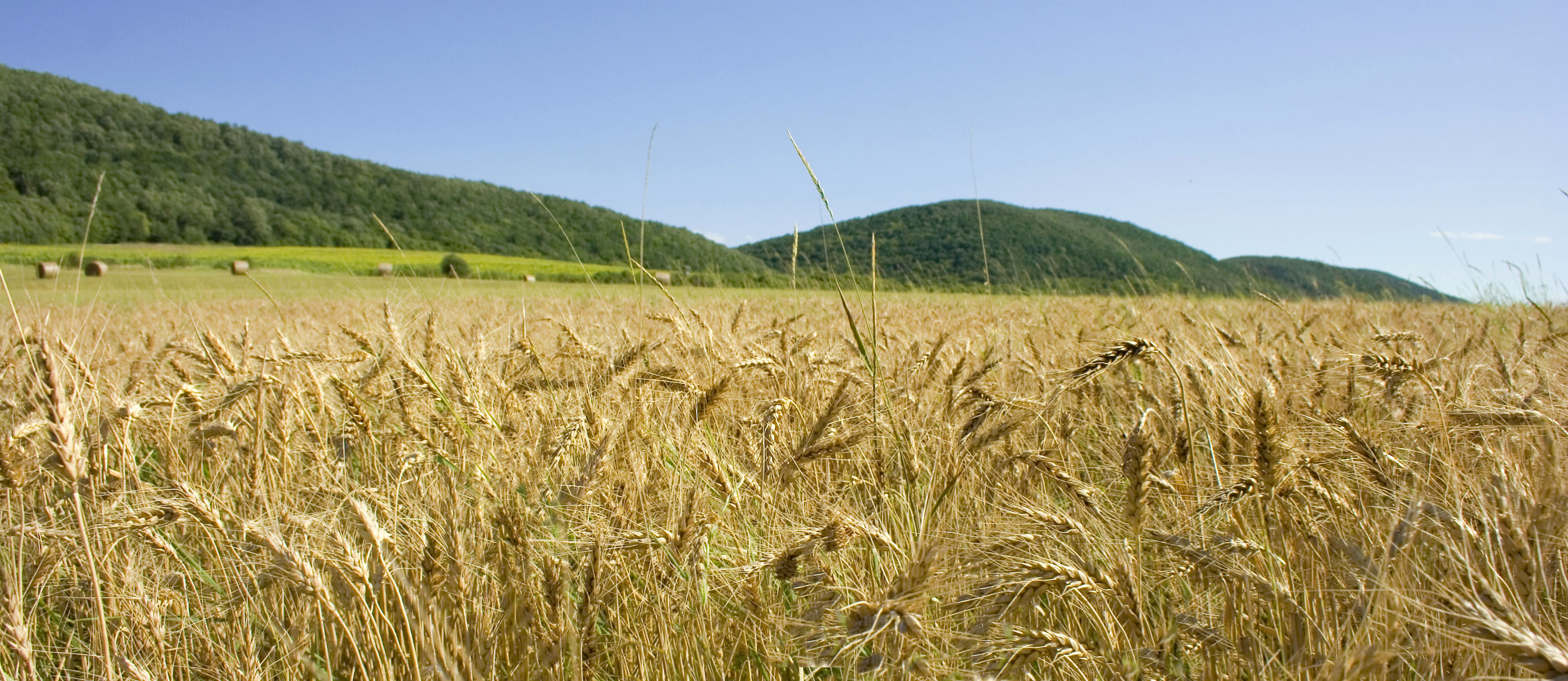
Wheat and weeds. Sower and Seeds. Black and White. Us and Them. Me and You... And who knows which is which… and who is who…
Parables are a great tool. In Greek, the word means to 'throw around'. Think about that. Jesus tells these parables, one after another, to ‘throw around’ ideas about God and the kin-dom of God. The Good Shepherd, the Widow’s Mite, the Prodigal Son, the Mustard Seed… All point at different aspects of God, all point to how we can ‘throw around’ our own conversations about God.
The sower throws wheat seeds on the ground, but then someone comes along and throws in weed seeds. Weeds grow up with the wheat. In today’s modern farm technology, we have pesticides and herbicides. Some were more primitive than the modern versions, which is why we have creatures in this country such as the pheasant, the Asian beetle, and other fauna out and about to prevent crops from becoming full of weeds.
Have any of you seen wheat in the ground? I love driving through the farm fields of western Minnesota in the month of June, when all the soybeans, corn and wheat are in the ground, and the trees are all green… It’s like driving through a giant green carpet. Or in August, when the wheat is in its prime, and those ‘amber waves of grain’ start flowing in the wind.
Wheat and weeds. Harvesters ask if it’s okay to take the weeds out, while they’re still young. No, says the farmer. By uprooting the weeds, so too would you uproot the wheat. Don’t take it upon yourself, he says. It's not up to you.
Wheat for many is a staple in grains, cereals, breads, pastries, etc. It’s a versatile plant, with many uses at home or on the farm. However, it might as well be a weed to others, as there are those who cannot digest the gluten within the wheat, properly. Wheat means life for many, unrest for others.
The symbol we use as our identifying mark as Christians, is a cross. A cross, the torturous device that thousands died upon, including our savior. As Christians, we use this symbol as a rallying identity, the proof that the device used to cause death, is a reminder of our life in Christ. And yet, the cross is still used as a weapon to this day. Physically burned, or figuratively as a symbol of a broken religion, separating those whom some deem unworthy of that life in Christ.
Wheat and weeds. What some may think is unworthy of eating, others may see delicious food. A literal example of this is the common dandelion, a weed that sprouts nearly everywhere, and sticks around. While maybe a nuisance, the plant has been used as food, and herbal medicine. Kale - once thought as mere decoration for salad bars, is now all the rage, to the point McDonald’s is putting it in their burgers. You know you’ve made it big when McDonald’s sells it.
Society as a whole, puts nearly everything on a binary scale of acceptable or not acceptable. Wheat or weeds. Female or male. Queer or straight. Rich or poor. Healthy or unhealthy. Fat or skinny. Good or bad, sin or salvation, law or gospel. Some find identity between these binaries. Some bristle at the thought of such a thing.
But what does Jesus say in this parable? In this ‘throwing around’ of conversation about God? Who are the wheat, who are the weeds, what practices are wheat-like, which are weed-like?
I’m gonna let you in on a little secret. There’s room for the middle. Because what Jesus is getting at - is not that the wheat survives and the weeds burn… but within the combining of the wheat and weeds… it’s not up to you to decide what is and what isn’t. There’s wheat and weeds inside all of us. We are all sinner and saint, all maintain law and gospel.
“We know that the whole creation has been groaning in labor pains until now; and not only the creation, but we ourselves, who have the first fruits of the Spirit, groan inwardly while we wait for adoption, the redemption of our bodies. For in hope we were saved. Now hope that is seen is not hope. For who hopes for what is seen? But if we hope for what we do not see, we wait for it with patience.” (Romans 8:22-25 NRSV)
Paul the Apostle, writing to the Romans, writes of the difference between living for the Spirit, and not our body. Spirit over body. Wheat over weeds. We have hope for work of the Spirit, that which is not seen, for that is the hope on which to hold.
Hope… the fine line between what is and what could be… that is where God is present. In the space between. Hope, faith, belief - the space between what is, and what is possible. Live for what is possible. The possibilities of life abound.
When two separate incidents happen with similar results, and a consequence of both events is the ending of a relationship, what was it that ended the relationship? Something in that middle period. Was it the wheat? The weeds? What caused the end? Something in the middle.
When Christ lived his life, teachingpreachingfeedinghealingwashingsaving all, and then dying on that cross, that symbol of both death and life… Was it the weeds that caused his death? The wheat? Or was it something else? Is it the wheat or weeds that give us new life with Christ? Or is it something else?
Grace. Grace through faith. It is Grace through faith, freely bestowed on us all, to save us all from making the choice between wheat and weeds. To save us all from the weeds that hold us back from the wheat that gives us life.
What the weeds are in your own life, what the wheat is in your own life - that’s up to you. Watching Marvel’s movie Dr. Strange the other day, the main wise character of the movie, the Ancient One throws in a little tidbit that has stuck with me. Talking to Dr. Strange’s compatriot, she says “We never lose our demons... We only learn to live above them.” Sin remains, we are never sinless beings. We learn to live in the middle between sinner and saint. We have faith in a Savior that saves us from our sin, and hope in that Savior that we can learn to live above that sin. We are people, of a broken humanity, bound by both wheat and weeds, holding on to the space between. God is present in the middle. God carries us through the middle periods of our lives. Life is made up of more than wheat and weeds. Entire giant green carpets of God’s beautiful creation exist, and we are made better for it. Go out and enjoy it.
Amen

No comments:
Post a Comment