Monday, October 23, 2017

Seasons

This is my second to last sermon at Lutheran Church of Christ the Redeemer, preaching a special set of texts based on Luther's Priesthood of All Believers.

Ecclesiastes 3:1-14
1 Peter 2:1-5, 9-10


Grace and Peace to you from God our Loving Creator, Redeemer and Spirit. Amen

For everything, there is a season. Turn, Turn, Turn. (I started the last sermon with a song, I might as well keep up the pattern, right?) A time to be born, a time to die, A time to plant, a time to reap, A time to kill, a time to heal, A time to laugh, a time to weep… Turn, Turn, Turn...

The writer of Ecclesiastes had some thoughts to go through. These words from Ecclesiastes 3 were popular already, then further popularized by the Byrds. But the author of Ecclesiastes also wrote the words in the second verse of the book, “Vanity of vanities, says the Teacher, vanity of vanities! All is vanity.” The author was likely at a time in their life when reflection was always around them. All they had was time, and so they wrote these thoughts down. In the autumn of their life, both good and bad and the dichotomies between them, seemed apparent.

The author had thoughts, and wrote them down. They never directly identify themselves, but some scholars believe the book was written by King Solomon. But whoever it was, they had purpose in their life, and then maybe toward the end of their life, they saw that purpose slipping away.

We could read this text out of Ecclesiastes as a reflection of our own lives, a simple matter-of-fact way of looking at life. But then he clinches it up there in the last line of that thought. “I know that whatever God does endures forever; nothing can be added to it, nor anything taken from it; God has done this, so that all should stand in awe before God. That which is, already has been; that which is to be, already is; and God seeks out what has gone by.” (Ecclesiastes 3:14-15)

Whatever we do, whatever has been done, whatever will be done - has been done by God. That what we do in life, is done with God, always ever present with us.

Martin Luther, the man we remember and the reformation we recognize in our celebration over the weekend - saw this presence of God in how he saw our own ministry as God’s people. As baptized members of the body of Christ, by God’s authority, we are called by God to God’s people to serve one another, in whatever function that is. The reality that is known as the Priesthood of All Believers, is this idea that all of us are ministers of the same Gospel, that all of us have been called through our baptism, through the calling and naming in the waters of baptism - that we look upon each other as God looks upon us - as God’s beloved.

We are called and named through our baptism to serve one another throughout the seasons of our life. As the author of 1 Peter points out - “like living stones, let yourselves be built into a spiritual house, to be a holy priesthood, to offer spiritual sacrifices acceptable to God through Jesus Christ.” (1 Peter 2:5)

And like actual stones, we are individual, we are unique. The seasons of life that form us as children of God are like the seasons of time forming and shaping rock. As much as time shapes us, and time shapes stones - so also does water. Water is one of the building blocks of life, the element that we are washed in and shaped by in our baptisms, as it washes and shapes stones. And when we come together, as shaped and washed living stones, and we form a community - so also we form a spiritual house, a dwelling place, a church. Individual and unique stones are formed together, gathered together to literally form a home, and as much as stones are required to build a building, individual members are formed together to become church, to fill one with the other.

The outside of this sanctuary is covered in stones, placed upon each other, to form walls that give structure. Our worshipping community, our church gives structure to each other, so that individual people, individual living stones don’t fall through the cracks.

Who are we as people? As a community? Like the living stones that we are, and the water that shapes us, we find ourselves in the land of water. The word, ‘Minneapolis’ is a combination of the Dakota word for water, and the Greek word for city, or collection of people. We are literally in the city of water. Minneapolis, or more precisely Fort Snelling is where the body of water our state hails its name from, the river of sky-tinted water - and the Mississippi, one of the longest rivers in the world. The two rivers were shaped by melting glaciers, with the Minnesota River pouring out of Big Stone Lake in western Minnesota, not too far from where I grew up. The glaciers themselves were giant frozen chunks of water, that carved their way through Minnesota, forming and shaping the landscape of the state we live in. And then they melted, formed a body of water known as Lake Agassiz, that over time shifted, but eventually drained into the bodies of water that contribute to the immense amount of lakes in this state.

Water shapes and forms us, and shaped and formed the land we live in. Water too, connects us. Again, water is an essential building block to life, so we as human beings are connected to every living creature on the planet through the water we need to survive. So also are we connected to every member of the body of Christ, through the waters of our baptism.

According to the idea of the Priesthood of All Believers, we are all ministers to each other, able to carry on the message of the Gospel, stewards of God’s grace, and called by God for a vocation in life. With this vocation, we are called and named through our baptism to go out into the world to make it a better place for us all, bestowing God’s Grace, Love and Mercy to the rest of the world, in the name of Christ, the One who sends us.

To everything, (turn, turn, turn…)  there is a season. (Turn, turn, turn.) A time to cast away stones, a time to gather stones together… “Like living stones” the epistle says, we are gathered together under the name of Christ, to minister to each other, through the waters of baptism that form and shape us. As Christians, we believe and proclaim that this Christ, the man who gathered people together, and taught and fed and healed and served them, and then was killed by them. Jesus the Christ, the savior of us all lives among us and gathered us living stones, and calls us all to live among each other - to in turn serve one another for the benefit of us all.

In this land of sky-tinted water, in the city of water, we can come together to help our neighbors in Puerto Rico, and in California and Texas and Florida, and even with the President of the Virgin Islands as our leader, we can hopefully come together to help heal from the damage of the many disasters they have faced. Because even if the President of the Virgin Islands doesn’t think we’re all connected under the same flag, maybe he can remember that through the waters of our baptism, we are all connected to each other as it is anyway.

… And a time to every purpose, under heaven.

Amen.

Monday, October 2, 2017

Authority

This is my third-to-last sermon at Lutheran Church of Christ the Redeemer, preached on 9/30 and 10/1/17.

Gospel: Matthew 21:23-32


Grace and Peace to you from God, our Creator, Savior and Spirit, Amen

“I fight authority, authority always wins… I fight authority, authority always wins… I’ve been doing it since I was a young kid, I’ve come out grinnin’... I fight authority and authority always wins” And so go the words to the 80’s song aptly named, “Authority Song” by John Mellencamp.

I was barely around in the 80’s, to the point that I was younger than Bridget is now, when the epic decade of the 90’s began. Yes, I’m that young. And to that point, I am as young as some of you were when your generation was fighting authority. It must be something about being in your 20s and 30s… 

I’ve been watching the Ken Burns and Lynn Novick documentary, The Vietnam War on PBS. Actually, it’s been on the PBS App with my Chromecast, but you know… I am a Millennial. Talk about generations fighting authority… A man once told me that if someone remembers the 60s - then they weren’t really living it.

It’s good to be watching it now, I never learned much about the war or much around the state of the world during that time period. It’s this time in our nation when those of us who weren’t around then can look at it and say… “what were we thinking?!” But then look at the current world around us and say again… “what are we thinking??!”

I’m pretty sure this documentary series has been in the making for many years, but I almost wonder at how serendipitous it is for the series to be shown in this climate. A president put into office in extraordinary circumstances, who listens to all the wrong voices and then begins to only listen to his own voice… Who disregards actual poll numbers, with a changing of the staff, who swears and says inappropriate things off the cuff… Aaaand, the comparisons between presidents can stop there. But the climate - political unrest, seemingly divided beyond any measure, chaos in the streets, protests everywhere, endless wars both foreign and domestic… Increased militarization, racial tension, even a fight for voting rights and continued conversation about modern segregation and modern slavery… You wanna talk about authority… what authority?

What authority did Jesus have? The chief priests of the temple were asking Jesus how he could do and say the things he did. Did they come from God? Or was John the Baptizer just full of himself? What gave Jesus the right to barge into their reality and start messing things up? Taking a stand against their injustice, whether intentionally or not. What gave Jesus the right? He should feel privileged enough just to stand in a temple, to be in Jerusalem - let alone preach in the streets… let alone question their own authority… Jesus could heal and feed people in his own time, in the private spaces of their homes. He didn’t have to do it in front of people. He didn’t have to inspire others to… Go and do likewise… What gave Jesus the right?

What gave Jesus the right -  to proclaim to the world that the way the Empire was doing things, how the authority of the land was actually no authority at all - and this would soon get him killed - that the only authority that anyone should observe is God’s authority.

This congregation held their own authority when you decided to call an openly lesbian pastor seven years before you’d actually be able to. When you decided to open your doors to the Togolese people, when you decided to donate your time and resources to community efforts to quell homelessness. When you decided to open your doors and hearts to a Transgender intern and their family, and many other openly queer leaders along the way… As a congregation, you fight against other authorities and hold your own authority. What gives you the right? What gives you the right to say that these out-of-the-ordinary realities are an integral part of this congregation’s vitality? On whose authority are you able to do this?

Whose authority? God’s authority. Lutheran Church of Christ the Redeemer is a member of the Evangelical Lutheran Church in America. You are part of the largest Lutheran denomination in the country. You celebrate the memory and teach the teachings of a law-school dropout, who nearly 500 years ago questioned the Pope’s authority. And with it began the revolution that propelled many reformers to re-form the Church, throughout those 500 years. So many bold and powerful leaders to stand up and say in a loud voice, we are part of God’s Church, and you are all Saved by Grace through Faith.

The Gospel of Matthew isn’t really the Gospel where Jesus steps over all the authority, for that Gospel you’ll have to wait until Mark starts in Advent. But Matthew says enough. Earlier this week, I was in Okoboji, Iowa for the Southwest Minnesota Synod’s Fall Theological Conference. Also known as a few days where most of the pastors of the ELCA’s southwestern Minnesota congregations - gather for fellowship, learning, and maybe even some rest. Our first speaker was Dr. Karoline Lewis of Luther Seminary - my preaching professor once upon a time. Dr. Lewis talked about the differences in the Gospels, why the Gospel of John was her favorite, and when a text comes up in the lectionary - you have the authority to preach it. The measure of a “good” sermon for her - isn’t necessarily on how it sounds to people - but how faithful it is to the text and God’s message. That even when some texts appear in the lectionary that might be hard to preach on - that we as preachers have the authority to preach on it.

That was a good reminder for me, because I fear that I may not have the authority to tell anyone to do anything… Or suggest or implore or… what authority do I have? Many people my age, my generation of Millennials - may talk about upending authority, may even get something accomplished on that front - but when it comes down to it… Some of us feel like we don’t have our own authority. Who are we to talk to someone like this? To stand in front of you and proclaim the Gospel? To stand at someone’s bedside or baptize a child or offer forgiveness or preside over communion or even officiate at weddings… The inability to imagine ourselves as people of authority… is something called “Imposter Syndrome” - and it’s real.

When I first started in ministry, I had no idea what I was doing. I had the possibility of having some type of authority, and I didn’t know how to wield it, or even if it was truly there. And I struggled with that for many years. I still struggle with it. Who am I to be doing this?

And then I go back to the thought of generations questioning authority, and maybe we all do at some point… Maybe we all ask ourselves, why am I doing this? And maybe that’s a good thing. Maybe we all need a little check-in, to give us a little humility. Maybe that’s our midwestern humility, the “Minnesota Nice-ness” of us.

Because in the end, we know that many decisions just aren’t up to us. Many realities, many questions in our head about what goes where, who goes where, why things happen the way they do, why one-in-a-million possibilities happen at the wrong time to the wrong people… Aren’t up to anybody. Maybe there are realities that even God has no control over.

Jesus was being questioned as to who gave Jesus the right to do the things he did, say the things he did… and he gave a parable that is one of those head-scratchers… but ultimately knowing that if anybody had authority, it was God.

So when a nation upends over who should protest the country and who can’t, and why they can’t and how they can’t and where they can’t… When the country looks for a moral authority and that authority isn’t the one in charge… When landscapes are destroyed and help is hard to come by… Where is the authority?

Perhaps when we feel distraught, upended in our own lives, we just need a retreat of our own, even if it’s in our minds. Prayer is good for that. Prayer is there to help calm our minds when all else is failing, when our own authority is in question… We have to remember, and hold on to the promise that God’s got this, that God is the authority, that we are all saved from our own doubts, pain and sorrow by the one who overcame death and darkness for the life and light for us all.

Because John Mellencamp might have been right - when you fight authority, God’s authority - always wins.

Amen

Wednesday, September 20, 2017

Community

My sermon preached at Living Waters on Sunday 9/17/17. It was Pride in Saint Cloud, and Living Waters' annual Fall Fest fundraiser was the day before.

Epistle: Romans 14:1-12
Gospel: Matthew 18:21-35


Grace and Peace to you from God our Loving Creator, and from our Lord and Savior Jesus the Christ, Amen

Texas is the second largest state in these United States, and when people mention cities in  Texas, I admittedly have only a vague idea of where they are. After the last couple weeks, I now know that Houston is the fourth most populous city in all of the United States, and is on the coast of the Gulf of Mexico. We continue to pray for the victims of all the hurricanes to rock the Atlantic and Gulf coasts, and pray for the recovery that will stretch for many years to come.

With Texas being so large, I’ve only been to one of the major cities in Texas, and that is El Paso. I visited El Paso with New Wine the summer after my senior year of high school. El Paso is on the border of Mexico, separated by the Rio Grande, with Ciudad Juarez on the other side of the river. On the United States side, large high rise apartments line the river bank. On the Mexican side,  there are small houses and dirt roads. Escaping poverty, famine, war, genocide, lack of employment in hopes of a better life - thousands of people from many countries south of that border - cross it every year. They risk life and limb, going beyond themselves and their semblance of a normal life - in hopes of a better life for themselves, and in many cases, their children.

These children - and many others from other areas of the world - who were brought here by their parents or other adults, or arrived without - and because of a legal action known as the Deferred Action for Childhood Arrivals - these children may yet have their illegal immigration status forgiven, to become full citizens.

In today’s Gospel - Peter, that old rock, asks Jesus a question. “If somebody sins against me, how often should I forgive that person?” Jesus responds, not seven times, but seventy-seven times. Or in other versions, 70 times 7. Otherwise, it’s a lot of times… Forgive, and forgive again. Forgive so many times you forget how many times you forgive people. Go above and beyond the complex idea of forgiving for when they sin against you, and forgive them again. Then Jesus tells a complicated parable about the unrepentant slave who is forgiven his debt, but fails to forgive the debt he is owed. Then the lord catches wind of this, and throws him in prison until he repays his entire debt.
It takes a lot of courage and respect for yourself and for the other person - to forgive.

You have to go above and beyond the casual forgetting about it - but total forgiveness takes effort beyond the norm. Forgiveness is a huge concept that is multi-faceted and we could take an entire sermon series on some aspects of forgiveness. So rather than try to tackle a large chunk of it in one sermon, I’ll leave it here - saying that God calls us to forgive one another, and to do so we must go beyond ourselves to do it. And when forgiving is too painful, when we’ve already pushed ourselves beyond what we are capable of, then we have to rely on the truth that God is the ultimate source of forgiveness. Sometimes, as the saying goes, we have to let go, and let God.

The Apostle Paul writes, “We do not live to ourselves, and we do not die to ourselves. If we live, we live to the Lord, and if we die, we die to the Lord; so then, whether we live or whether we die, we are the Lord’s. For to this end Christ died and lived again, so that he might be Lord of both the dead and the living.” (Romans 14:7-9) Paul points out, that all of us are of God, and whether we forgive or not, we are all God’s children. In our reading from Romans today, Paul starts off by saying that we shouldn’t judge one another. How does he do this? By calling the people who eat only vegetables weak. What was that about judging? We are all God’s children and we shouldn’t judge one another. Simple enough, we learn that when we’re young.

By maintaining a culture of non-judgement, we might not say rude things to one another, but then we might not say anything at all. What if we took the concept of going beyond forgiving and forgetting - to forgiving so often that we lose count - What if we took that concept of going beyond ourselves to not judging - to embracing? Embracing our differences for who we are as beloved children of God? “Whether we live or whether we die, we are the Lord’s”, Paul writes.

This past year, members of Living Waters went beyond themselves and fed their neighbors through programs such as the Yes Network, Feed My Starving Children, Kids Against Hunger, Meals on Wheels, and at the Place of Hope and our own wonderful food shelf. What if we went further? What if we didn’t only feed them for individual meals, but were able to enact lasting change in the community by advocating for better wages, and better access to food and housing? Thinking beyond the temporary, to something more permanent?

On the sign by the driveway, the worship times are listed with “All Are Welcome” below them. Our mission statement aspires to build a welcoming and inclusive community. What if we went beyond writing these words, and became active in proclaiming it? Wrote a statement of welcome that was specific in its invitation… So that we had words and actions to back up our statements.
This weekend in Saint Cloud was the local Pride festival, where people from across greater Minnesota came to Lake George to celebrate their identities of going beyond the closet where society placed them. Going beyond the barriers that kept them in the closet, so that the people who openly identify as lesbian, gay, bi, trans, and more - can celebrate and come together in community.
For community is what this is all about. What we define as community, who is allowed in that community, and where we find that community - that’s why we’re here. Yesterday, the other end of the church was full of our community’s discarded items, for other members of our community to buy or have. Games and activities, the 5k and fellowship, the vendors and coffee… Fall Fest was community, our community coming together.

Attending worship is forming community, becoming active in the goings on at church, signing up for serving communion, ushering, singing in the choir, serving in the nursery, teaching Sunday School and Confirmation… Serving your community - Being in community - Forming Community… In a little bit we will celebrate communion, God’s Grace made flesh, poured out for us all - we celebrate as a community. The binding of that community is found in the living waters of baptism, where we are called and named beloved children of God.

We open our doors every week to members of our community, so that we worship together, as community. When a member of the community sins against us, Jesus tells us to forgive and we go beyond ourselves and forgive until we forget how often we’ve forgiven. Paul the Apostle calls on us to not judge our neighbors, the members of our community. God is calling on us to go beyond ourselves and serve our community by opening our definitions of community. Extending our community outward, and allowing more lasting change for our community.

We are called, summoned by God to live into that community, expand our definitions of that community, and bring hope and love to those outside of it. For we are all members of the community of God, and saved from ourselves by the Grace, Love and Mercy of God, our Creator, Savior and Spirit. We live in, serve, and engage many forms of community, yet all are one in God’s community. “Whether we live or whether we die, we are the Lord’s”. God calls each and every one of us to love and serve one another, to forgive one another, to go beyond ourselves and our bounds of community for one another. You are a beloved child of God.

Amen.

Tuesday, August 29, 2017

Boldness

This is my fourth sermon as intern at Living Waters Lutheran. I wrote this before knowing the potential of the destruction of Hurricane/Tropical Storm Harvey. Living Waters will be taking up a donation for Lutheran Disaster Relief for the next couple weeks in response to the damage. 

Gospel: Matthew 16:13-20


Grace and Peace to you from God our Loving Creator, and from our Lord and Savior Jesus the Christ, Amen

    Jesus asks his disciples, “Who do people say the Son of Man is?” Who is this guy you’ve been following around? The disciples reply with… Perhaps your relative, John the Baptist, or a prophet of old, Elijah… Someone important anyway…

And then, Peter... Peter that ol rock… Peter speaks up! Peter declares in a loud voice that Jesus is in fact, the Messiah. Jesus responds by blessing him, and saying that upon this rock, Jesus will build the church. Now, some may assume that Jesus was making a pun - Peter after all comes from Petros, meaning Rock… And Peter did sink like a stone a couple weeks ago… And Peter is a stumbling block a little bit later… And Peter is stone-faced when people ask about Jesus after the Last Supper… Okay, that’s enough stone puns for now.

Either way, Peter speaks up, and Jesus says that he will build his church upon the rock. The first line of our Hymn of the Day... that we will be singing shortly, is Built on a rock the church shall stand, even when steeples are falling… Jesus builds his church on the effort of Peter standing up, speaking up and declaring Jesus as Messiah.

Who is Jesus to you? I think that’s an honest question that we all wrestle with from time to time. 

Here are some images of different depictions of Jesus, maybe some you’ve seen, maybe others you haven’t. Different perspectives, some might seem offensive to you. But the artists who depict Jesus in this way, may want to give people a variety of reactions to them. (I showed the congregation images of Jesus, from different perspectives, Native American, African, Chinese, transgender... etc...)

Jesus is generally depicted, in our Upper Midwestern Lutheran world… as this ( a stereotypical white Jesus). The traditional image of Jesus is this guy that looks like a lot of other bearded men with long hair. Look at a college campus, and there are plenty of Jesus-look-alikes around, as well as pop culture. (Chad Kroeger and Obi-Wan Kenobi)

Alright. So there’s a lot of images that we associate with our Messiah. The disciples had theirs, and Elijah and John the Baptizer were important figures in their life. Jesus is important, and Jesus, like Elijah and John… have influence on the people and are change-makers in their world.

The question right now… is Who is Jesus to you? A few years ago, there was a funky 80’s song going around the internet entitled, “Jesus is my Friend”. I won’t show it to you now, but you can certainly look it up when you get home. The image of Jesus as our friend is certainly planted in us when we’re young, with the image of Jesus sitting or walking with children is first introduced to us. Jesus is our big brother, our friend in times of trouble, our protector.

We have plenty of songs about Jesus, in our hymnals and on the radio, plenty of movies, plenty of posts on social media, and then we have the Bible, our Bible… sitting on a dusty shelf somewhere in our house…

Jesus is the Son of God, he had his ministry on Earth, died and rose again. The Apostle’s Creed, the creed most of us had to memorize in confirmation class… portrays Jesus as a baby one sentence,  “I believe in Jesus Christ, God’s only son our Lord. He was conceived by the Holy Spirit, born of the virgin Mary…” and BOOM “suffered under Pontius Pilate”...

Wait… where did all of the Gospels go? That’s skipping like 20 Chapters in the Gospel of Luke. As I heard a theologian say once, Jesus lept out of Mary’s arms, into the hands of Pilate!
And then we move on to remembering his death and resurrection. Oh, and Jesus saves us all through his death. And the story of Jesus remains in those dusty bibles on the shelf, to be brought up in church, and maybe occasionally in conversation.

I ask again… Who is Jesus to you? Somewhere in the skipped 20 chapters of the Apostle’s Creed… is the life and ministry of Jesus on earth, as told by the Gospel writers. All the teaching, and healing, and feeding, and walking and talking… All the parables, all the little nuggets of wisdom. That’s the Messiah Peter was talking about. The Messiah, the one who saves us all from ourselves. Through the Grace, Love and Mercy of God… you and I and the rest of humanity… have been saved from our sin, our pain, our weakness. That’s the Messiah. That’s the Good News.

All too often though, we think that this Messiah is ours alone. Our own personal Jesus. Someone to hear our prayers, etc. Someone to wield against someone else. Those pictures of Jesus I showed you earlier… Some may have been thought provoking, others maybe offensive to some. But, the artists, the communities and cultures that these images come from - these are examples of them proclaiming their faith that their Messiah, our Messiah - cannot be put into a box, one where there is solely one correct version of Jesus.

Jesus is somebody to everybody. We have faith in this somebody, and we can proudly and boldly proclaim our faith in this somebody. The other disciples threw out what other people thought, but there Peter was boldly proclaiming that Jesus is the Messiah, the Anointed One - the one who saves us all from ourselves.

Jesus says that on this rock I will build my church. The passion that Peter shows is the passion that propelled Christianity through history. Be like Peter. Be passionate in your faith. Be passionate in who you are as a beloved child of God. The walls of church buildings are built to maintain structure, to withstand weather, to provide shelter and sanctuary, and to create a space where God’s word is proclaimed, where the promises of God are shown in the living waters of baptism and in the bread and wine of communion. Where community is held, where people experience the beginning, middle and end of their lives, where we say hello and wave goodbye. Our existence is a bold expression of our faith. And here’s the kicker - the church isn’t this building… it’s you. We are the church. We are the church that Jesus built upon the bold proclamation that Jesus is the Messiah. That’s who we are.
I keep asking you, “Who is Jesus to you?” This is a sermon, and you’re mostly white Minnesotan Lutherans, so dialogue in a sermon might not be all that comfortable for you, and that’s okay. I don’t like it either. But I can tell you how I’d answer that question.

Jesus for me, is the Messiah that boldly lives out his faith in God and humanity by preaching and teaching and feeding and healing those, who in the eyes of those in power, Jesus shouldn’t be preaching and teaching and feeding and healing. The folks like the Canaanite woman last week, or the 5000 people a couple weeks before. Jesus is the Messiah who was born into poverty, born a refugee, and lived his life showing humanity what to do when the deck is stacked against you. Even when the deck is in your favor, Jesus the Messiah, the Christ, the Anointed one does what he’s not supposed to for the benefit of those around him, to teach us all how to live, so that we may go and do likewise. Jesus is the Messiah that even when we as humanity make mistakes, when we mess up, when we are in pain, when we lose our loved ones, when we need a loving presence and the arms of our Savior… Jesus the Messiah is the one who saves us from that darkness, because the light of Christ shattered death and shatters the darkness that we live with.

With the darkness of Charlottesville in our recent memory, with the threat of nuclear war seemingly always on the horizon, when our sea levels are rising and people are crying out in pain… We may not know how to respond. What we can do, is we can boldly proclaim in a loud voice that Jesus is our Messiah. Jesus loves you, loves me, loves us all and we are called by this Messiah to go out into our world and help create a beautiful life for us all. Stand with your neighbors when they need you. Go out and be the church. Boldly proclaim to all the world that you are loved. They are loved. Be bold in your faith, for that is the rock on which Christ built the church. Built on that rock, this church shall stand.

    Amen.

Monday, July 31, 2017

Throwing Around

This is my third sermon preached at Living Waters as part of my internship. Preached on 7/30/17, I wanted to preach a 'safe' sermon to balance out the previous one.

Epistle: Romans 8:26-39
Gospel: Matthew 13:31-33, 44-52


Grace and Peace to you, from God our Loving Creator, and our Lord and Savior, Jesus the Christ, Amen

A mustard seed. A clump of yeast. A treasure in a field. A merchant in search of fine pearls. A fishing net. Parables are tools that Jesus uses to ‘throw around’ ideas of God and the kin-dom of God. In Greek, the word parable or paraboli means to ‘throw around’. When playing catch with a ball or a frisbee, the object is to ‘throw around’ the object, so that another person can go ahead and catch it. The idea isn’t to throw it sooo out of the way that they won’t catch it, but to practice your own skills of throwing, and in return, catching. So that the other person has a better chance of likewise, catching. You throw around the ball for mutual enjoyment, learning, and growing.

Jesus ‘throws around’ these parables, even if some of them don’t make complete sense. When Jesus asks the disciples if they understand what he’s talking about, and they all nod in agreement and say, “Yes.”... I’m gonna go ahead and say that they probably didn't. Because maybe that’s not the point. Because there isn’t a single way of understanding these. Or a single audience.

When you ‘throw around’ a ball, there isn’t a singular way of throwing so that the person will catch it. There isn’t a singular way in which the person can catch it. There isn’t a singular person you can successfully throw to, and the rest just don’t catch them…

Because sometimes you miss. Sometimes when ‘throwing around’ a ball, the ball goes too high, or too low, or the wind catches it, or a bird flies in front of it or whatever. When a ball is thrown around… Limitless possibilities abound as to how that ball will travel, and it’s a matter of determining the best odds as to how that ball can be caught.

Jesus tells many parables to help ‘throw around’ ideas that inform people about God, but none of them complete the whole picture. The kin-dom of God is like… The kin-dom of God may be equated to… You could think of God as… Jesus is like…

Nothing we say will ever give a complete picture of God or the kin-dom of God. Words may get in the way as to how we describe God, but nothing can truly separate us from God. The Apostle Paul asks the question in his letter to the Romans, “Who will separate us from the love of Christ? Will hardship, or distress, or persecution, or famine, or nakedness, or peril, or sword?” He then replies to his own question. Nothing. Paul writes, “For I am convinced that neither death, nor life, nor angels, nor rulers, nor things present, nor things to come, nor powers, nor height, nor depth, nor anything else in all creation, will be able to separate us from the love of God in Christ Jesus our Lord.” (Romans 8:35, 38-39 NRSV)

Last week, Jesus talked about the wheat and the weeds, and how we cannot take the weeds from the wheat, because the wheat would come with the weeds. It’s not up to you to decide who or what or how or whatever - the weeds are. Personally, I believe that we are all made up of wheat and weeds, but you would have had to come to my other internship site to hear that sermon.

One way you could look at these parables is if you place your own self, or your own faith... in the center of them. Your faith is the mustard seed, the yeast, the treasure, the fine pearl… But allow me to put it in another light - what if Jesus is the mustard seed, the yeast, the treasure, the fine pearl? Jesus the mustard seed, grew into a large tree where every kind of bird rests in his branches. Jesus the yeast makes the flour leavened. Jesus the treasure for all. Or your own treasures - your time, your talents, your money - If you think of it with stewardship in mind - that all that we have is God’s, and all that was given to us was given to us by God… Then by sharing the gifts of God - Your gifts, like a mustard seed, grow into a large tree, where they have untold futures of bestowing life to many, in the form of a small mustard seed. A little can go a long way. Or your gifts are what makes flour leavened, into beautiful bread for all to consume. One little ingredient that has a big impact.

Did you notice I saved one of the parables? This one doesn’t as easily translate the same way into a multi-leveled parabolic metaphor the way the others do.

This one is my favorite among the selection that we read this morning. The fishing net. Jesus is a fishing net - that catches fish of every kind… then the fisher draws in the net, separating the good fish from the bad fish. Jesus adds commentary, saying that so it will be at the end of the age… the angels will separate the righteous - hold onto that word, “righteous” - from the evil ones. Then the evil ones will be tossed into the fire where there will be lots of weeping and gnashing of teeth.

I’m gonna go ahead and examine that first part - the fisher throws in a fishing net, catching fish of every kind. Every kind. Jesus the fisher, throws his net into the world, catching fish of every kind (that’s humanity). Let’s skip the separating from the good ones and bad ones to the part where Jesus describes who is separated.

The righteous from the evil ones. The righteous - righteousness in Greek, is equated with the word for justice. Therefore the righteous ones are the just - the ones that fight for justice. In this parable - Jesus is pointing out that the justice-minded folks are the ones that are saved from the fire of weeping and gnashing of teeth.

But what is “justice”? What is this word that gets ‘thrown around’ so much these days? Well, I’m glad you asked. (PS, this is a shameless self promotion for a deeper look into justice - in an eight-week-long study coming this fall - where we will dive into topics of social justice… but more on that later)

Justice can be seen as the application and advocacy of egalitarianism and equity for us all. The idea that was set down for us all by the founders of this country - that we are all created equally, and all equally endowed with a set of unalienable rights. Social Justice, and those who advocate for it, is the idea of people fighting for and maintaining basic rights that are available for everyone else, but inaccessible for some. What some of those points of advocacy are, what the Bible says about justice, and what you can do about it - will be explored later this fall. So stay tuned.

So, Jesus catches fish of every kind, keeps the just and throws out the evil ones… but before you start throwing tables at me - remember what Paul says. Nothing you can do or say, nothing in all of creation - will ever separate us from the love of God. The truth is - is that Jesus saves us all from ourselves, for we are all sinful beings. In some respects, we are all evil, we all do things we shouldn’t. It’s our basic and broken human condition. No one is more broken than another, and it’s not up to any of us to determine the kept or thrown out. God saves us all through the grace freely bestowed on us all, through the life, death, and resurrection of Jesus the Christ. Jesus the Christ who ‘threw around’ stories about God, who taughtpreachedfedhealedwalkedalongside all who needed it.

Jesus the Christ, the yeast, the merchant, the mustard seed, the Savior of us all - ‘throws around’ stories about God that may have many meanings, and are intended for many audiences with many aspects and many perspectives. Jesus the fisher throws a net that catches fish of every kind, and there’s nothing that we can ever do or say, that will ever separate us from the love of Christ.
And that’s the radical truth. That no matter how hard you want to point out who is deserving of the weeping and gnashing, there’s absolutely nothing we can ever do, nothing that will ever separate us from the love of God. Because God is there in the darkest of times, walking alongside you and shining light through the darkness.

Amen.

Tuesday, July 25, 2017

Wheat and Weeds


My second sermon preached at Lutheran Church of Christ the Redeemer. Preached on July 22-23, 2017

Epistle: Romans 8:12-25
Gospel: Matthew 13:24-30


Grace and Peace to you from God our Loving Creator, and from our Lord and Savior Jesus the Christ, Amen

Wheat and weeds. Sower and Seeds. Black and White. Us and Them. Me and You... And who knows which is which… and who is who…

Parables are a great tool. In Greek, the word means to 'throw around'. Think about that. Jesus tells these parables, one after another, to ‘throw around’ ideas about God and the kin-dom of God. The Good Shepherd, the Widow’s Mite, the Prodigal Son, the Mustard Seed… All point at different aspects of God, all point to how we can ‘throw around’ our own conversations about God.

The sower throws wheat seeds on the ground, but then someone comes along and throws in weed seeds. Weeds grow up with the wheat. In today’s modern farm technology, we have pesticides and herbicides. Some were more primitive than the modern versions, which is why we have creatures in this country such as the pheasant, the Asian beetle, and other fauna out and about to prevent crops from becoming full of weeds.

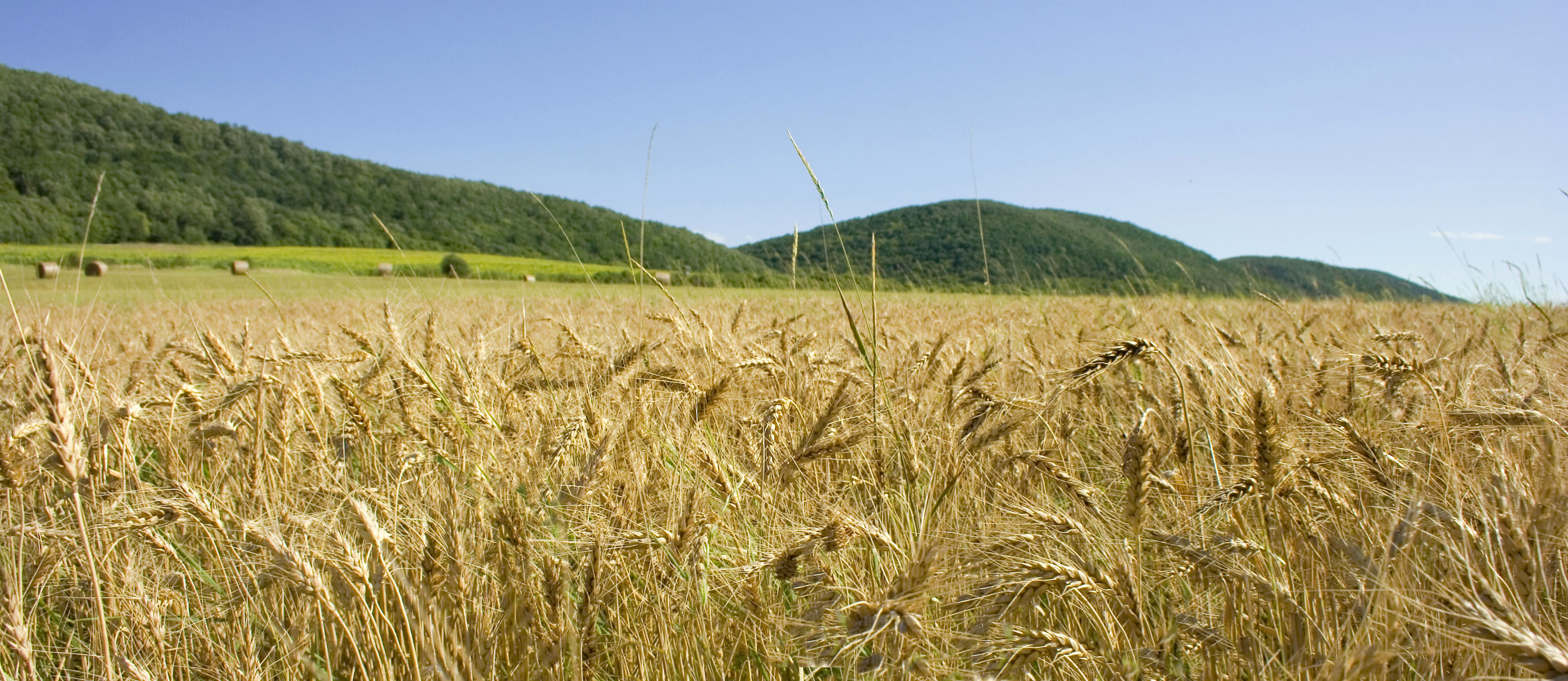
Have any of you seen wheat in the ground? I love driving through the farm fields of western Minnesota in the month of June, when all the soybeans, corn and wheat are in the ground, and the trees are all green… It’s like driving through a giant green carpet. Or in August, when the wheat is in its prime, and those ‘amber waves of grain’ start flowing in the wind.

Wheat and weeds. Harvesters ask if it’s okay to take the weeds out, while they’re still young. No, says the farmer. By uprooting the weeds, so too would you uproot the wheat. Don’t take it upon yourself, he says. It's not up to you.

Wheat for many is a staple in grains, cereals, breads, pastries, etc. It’s a versatile plant, with many uses at home or on the farm. However, it might as well be a weed to others, as there are those who cannot digest the gluten within the wheat, properly. Wheat means life for many, unrest for others.

The symbol we use as our identifying mark as Christians, is a cross. A cross, the torturous device that thousands died upon, including our savior. As Christians, we use this symbol as a rallying identity, the proof that the device used to cause death, is a reminder of our life in Christ. And yet, the cross is still used as a weapon to this day. Physically burned, or figuratively as a symbol of a broken religion, separating those whom some deem unworthy of that life in Christ.

Wheat and weeds. What some may think is unworthy of eating, others may see delicious food. A literal example of this is the common dandelion, a weed that sprouts nearly everywhere, and sticks around. While maybe a nuisance, the plant has been used as food, and herbal medicine. Kale - once thought as mere decoration for salad bars, is now all the rage, to the point McDonald’s is putting it in their burgers. You know you’ve made it big when McDonald’s sells it.

Society as a whole, puts nearly everything on a binary scale of acceptable or not acceptable. Wheat or weeds. Female or male. Queer or straight. Rich or poor. Healthy or unhealthy. Fat or skinny. Good or bad, sin or salvation, law or gospel. Some find identity between these binaries. Some bristle at the thought of such a thing.

But what does Jesus say in this parable? In this ‘throwing around’ of conversation about God? Who are the wheat, who are the weeds, what practices are wheat-like, which are weed-like?

I’m gonna let you in on a little secret. There’s room for the middle. Because what Jesus is getting at - is not that the wheat survives and the weeds burn… but within the combining of the wheat and weeds… it’s not up to you to decide what is and what isn’t. There’s wheat and weeds inside all of us. We are all sinner and saint, all maintain law and gospel.

“We know that the whole creation has been groaning in labor pains until now; and not only the creation, but we ourselves, who have the first fruits of the Spirit, groan inwardly while we wait for adoption, the redemption of our bodies. For in hope we were saved. Now hope that is seen is not hope. For who hopes for what is seen? But if we hope for what we do not see, we wait for it with patience.” (Romans 8:22-25 NRSV)

Paul the Apostle, writing to the Romans, writes of the difference between living for the Spirit, and not our body. Spirit over body. Wheat over weeds. We have hope for work of the Spirit, that which is not seen, for that is the hope on which to hold.

Hope… the fine line between what is and what could be… that is where God is present. In the space between. Hope, faith, belief - the space between what is, and what is possible. Live for what is possible. The possibilities of life abound.

When two separate incidents happen with similar results, and a consequence of both events is the ending of a relationship, what was it that ended the relationship? Something in that middle period. Was it the wheat? The weeds? What caused the end? Something in the middle.

When Christ lived his life, teachingpreachingfeedinghealingwashingsaving all, and then dying on that cross, that symbol of both death and life… Was it the weeds that caused his death? The wheat? Or was it something else? Is it the wheat or weeds that give us new life with Christ? Or is it something else?

Grace. Grace through faith. It is Grace through faith, freely bestowed on us all, to save us all from making the choice between wheat and weeds. To save us all from the weeds that hold us back from the wheat that gives us life.

What the weeds are in your own life, what the wheat is in your own life - that’s up to you. Watching Marvel’s movie Dr. Strange the other day, the main wise character of the movie, the Ancient One throws in a little tidbit that has stuck with me. Talking to Dr. Strange’s compatriot, she says “We never lose our demons... We only learn to live above them.” Sin remains, we are never sinless beings. We learn to live in the middle between sinner and saint. We have faith in a Savior that saves us from our sin, and hope in that Savior that we can learn to live above that sin. We are people, of a broken humanity, bound by both wheat and weeds, holding on to the space between. God is present in the middle. God carries us through the middle periods of our lives. Life is made up of more than wheat and weeds. Entire giant green carpets of God’s beautiful creation exist, and we are made better for it. Go out and enjoy it.

Amen

Monday, July 10, 2017

Rest.

This is my second sermon preached at Camp Nidaros, a pastor's retreat area next to my previous internship site in rural Otter Tail County. A beautiful day under the clouds and trees, next to Otter Tail Lake and Walker Lake.

Psalm 145
Matthew 11:16-19, 25-30


Grace and Peace to you from God our Creator and from our Lord and Savior Jesus the Christ, Amen

“Come to me, all you that are weary and are carrying heavy burdens, and I will give you rest. Take my yoke upon you, and learn from me; for I am gentle and humble in heart, and you will find rest for your souls. For my yoke is easy, and my burden is light.”

Christ the Shepherd of us all, the advocate for all the lost sheep… is telling us all to rest. After summoning the disciples, telling them that he came to bring a sword and not peace, to break up families, rend father from son, mother from daughter, etc etc etc… Jesus the Christ, who has been busy telling us what we are called to do in this world… tells us in our Gospel for today… to just go ahead and cool down. Put on the brakes. Stop and smell the roses.

Rest.

It’s hard to remember to stop sometimes. Those of you who are retired, those of you who need to actually retire, those who are taking the summer off, taking the day off, taking the morning off… taking this sermon off… Rest.

It’s certainly a huge difference from what Jesus had spent the last few weeks talking about. Culminating all of this discussion of what he is calling us to do… to finally say - Rest.

Life can be like that sometimes, when you just rush and rush and rush and then… stop. I’ve heard people tell me that when they work too hard for too long, something goes wrong, and they are forced to stop working. For a few clergy-folk, and it certainly wasn’t only one who’ve confessed this to me - but for those who work too hard for too long, as clergy are wont to do… a major attack on their body is the thing that forces them to take things slow. Usually it involves the heart or blood flow. Working hard and long for extended periods of time can wear a person down, and it’s not just clergy that do this, but plenty of hard-working people do. Our society demands it of us. Parenting, especially for new parents, can be quite taxing on people. School events, sports, then throw on church… self-care… When’s the *rest* supposed to happen again?

Self-care is a terrible habit to get into. Especially when juggling so many balls at once. It’s just one more ball to throw in the mix. And when you finally have the opportunity to just focus on yourself, you feel guilty for doing so. Vacation and retirement are great examples of self-care, as long as you can somehow manage to not think about work. Even now, I’m technically ‘off’ this weekend, and here I am up here. Don’t worry, I feel honored and love being here. But I’m technically ‘working’. And I had a wedding on Friday.

Just to catch you up for those of you who know me, and even those of you who don’t - It’s been a year since I was preaching under these trees, next to these lakes. I’m Jon Rundquist, the former intern of Zion, up the road. I’m currently serving my second internship at Living Waters Lutheran in Sauk Rapids and Lutheran Church of Christ the Redeemer in south Minneapolis. I’m on this second internship due to being postponed in my Approval for ordination. The second internship was part of the recommendations of the postponement. Since I left Amor last August, my family and I have been living in Saint Cloud, where I finished my Master of Divinity, and Tiffany started and finished her Master of Social Work. Raising two kids, working at Target occasionally, Tiffany working her unpaid internship, and on top of all that, I came out as transgender and non-binary in the fall. It’s been a very busy year, and I’m still going.

For some of us, rest doesn’t come by easy. For Jesus, rest doesn’t come by easily for him either. From the moment he hits the ground running, he doesn’t really get a moment to rest. He gets one opportunity to rest in a boat while the disciples are fishing… and then a storm comes and he needs to save them from that anyway. He's got so much in his plate, and yet here he is telling us all… to rest.

But it's hard these days. A new crisis erupts over night, even when we're resting, somebody else is using their device to destroy someone else's life and reputation, or complain about random things or insist that they're more popular than others or incite violence or not do the thing they're supposed to do when everyone else… is resting.

Another act of injustice. Another attack, another life taken, another reason to stand up and say- enough is enough. Every day we get up, there's something to work on, something to fight, somebody to correct, something to cry out for… and still Jesus says… rest.

For his yoke is easy, and his burden is light.

 A colleague of mine asked on Facebook what they could do to help ease the burden of caring for patients in their chaplaincy work, to help center themselves. When I feel overwhelmed, anxious, out of my element…. I seek the one element that binds us all together. I pray. I seek the One who offers us rest and I pray. Because I know and have faith in God, that God's got this.

God, the Creator of all things, of these rocks and trees, lakes and rivers, you and me…

God's got this, because God's had us in God's loving arms since before the lights were in the sky and long after they go out. As the psalmist writes in today's psalm, God endures throughout all generations, Jesus said he is the beginning and the end.

God calls us to care for God's creation, to advocate for the marginalized, to love one another, to upend the status quo, to lead by Christ's example, to keep the faith, extend the faith… and rest.

And when you have rested and begin to be restless, start again. Keep up the good fight. The sun will shine tomorrow.

For his yoke is easy, and his burden is light.

I cannot end this sermon, without addressing the elephant in the room… or trees…
Jesus the Christ offers us with this text, a promise of the ultimate rest, the ultimate laying down of burdens at his feet. There is no life without death. But because of the One who conquered death, there is no death without life. Through the unwinnable and unshakable never-resting power of God's Grace, freely bestowed to all through Christ's life, death, and resurrection… in the Cross, we find our eternal rest.

 Through all the joys and sorrows of life, the fighting of injustices, the daily grind, the working and over-working, the chaos of modern realities… remember to rest. We have confidence and boldness in Christ, knowing that through it all, God's got this.

Amen