Sunday, May 3, 2015

The Good Shepherd of Poverty: Alberta Sermon 3

Last week, I preached at Trinity Lutheran in Alberta, Minnesota for the third time. I had to have it recorded for my Preaching class (so you get an added bonus of a video if you so wish to have this narrated as you read it) and thus I couldn't upload it until my classmates had had a chance to watch it. (We also missed today's sermon due to schedule changes so... without further ado...)

Acts 4:5-12
Psalm 23
1 John 3:16-24
John 10:11-18


Grace and Peace to you from God, our Good Shepherd, who laid down God’s life for us all, to
lead us beside still waters and restore our souls; to dwell in God’s house our whole lives long.
Amen.


“I am the good shepherd. I know my own and my own know me, just as the Father knows me
and I know the Father. And I lay down my life for the sheep. I have other sheep that do not
belong to this fold. I must bring them also, and they will listen to my voice. So there will be one
flock, one shepherd.” (John 10:14-16 NRSV)


How many of you know the 23rd Psalm by heart, or at least most of it? Yeah, it’s a good
one. We love it so much; we have it read at important points in our life. Whether it’s at a
wedding or a funeral at a loved one, we read the 23rd Psalm. We have it read at our hospital beds;
we read it when we want scripture to comfort us. Some of us may have other favorite passages in
the Bible, but there’s just something about that shepherd image. There’s something about the
image of someone watching out for us; when we’re at our deepest depths of sorrow. The Good
shepherd knows us, and we know the Good Shepherd. We know the Good Shepherd is there to
indeed walk with us in our deepest and darkest valleys. We have that faith; that God’s got our
back, even when the wolves of our lives are biting at our heels. When our backs are against the
wall, God is there, with the rod and staff to comfort us.

It can be easy to forget about the Good Shepherd though. It can be easy to not even notice
the Good Shepherd. Some may not even know the Good Shepherd, or know that there’s anybody
watching over. Jesus, however reminds us that he already has other sheep that are not in the fold.
It is Jesus’ job, as the Good Shepherd, to bring in the other sheep. The onus is on Jesus, the Good
Shepherd to gather us all, into one flock, one shepherd. God watches over us all, even if we don’t
know it. Even if we’re unaware of God’s presence, God is there. That’s what makes the job of
being a sheep so easy. It’s not up to us to find the other sheep. As sheepish as that sounds, it’s
true. Being a sheep ain’t so bad after all.

“We know love by this, that he laid down his life for us—and we ought to lay down our
lives for one another. How does God’s love abide in anyone who has the world’s goods and sees
a brother or sister in need and yet refuses help? Little children, let us love, not in word or speech,
but in truth and action.” 1 John 3:16-18

We can’t be the Good Shepherd, that’s up to God. But we can be more than sheep, too.
Finding the other sheep is, always has and will be, up to God. But we can be more than sheep.
Our Second Lesson this morning reminds us that love is found in not only Christ’s death and
Resurrection, but in our laying down our lives for one another. Laying down our lives...

What does that mean for us? Sure, maybe we’ll have the chance to step in front of a
bullet for our friends; but hopefully not. No, laying down our lives for one another means more
than that. It means separating from ourselves the stuff that gets in our way... to really listening to
people; to really being there for people. It means tearing away the barriers inside ourselves that
prevent us from being present to ourselves; to each other.

Let me give you an example: poverty. Homelessness. Underprivileged individuals living
among us. You may be thinking to yourself, “Poverty doesn’t exist here!” “Alberta? There are no
slums here.” And, you may be right. There aren’t slums like you see on TV. THOSE people live
there. Not us. Not us strong and fervent Minnesotans. Not us humble farming folk.
I’m here to tell you this morning, that poverty does indeed exist within our midst. I know
hard-working folks who grew up just miles from here... that spent years living below what the
Federal Government considers poverty. But poverty is hard to spot in these parts. Poverty
doesn’t look like what it does on TV. That’s because the faces of Greater Minnesota’s
impoverished, look like mine and yours. Those of us who grow up and live outside the Twin
Cities overwhelmingly have similar backgrounds. We have similar culture, similar occupations,
similar livelihoods that we keep to ourselves. To call people around here poor... is a slap in the
face. We work hard for our money; for our families. We work hard to keep the meat and potatoes
on the table. We are a hard-working people. We survive the harsh (or not so harsh...) winters
and sweltering summers. We are a tough people, us Minnesotans.


What if I were to tell you – that at least 500,000 people living in Minnesota live under the
Federal Poverty line every year. That’s half of a million people. That’s more than the entire
human population of Wyoming. 2/3 of North Dakota. Half of South Dakota. Yet, in comparison
to other states, we have one of the lowest poverty rates at 11%. The highest state has almost a
quarter of its residents living under the Federal Poverty Line.

We are a tough people. Even when people are clearly in poverty in this state, we don’t
admit it. How many of you were shocked by the numbers I just gave you? 500,000 people don’t
make enough money to be able to feed their families in this state. We struggle on, knowing we
are a proud and strong people. We don’t want to admit defeat. We don’t want to call ourselves
poor, because that’s a sign of defeat. Calling ourselves poor looks bad on ourselves, our parents,
and those tough ancestors of ours that carved out a living out of this soil. This soil that gives us
life; that gives others life. And yet, an estimated 14,000 Minnesotans sleep on the streets or in
shelters every night. Children go without food on their plate. And yet, we’re too proud to admit
when we need help. We’re too proud to admit that our neighbors go without, and we know it. For
we are a strong and hardhearted people.

1 John reminds us that “...by this we will know that we are from the truth and will
reassure our hearts before him whenever our hearts condemn us; for God is greater than our
hearts, and he knows everything. Beloved, if our hearts do not condemn us, we have boldness
before God; and we receive from him whatever we ask, because we obey his commandments and
do what pleases him.”

Jesus laid down his life, by dying on the cross for us all. By the freely-given Grace of
God, we are saved from our sins of this world. We have to hold onto that. Whatever ailment
befalls us, we have to know that there is someone watching out for us. Someone who loves us
enough to lay down their life for us.

God calls us to lay down our lives for one another. For the weak, the lonely, the poor in
spirit. We are all God’s blessed children. We are all beloved Children of God. We are all in
God’s fold. God is there to restore our souls, and lead us on our paths, for God’s sake. When we
walk through the darkest valleys of our lives, God is there to comfort us. Jesus is our Good
Shepherd, and watches over us. The Good Shepherd laid down his life for us, and we must do the
same for others.

So when you’re sitting there reading the 23rd Psalm, and you read about how the Lord is
our Shepherd, and he makes us to lay in green pastures and beside still waters – think of Jesus,
our Lord, our Good Shepherd who guides us through our darkest valleys. For though we walk
through the valleys of our lives, with the shadow of death looming; we may hold in our heart the
comfort of a Savior.

The comfort of a Savior who laid down his life for us all; on a hill named Calvary; so
very long ago. This Savior who rose again the third day, saving us from the sins of this world, to
join him in the next. Laying down our lives for each other may seem like a daunting task.
Breaking the barriers we have in our own lives; so that another’s life in whatever muck they find
themselves in, may be set free. Poverty is rampant in this world. It may not seem like it here in
Alberta, but poverty is around you; it’s just hard to see. Dig down deep, friends. Have no fear,
little flock. Breaking the bonds inside you is hard enough. Breaking the bonds of poverty in this,
the richest country on the planet – now that’s a feat to behold. I dare you, to engage the
conversation of poverty with your neighbors, coworkers, classmates, teachers, students. Learn
from them, teach them. Knowing – that a man laid down his life for us all, once; so too may you
also lay down your life for your neighbor.

Being a sheep is easy. Being more than a sheep; that’s up to you.

Amen.


Link to Video -
https://drive.google.com/file/d/0B7uFAcq5lEgRdWlyZ213cXBib00/view?usp=sharing

Tuesday, February 17, 2015

Of Rocks and Changes - Transfiguration Sunday


This is my sermon that I preached at Trinity Lutheran in Alberta, Minnesota on Sunday, February 17

2 Kings 2:1-12
Psalm 50: 1-6
2 Corinthians 4:3-6
Mark 9:2-9


Grace and Peace to you, from the God of Moses and Elijah; and from God’s Beloved Son, Jesus the Christ, Amen

“Six days later, Jesus took with him Peter and James and John, and led them up a high mountain apart, by themselves. And he was transfigured before them, and his clothes became dazzling white, such as no one on earth could bleach them. And there appeared to them Elijah with Moses, who were talking with Jesus. Then Peter said to Jesus, ‘Rabbi, it is good for us to be here; let us make three dwellings, one for you, one for Moses, and one for Elijah.’ He did not know what to say, for they were terrified.” (Mark 9:2-7 NRSV)

Today is Transfiguration Sunday. Transfiguration is the fancy word for the act of changing into something more beautiful or wonderful than before. (See, there I go teaching to you again…) When important stuff happens; when significant events transfigure us, there are times when we want to record it, so we can look at or watch it again. We want that important time in our lives to last… because this is a big deal, and of course we want that amazing moment to last beyond our ever-shrinking memories…

Like a Butterfly!


How many of you have a cell phone? Okay, so how many of you have a smart phone? We take pictures on our phones. We take videos on our phones. Back in the day, we had to have two separate devices for such things, and they’d take up an entire backpack to fill. Never mind all the film, tapes, batteries, memory cards we had stored with them. Now, they fit in our pocket, and when something important happens, we just whip our phones out of our pocket and hit a couple buttons to accomplish the same task. (Talk about transfiguration!) Some phones even have quick little buttons on the side that are very convenient when you have your phone OUT of your pocket, but not so convenient when it’s still in your pocket… and it starts taking pictures of… well, your pocket.


Even if we’re not truly present at the time of the transfiguring event, we strive to savor it by recording it with our devices. When the baby starts crawling for the first time, there we are watching it happen for the first time… through the lens of a camera, or our phone. We watch our children grow; hitting those milestones like baptism, turning over for the first time, crawling for the first time, walking for the first time, and running for the first time… and then… it’s hard to take pictures of them because they’re always moving… and then… and then….  And then I don’t know what happens next, because Sam hasn’t gotten that far in the book of life yet… but when he does that next thing… Someone will be recording it somehow.

“He did not know what to say, for they were terrified”… When these transfiguring, transformative things happen, we don’t know how to stop and smell the roses. We don’t want to stop and smell the roses, because we’re too busy wanting to preserve the smell somehow. Fumbling with our phones; our cameras, just to get that perfect moment recorded. When we see an old friend, we want to stop and talk with them for a while; to make sure that we get that all-important ‘selfie’ to post on our facebooks and instagrams and twitters later…

Peter, literally the rock on which Christ would build His church seemed to be the disciple that never knew what to say when walking with the twelve. In the Gospel of Matthew, the disciples were out on the boat when Jesus went up to the mountain to pray. That night, the wind was strong and sent the disciples farther out into sea. They awoke the next morning to Jesus walking out on the water, and again, were terrified. Once again Peter, that old rock… (Rocks float right? At least the very small ones do…) Peter that old rock steps out of the boat, and starts walking out on the water… until he notices the wind, that transformative change in weather, and like the Πέτρος that he is, begins sinking. “Oh ye of little faith,” right?


Change happens. In a few weeks, the snow will melt and the ground will thaw, (I know, it may be hard to believe, but it always does…) you’ll get out the tillers and plows and the planters and start planting those crops, and Spring will be right around the corner. Hey, at least one of the groundhogs confirmed it!

But change is coming. Lent is coming. Spring is coming, and Peter shows up again in another memorable scene during our forthcoming Holy Week. For it is Peter that denies Christ three times, just as Jesus predicts. Change had happened rather quickly for Peter, and in that change brought with it the same confusion; the same bumbling as to what to say in that moment; the same broken humanity that he found himself in. Jesus, the man whom Peter had been following around for years, was going to die. Change had happened rapidly, and while ultimately and eventually a very transfiguring experience for the world; this change was too much for Peter to handle. It was too much for the people around them. It was too much; for us.

That transfiguring change on that mountain with Moses and Elijah and his disciples looks very reminiscent to the upcoming scene on a similar hill, with two other individuals and disciples around him. Both scenes depict a transfigured Jesus. Peter wants to sit and take it all in the first time, and denies it the second time. Without the second transfiguring experience however, the secret at the end of today’s Gospel message makes no sense.

“As they were coming down the mountain, he ordered them to tell no one about what they had seen, until after the Son of Man had risen from the dead. So they kept the matter to themselves, questioning what this rising from the dead could mean.” (Mark 9: 9-10 NRSV)

Jesus, the Son of God and Son of Man – our Beautiful, Beloved Savior would die on a hill with two other figures, and disciples watching from afar. What Feast of Love is that; to die for the sins of the world; to die to save us from those sins. Death is not the end for the Son of Man, for the transfiguration experience of resurrection; is where we place our own transfiguring experience. Jews, Muslims, Hindus, Agnostics, and Atheists all agree that Jesus of Nazareth lived, and then died. It is the promise that awaits us on Easter morning; the transfigured, resurrected Christ that we rest our faith in; that we are called and named in the waters of Baptism. That Feast of undying love and salvation that we remember in the celebration of our own Feast of Love this morning.  

Change can be exhilarating. We get caught up in the whirlwind of emotions, and wish to capture it with whatever device can fit in an accessible location, so as to not forget the overflowing of positivity. Peter wanted to hold onto the Transfiguration with using tents to stay a while. We hold onto our transfiguring moments with our own transfigured devices right at our fingertips. We get caught up, without remembering that what is happening out there, is just as important as what’s happening right here. What we feel in the moment of transfiguring, can never be reproduced or recorded, so live in the moment.

Change can be frightening, or even terrifying. Jesus’ disciples were often terrified in the Gospels. Change can look like an unwanted, unwarranted, and unneeded thing. In the moment, it may look unbearable. How can one go on when so much change has happened? How can we remember who we were before; before all the change happened? Without changing who we are, how can we learn to live in this new reality?

Change may happen suddenly or slowly over time. One major change may uproot our sensibilities, but how can we live with this sudden or slow change, and learn to embrace it? How can we learn to see the changes in our lives, so that they can begin to look very similarly to that of today’s Gospel lesson? How is God calling us to be transfigured in our own lives? Changes can seem to overwhelm us completely; causing us to lash out and create barriers, rather than spaces for growth and conversation.

That, my friends, is where we find the hope of Jesus Christ – in the growth areas. For we are all sinful beings; all part of a broken humanity. It is the Grace of God that allows us to live in those growth areas; where conversation can be held, rather than abandoned. If we allow the Spirit to send us forth, into the unknown of silence; we may begin the bridge the gap between change and growth. That gap by the way; is where our own transfiguration happens. Where we change for the better, in order to learn from one another, be with one another, and live in peace with one another.


In this upcoming season of Lent, I hope that we all learn to slow down to smell the roses and hear how God is calling us to change in our lives; to transfigure; to reorient our lives for the betterment of all. To paraphrase Red Green, God’s pulling for us; we’re all in this together. Amen. 

Monday, February 2, 2015

I am Authority (And So Can You!) - a Meme special

My Sermon from yesterday that I gave at Trinity Lutheran in Alberta, Minnesota

Deuteronomy 18:15-20
Psalm 111
1 Corinthians 8:1-13
Mark 1: 21-28


Grace and Peace to you from God our Creator, and our ever-present Teacher, Jesus Christ; Amen.

“He commands even the unclean spirits, and they obey him.” Teachers. How many teachers are out there this morning? How many of you are able to command unclean spirits out from your students? How many of you SMELL something unclean ON your students? In the Gospel lesson this morning, Jesus is teaching in the temple, when he gets interrupted by this unclean spirit-filled man screaming at him. Jesus stops what he’s doing, yells at the spirit, and exorcises the spirit right out of the man. Oh, what authority this Jesus has! He just plucked the spirit right out of the man. Jesus probably went right back to teaching too… As if nothing happened… Perhaps some of you have authority to stop kids from yelling in your classes…


Mark is the shortest Gospel of the four. If you’ll notice, this comes from the first chapter. There’s no Christmas story in Mark, only his baptism and BAM! Jesus begins calling disciples and just gets to work. Epiphany is the season of showing folks what God does in the world; what Jesus’ ministry is like. In the last couple weeks’ Gospel lessons, Jesus was calling disciples to, “Come and See”. Today’s Gospel is Jesus teaching and exorcising. We know that Jesus did much more than these, and continues to do much more in our world. Yet, we must not overlook how powerful such an act as teaching can be.
Teaching, for many, is a calling; a vocation; an act of God that tells us deep inside, that we are made to teach. We were born to teach. Teaching feels so right for us, that it’s second nature. I just taught those of you who didn’t know before, that Mark is the shortest and Earliest Gospel. Okay, so I added the ‘Earliest’ part just now, but like I said, some of us cannot help teaching people. Whether it comes out of intuition or it just feels right; we teach because God taught us. We teach because someone taught us. We teach… because we feel we have the AUTHORITY to... to impart knowledge that we’ve learned to the rest of the world – because we feel that it will be useful to them someday.

Teachers be like...


We don’t know what Jesus was teaching that day in the temple. It probably wasn’t nuclear physics or the intricacies of how Minnesota’s strange weather patterns affect crop yields… but Jesus was teaching in the temple; because Jesus, the newly baptized; had the AUTHORITY to teach. Jesus was ordained by God, baptized in the Jordan River by God, and yet, was completely and undeniably God.
In the reading from Deuteronomy this morning, the author writes, “I will raise up for them a prophet like you from among their own people; I will put my words in the mouth of the prophet, who shall speak to them everything that I command.” (Deut. 18:18 NRSV) Teachers, especially the good ones, are today’s modern prophets. From among their own people. How many of you like hearing someone talk, sing, preach, teach… that is able to speak to you, personally, living similar experiences – they speak as if they have AUTHORITY on the subject, because it’s the same authority you have. You have personal authority over your own life, and when people speak to that authority, and have similar AUTHORSHIP – you can understand what they’re saying, and you feel good about what they’re saying. You may not agree with them, but you can certainly understand where they’re coming from; because they come from where you come from.


I grew up about 10 miles from here. My brothers and I used to ride our bikes on County Road 9 to the ‘Alberta Tar’ – and turn around. At school, I feel like I have AUTHORITY on rural life; because I grew up a block from these farm fields and my father drove tractors and combines most of my life. I took my gun safety in the Alberta school. The open fields and sparse trees are my home.
I never thought that rural ministry would be what I feel called to; but it turns out that I love coming back to the prairie, to share God’s message of Grace, Love, and Mercy to people I grew up with. I love when people at school talk about rural issues, because I feel that they have the AUTHORITY to talk with us about it, because they grew up like I did. When people try to speak about rural issues not having experienced life in a rural community – I get annoyed that they don’t have enough authority to speak about it.

What I feel like saying... too often...


When Jesus was teaching in the temple, he was speaking to his people. Jesus grew up with these people, and having authority to teach in the temple was hard to get. The fact that Jesus was teaching in the temple showed that he was given high authority to do so. This was a big deal for Jesus to do. In all of Church history, women for instance, were not given this authority; to speak in a religious service; until the 1800s. That’s at least 1500 years when half of the Christian population was prevented from speaking openly in worship. There are still many groups of Christians that don’t give this AUTHORITY to women. Many groups of people in churches today are not given AUTHORITY to preach, teach, or even worship… the God that freely bestows Grace, Love, and Mercy to all, no matter what.


The God that gave us a child, born long ago, to save us all… from our sin in this world. That child, Jesus the Christ, was baptized in the Jordan River, and lived among the people of his mother. Jesus was given the authority to teach, exorcise unclean spirits, heal the sick, feed the poor, and calm the storms. And you know what? You’ve been given this authority too. Not only have you been given this authority, but God calls us to go and do likewise.
But Jon, you say, we can’t calm storms or feed thousands with a couple fish and a loaf of bread or exorcise unclean spirits; and I say to you, you’re right. WE can’t perform miracles. But God can, through us.
We can do all things through Christ who strengthens us. God’s Work, Our Hands folks. God calls us to teach one another, feed one another, live with one another, be there for one another, heal one another and LOVE one another. We have been given this AUTHORITY, for we are all beloved Children of God. Paul writes in his first letter to the Corinthians that we read this morning, “…for us there is one God… from whom are all things and for whom we exist, and one Lord, Jesus Christ, through whom are all things and through whom we exist.” (1 Corinthians 8:6 NRSV)
On this day of bowls that are sometimes less than super; with deflated pigskins and scandals aplenty plaguing the league with more problems left unresolved than the United States Congress… With our nation’s authority figures constantly under investigation; causing us to DOUBT their authority… to whom do we still give authority?
Jesus had authority that day in the temple. That authority followed him the rest of his life, and the rest of his follower’s lives. His disciples were given the authority to spread the Good News, and over the nearly 2000 years since, those that put their faith in Christ have become the number one religion in the world; putting Jesus right at the top with the world’s most followers. According to most reports, a full third of the world is a follower of Jesus of Nazareth. A full third of the world gives Authority to the faith we call Christianity. Many experience it differently, and everyone interprets their faith uniquely. We Christians all follow the one Triune God, of which Jesus is of that Holy Trinity; yet we differ on how, why, or when one follows the teachings of this Christ. Yet, we all acknowledge that he taught, and he continues to live in our lives and teach us throughout our lives.
Each of us has a story to tell. Each of us has Authority; or authorship in our own life’s story. Yes, the God upstairs has the copyright, and we’re still writing the pages of our story. That doesn’t mean however, that the story has to continue as it has been. All the news happening these days, may look very familiar. The same stories always appear on the news every night. Another day, another school shooting, political scandal, house fire, plane crash, child missing… the list goes on and on… There are nights when you don’t even want to turn on the news… The pages are still being written folks. Another page is waiting to be filled… Another bad chapter awaits another good one… just waiting to be written. Another night of breaking news; awaits another dawn… breaking just over the horizon of those frozen fields…


I remember riding the bus to school; early in the morning on a frosty morning such as this… scraping the frost off the frozen windows with my fingernails… so I could see that sun peak over the tree lines… On a clear frosty morning, it seemed like no matter what homework I had neglected to do; how many kids had pushed me or called me names the day before… That sun; that light would pierce the darkness of whatever pain I felt… And I could go through that day, remembering that moment, knowing that the sun would rise again tomorrow. There’s always another tomorrow.


For us Christians, God is that yesterday, today and tomorrow. God’s son Jesus is that light in the darkness. Jesus is that Teacher; that Healer; that Savior that saves us from our unclean spirits. “He commands even the unclean spirits, and they obey him.” There are some days, in our darkest times, where we are filled with our own personal unclean spirits. Christ died on a hill called Calvary so those unclean spirits couldn’t take authority over us; so our sin didn’t define us. For no matter what unclean spirits ail us; whatever sin; whatever pain; whatever darkness we find ourselves in… God’s unquenching and unwavering Grace, Love and Mercy for us all; each and every one of us; is more than enough for us. All of us. It’s time to share that God-given Grace, Love and Mercy to our friends, neighbors, coworkers; and yes, even those spirits we deem unclean. For as Paul writes, “…for us there is one God… from whom are all things and for whom we exist, and one Lord, Jesus Christ, through whom are all things and through whom we exist.” Go. Teach the Good News. Be the author you want to be, and claim that authority to do so, because That’s what Jesus would do… Amen

Monday, January 5, 2015

The Light of Christmas

This is my sermon that I preached at Svea Evangelical Lutheran Church, yesterday. Erik was off on his adventures, so he had asked me to preach. 

Sirach 24:1-12
Wisdom 10:15-21
Ephesians 1:3-14
John 1:1-18


Grace and Peace to you from God, the Creator of all things; and The Light of the World, Jesus the newborn Christ. Amen.

The light shines in the darkness, and the darkness did not overcome it. There was a man sent from God, whose name was John. He came as a witness to testify to the light, so that all might believe through him. He himself was not the light, but he came to testify to the light. The true light, which enlightens everyone, was coming into the world.
            Our Gospel this morning tells of John in the wilderness, who in our text a couple weeks ago was the voice crying out in the wilderness calling for the Messiah, and today’s Gospel text is right before that one. Jesus the Christ is whom John is calling out for; is pointing towards. John is pointing towards the Man who was to become our Light; our Savior. The Gospel writer’s poetic description of the Word, of Light, and ultimately about God; speaks volumes in the short sentences held within. Christ is our Light. Christ is the Word made flesh. Christ is our Emmanuel, God is with us; God Incarnate. 
            The author of the Wisdom literature read this morning talks about how Wisdom was that which brought the Israelites out of Egypt, and guided them along their way. Wisdom became their savior. As Jews living before the time of Jesus, this was their way of interpreting God’s power. Most bibles on our shelves at home and in our pews don’t have the two non-New Testament texts read for us today. Sirach and the Wisdom literature come from a set of texts known as the Apocrypha or Deuterocanonical books. When Martin Luther was translating the Bible, he noticed that these books were written in Greek, not in the original Hebrew, and decided to leave them out of the Bible given to the common people. Roman Catholics consider these and other books canon, or on the same authority as found in the rest of the Old Testament. Orthodox Christians have an even larger canon with even more books. Protestants, having taken the basis of their doctrine from Luther and other reformers, don’t consider these books to have the same weight as the other texts found in our Old Testament, but find them useful in understanding context.
            Today’s text from the Wisdom literature makes reference to, as looking at the text through the lens of Christ, the coming of the Messiah; our Savior, Jesus the Christ. Looking at the text through this lens, we as Christians might see that Christ was the guide of the Israelites. God Incarnate was the starry flame through the night, in the darkness of their despair, guiding them to the Promised Land. 
   
            The Light shines in the darkness, and the darkness did not overcome it. It’s been pretty dark out there. While the solstice has passed, and the days are indeed getting longer, it still gets dark before most folks have supper. Some people go to work in the dark, and come home when it’s dark. Way up north, around the Arctic Circle, people only have a few hours or less of daylight these days.  Due to the lack of sunlight in the winter, some people have Seasonal Affective Disorder; causing them to require artificial sunlight for them to emotionally make it through their day. At Luther Seminary’s library, there’s a special part of the library for those with Seasonal Affective Disorder to get their sunlight. People with fair skin use tanning beds more often in the winter to get that ‘winter glow’. The rest of us Scandinavian Minnesotans just blend into the snow piles.
            We have problems with the dark. Have you ever gone out, late at night, in the middle of nowhere, and just appreciated the dark? With too much darkness, your eyes try to adjust to the limited light. We need light to appreciate the color around us. Without light, color just disappears. Like an old black and white movie, when the darkness surrounds us, color isn’t easily distinguished by our eyes. We see what we need to, if we can, and our eyes don’t bother with the color. When we take pictures, and there isn’t enough light for the lens to pick up, the subject of the photo loses the color as well.
            Without light, life loses its color. Without light, life isn’t quite as vibrant.

            How’s Christmas going for you? Yes, according to the Church Calendar, we’re still celebrating Christmas. Technically, Christmas goes until January 6th. There are 12 days of Christmas, and no, I’m not giving you 11 pipers piping, as today is the 11th day of Christmas. Tuesday is Epiphany, or Three Kings Day, and is the celebration of the Magi visiting Christ. Thus, Epiphany is the celebration of when the Magi are shown God’s existence through the birth of a child. God Incarnate was made known to the Gentiles at that moment, and thus the day is known as Epiphany, or Theophany. Christ was made known to the Magi at that moment, which some scholars say was years later, after Jesus’s birth.
                Christmas, beyond being 12 days long in the Church Calendar, is a two month long mad dash to the shopping malls and Targets to buy enough gifts for everyone. Even before trick or treating your way through your neighborhood, you start to notice stores hanging red and green decorations up in the back corners, just waiting for all the spiders and witches to be bought up at rock bottom prices. Christmas is a two month long marathon of radios sneaking in the occasional ‘Jingle Bells’ and ‘Let it Snow’ between the Garth Brooks and Bruce Springsteen. Once the turkey is on the table on Thanksgiving, it’s a ‘No-holds-barred’ race to the shopping malls and Targets again – to score on even better deals for the Pre-Black Friday sales. Black Friday doesn’t even mean anything anymore if stores were open on Thanksgiving anyway.
            So, Black Friday came and went, and the stores found out that opening on Thanksgiving wasn’t as profitable anyway, and Black Friday wasn’t as great as it had been in years prior, and stores were even more packed in the days leading up to Christmas Day. Once Christmas Day happened, I’m sure many of you were relieved to finally reach that day. Finally, all of your hard work paid off. Finally, the looks on your relative’s faces when they opened your gifts were worth the wait and the gifts you spent your hard-earned money on. Finally, you were able to open the boxes under the tree with YOUR name on them. And once you faked the smile at receiving the same tie or pair of socks you did last year, you knew that Christmas was over. The gifts were given, you saw the smiles on your relatives, opened your own gifts and cleaned up the wrapping paper. Maybe you waited until the next day, or even until New Years, but you took the Christmas tree down. You put it in the box or threw it to the curb or hauled it to the dump (or the town dumpster in the parking lot?).
            Christmas is over for most folks, and that’s fine. I was frankly tired of hearing the same 12 songs on the radio and in the stores anyway. We still have our Christmas tree up, but only because I don’t want to bother putting it away. Our family growing up would occasionally keep the tree up until halfway through Lent. No matter how you celebrated it, where you celebrated it, or how long you are celebrating it, it was a time you were waiting for.
            Christmas, no matter what time of year it is, is a time to be waited for. We even have a season in the Church Calendar for the anticipation, known as Advent. Easter falls on a different date every year, but you know exactly when Christmas is. If you wanted to, you could count exactly how many days it would be until Christmas. There are even websites you can access that tell you the very same thing.
            The Jews who wrote the Sirach and Wisdom texts were waiting for the Messiah to come on Christmas. The hope of the Messiah was their light in the darkness. The hope, the waiting, the anticipation of Christmas is our light in the darkness. Christmas, for us Christians is a bright, shining light; symbolized best by the Christmas tree and the Star of Bethlehem, which tops most Christmas trees. December is the darkest time of year, and the Winter Solstice is the darkest day of the year. Hanukkah, Kwanza, Christmas, and the celebration of the Solstice all bring light to this time of darkness.
            We as Christians celebrate Christmas not only for the presents and family gatherings, but with the knowledge that the Christ child that was born on Christmas was destined to live a life full of teachings, blessings and miracles. This Christ child would eventually become the wounded Christ, the dying Christ, and the Redemptive Christ on Calvary. The Redemptive Christ that would die for all of us. The Redemptive Christ; God Incarnate; that saves us all from our sins; so that we all may live, free from the darkness of this world.
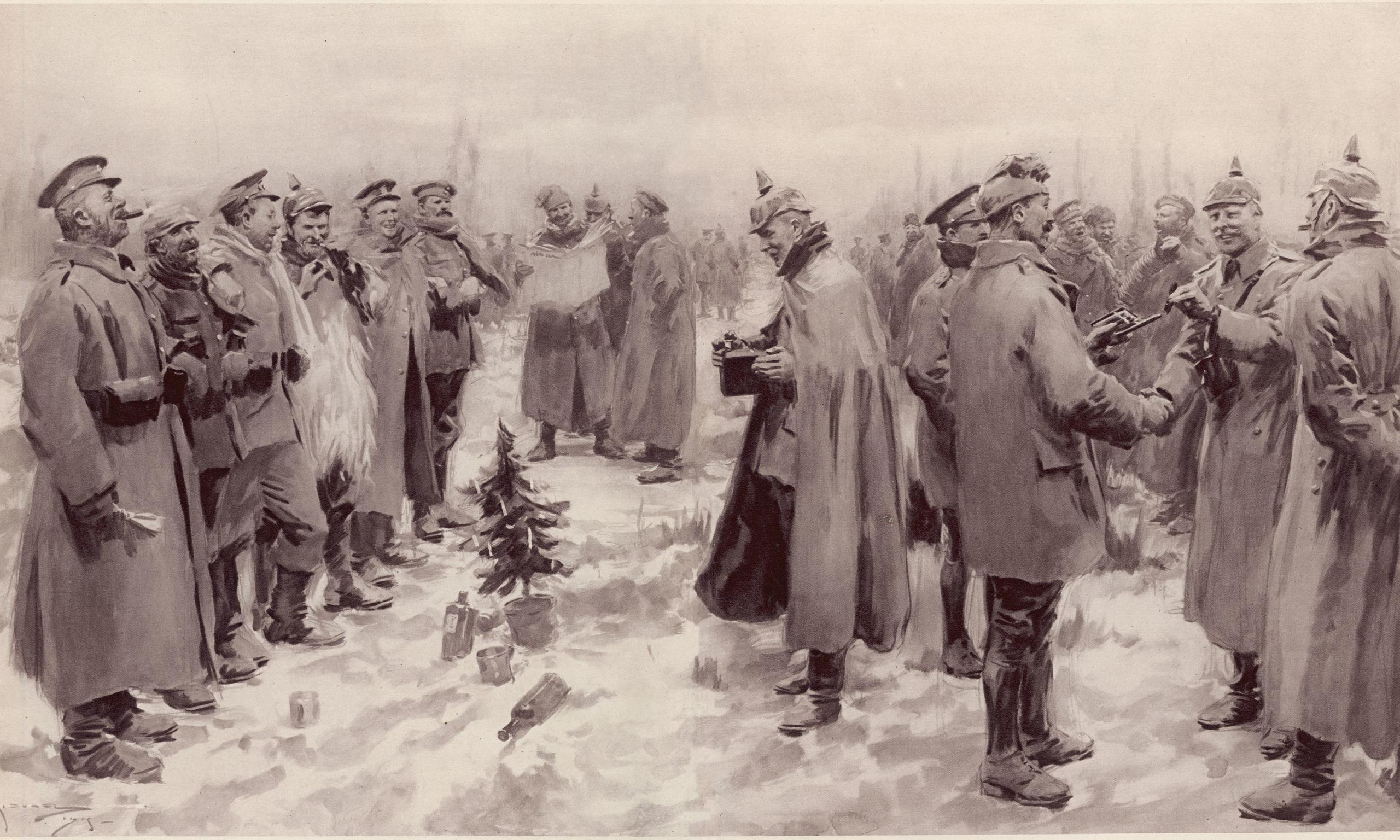
            I leave you with a popular Christmas story many of you may have heard before. It was the Christmas of 1914, and the ‘War to End All Wars’ was waging throughout Europe. In some trenches along the Western Front, all became quiet that Christmas on the Western Front, as men who had shot at each other for weeks, stopped shooting. No Man’s Land became a land of everyone joining in song around the celebration of Christmas. Germans, British and French soldiers came together to exchange food, gifts, and souvenirs. Supposedly, even games of soccer broke out. That Christmas, the light of Christ shone out through the darkness of war into the hearts of those soldiers. 


             Christ, be our light this day. Shine through our darkness today and every day. Merry Christmas. Amen.     

Sunday, December 14, 2014

Voices Crying Out in the Wilderness

My Sermon that was given on 12/14/14 at First Lutheran in Morris, MN


Grace and Peace to you, from God our Creator and awaited Messiah, Jesus Christ, Amen.

“There was a man sent from God, whose name was John. He came as a witness to testify to the light, so that all might believe through him. He himself was not the light, but he came to testify to the light.”

John was being scrutinized by the authorities at that time. Why WAS he dunking people in the water? Yes, dunking. Immersing. In Greek, the word, βαπτίζω means to literally sink, dunk, immerse. When you eat your doughnuts with your coffee, many of you may βαπτίζω your doughnut into your coffee. I βαπτίζω my chicken nuggets in my ranch dressing. Dunking. It’s what we do. It’s what John was doing in the Jordan River a couple thousand years ago. The authorities saw what he was doing, and were asking; on what authority HE had to be βαπτίζω-ing people. HE wasn’t Elijah. HE wasn’t the Messiah. HE wasn’t the prophet… HE was just some wild man out in the wilderness… Crying out… that the real Messiah was coming. The Messiah; the Christ; the Savior of the world… was coming to save them from… themselves.

When have you needed saving? When have you done something terribly awful, that when you dig yourself a hole, you need someone to throw out a rope for you, BEFORE you just keep on digging? When you have Foot-IN-Mouth disease, and you need someone to bail you out before you keep on shoving it on in… When you try to repair a broken relationship, and yet, you end up breaking it even more, causing the divide between you to grow even larger. When you return home… only to realize that home… isn’t the home you left all those years ago…

This, this is my home.

For those of you who don’t know me, my name is Jon Rundquist. I grew up in this church; this congregation. I bring you Advent Greetings from Luther Seminary in Saint Paul; where I have just recently (as of yesterday) finished my 4th semester of working on earning my Master of Divinity. I live in Lauderdale with my beautiful wife, Tiffany and our 2.5yr old son, Samuel. Tiffany is a full-time case manager working to coordinate medical services for the elderly in Hennepin County, and Samuel enjoys pre-preschool at a daycare at Luther Seminary for five days a week. I want to thank you, First Lutheran, for your welcoming presence, and your continued financial and prayerful support of my vocational journey. It’s always nice to have a place to come home to.

I have a few days left of my Clinical Pastoral Education at Unity Hospital in Fridley. There, I work with patients on the oncology unit, and the substance abuse unit. On the oncology unit, I have the blessed opportunity to be with patients in their battles with cancer and other associated complications. Across the way, I also have the unique privilege of walking with people in their times of struggle with their own disease of addiction. The doctors, nurses and other professionals are there to walk alongside folks struggling with their disease called addiction. They are there to save folks… from themselves; from their own disease of addiction.

Who do you have to save you from yourself? Who do we have to save us from ourselves?

The prophet writes, “The spirit of the Lord God is upon me, because the Lord has anointed me; he has sent me to bring good news to the oppressed, to bind up the brokenhearted, to proclaim liberty to the captives, and release to the prisoners… to comfort all who mourn; to provide for those who mourn in Zion.” Isaiah 61:1-2

There’s a tremendous amount of mourning and grieving going on in our world country these days. ISIL wages war in a country we’ve left for good – twice; only for us to return a third time. Fifteen billion dollars were spent on campaign advertisements alone this election season; while millions go without enough food to eat in this country. So many mass and school shootings have happened in the last couple years that they barely get reported on anymore. Young men are dying in the streets of our country solely because of the color of their skin.  As a nation, we recently found out that our country ruthlessly tortured hundreds of men for years because whoever was in charge didn’t deem basic inalienable human rights necessary to give other human beings. Who is going to save us from ourselves?

These are the voices crying out in the wilderness. These are the voices crying out for a savior. WE are the voices crying out for a savior.

Paul writes in his letter to the Thessalonians, “See that none of you repays evil for evil, but always seek to do good to one another and to all… Rejoice always, pray without ceasing, give thanks in all circumstances; for this is the will of God in Christ Jesus for you.”

Paul was right 2000 years ago. How many people have died in the name of ‘justice’; repaying evil for evil. If we are to follow the Bible so closely, how do we seem to miss Paul’s words here so often?  But then again, how many of you rejoice always, or pray without ceasing, or give thanks in all circumstances? “This is the will of God in Christ Jesus for you.” That’s right. We can’t. We can’t follow everything that Paul says; that Jesus says; that God says. There are 613 laws in the Hebrew Scriptures. That’s 613 times where God tells the people, “Thou shalt” and “Thou shalt not” – over and over again. Early rabbis quickly figured out that it would be nearly impossible to follow every single law. So, they follow which ones they can, and allow for human error and logic to dictate which ones are more important than others.

We as Christians know there’s more to the story. We know what savior awaits us. We know who John is crying out in the wilderness for. We know who WE are calling out in OUR wilderness. Jesus the Christ is our Savior. Jesus the Christ is our Messiah, our Emmanuel. For it is in Christ that we wait this season of Advent; in this time of darkness and patience. For it is in Christ that we βαπτίζω baptize the faithful. For it is our faith in Christ that we wait – to save us from ourselves. It is the promise of God’s Grace that is bestowed to us and everyone; through the awaited Christ. It is this Gospel message; literally this ‘Good News’ of Christ’s redemptive Grace that we must rest our blessed assurance on.

 The Psalmist writes, “Those who go out weeping, bearing the seed for sowing, shall come home with shouts of joy, carrying their sheaves.” Psalm 126:6

Lives have been lost, and tears shed. This Advent season; we must remember that even while there is so much death and destruction in our world; so much darkness – Christ, who is our light shining through the darkness, sets us free from this darkness and bondage of sin; so that we may, as the Psalmist writes, “come home with shouts of joy” at the promise of this Grace, and work together to restore our country, so that all may come home with shouts of joy.

I leave you with some words of redemption in relation to our local community. About 450 years ago; a few years after Martin Luther nailed his 95 theses on the door of the Church and jumpstarted the Reformation, Protestants and Catholics alike disagreed greatly with the Anabaptists (our modern day Mennonites, Hutterites, Christian Apostolics and Amish) and would persecute them greatly; killing them in droves. Three hundred years later in the late 1800s, the descendants from these persecuted Anabaptists began settling in America, with some settling around here, in western Minnesota. Hundreds of years prior, the Lutherans and Catholics killed them in droves, but in the late 1800s, these Anabaptists settled in the land of Lutherans and Catholics. Here in Morris, we have a fine example of how our modern descendants of these Anabaptists, the various groups of Christian Apostolic church members, us Lutherans and Catholics, along with our Mennonite and Hutterite neighbors; can all live together in this agriculturally-rich railroad and college town; despite our rough beginnings. God’s Grace was shown to all then, and it is shown to all of us now.

Seven years ago, when I graduated high school, there were no Latina/Hispanic students in the high school. This year, at least a half-dozen Latina students graduated from the high school, with more in the following graduating classes. Our Latina neighbors are growing, and slowly being welcomed into this community. Who is the voice crying out in Morris? Grace abounds in this community. I foresee great gracious potential in this community for each and every one of us to show our neighbors the same Grace that God gives us all. The same Grace we see in the promise of the awaited Messiah this Advent season.

Show our neighbors that this community is grace-filled. “Till the spear and rod can be crushed by God, who is turning the world around…” “the dawn draws near,” First Lutheran, “for the world is about to turn.” Be the voice that is crying out in the wilderness. Be the face of Christ’s redemptive Grace, Love and Mercy to our community. Together, we shall prosper.  

As Paul writes in today’s second lesson, the Grace of our Lord Jesus Christ be with you.
Amen.

Monday, October 27, 2014

Being Rural, Being Radical, Being Church - Get Set for the Millenial Clergy Wave


Friends in Christ - Grace and peace to you this day from God our Creator and our Lord Jesus Christ:


Reading Emmy Kegler and Eric Worringer's blog post last week, and after reading the Rev. Charles Austin's article in The Lutheran (which the aforementioned co-authored blog post was written in response to); I decided to pair up with my co-CPE Chaplain and fellow Luther Seminary Middler, Dean Safe to write a response to both posts as well - to add more voices.


Ultimately, more voices are what we need. Ultimately, we think Millennials have proved their worth at making their voices heard. Through movements like Occupy Wall Street and many other vocal protestations of the issues affecting our generation and our contexts, we have been able to effectively raise our concerns. This is our take on what it means to be and do church going forward into a “shifting” American religious climate.


Both Dean and Jonathan’s upbringings consist of a primarily Small Town/Rural story. We are concerned with BEING the church and DOING church in a way that may be perceived as “radical”, but more important, what is life-giving to (particularly) rural people in a shifting world. Where oftentimes rural folk are neglected, or considered “fly-over country”; where churches are closing left and right; where rural people are aging - how can we as millennial pastors become passionately invested in being the church for these people whose lives are changing just as often without much say in the matter, and who are afraid of being forgotten? How can we be the radical, life-giving Church to a people whose histories are valued, whose traditions are near-sacred?


Radical and life-giving… Like The House for All Sinners and Saints in Denver, Colorado.


Thus, we’d like to address the ‘Nadia Problem’ that Emmy and Eric make reference to. It has been a concern of ours as well. They write, “We have witnessed the rise and popularity, and celebrated the work of Nadia Bolz-Weber, but we also have an issue with it.  Not because of anything she has said or done, or because she is tattooed, crass-mouthed, or too progressive or too orthodox, but because she does not represent the actual ELCA.  She has been raised up and celebrated as a voice, particularly before our youth and young adults, as "a new way of doing church," putting the "evangelical" in "Evangelical", and so on.  Then we send kids home from Youth Gatherings and college weekends and seminary visits to places where church continues in much the same way it always has.”


Yes. Precisely. We wholeheartedly agree.


They continue, “Our concern, which again is brought up by this article, is that because Nadia has become an example, it allows the institution to use her image and ministry while still largely continuing on its own path, rife with institutional anxiety and attitudes of scarcity, and bemoaning the loss of a generation of institutional pastors.  We continue to produce leaders equipped to explain what it means to be Lutheran (using our institutional memory), when what the world hungers for is a real and meaningful experience of a God worthy of worship and service. What we pray and yearn for is not an institution with one Nadia as an example, but a transformational generation of leaders of all ages that are able to cope and proclaim the Gospel as well as she has.”


We’ve had some thoughts as of late, on our down time from CPE at Unity Hospital, that may ALSO seem “radical” at first. But as we state above, radical is how we need to look at how we DO Church. As the church is “shifting” in its identity (in our post-Christendom world where the church can no longer assume that people will come through the doors), we as millennial pastors-to-be are called to find ways to bring the church to the people without the pretense of “doing church”. Rather, as pastors, we are called to bring ourselves; our broken, ordinary, foul-mouthed selves and some bread and some wine and gather around a common space and say, “Hey. I have this message. I have this bread and wine. There’s community here, and I’m a sinner amongst you. Let’s talk.” It’s in doing this; in getting outside of the church walls, in losing the expectation that people must come to the church, where these radical acts of ministry will suddenly not be so “radical”. Radical, different, and earnest as we see these things now will be the new normal. We envision a world where pastors are out on the streets and sidewalks in the small towns and big cities with the homeless and poor and marginalized and everyone would recognize it as being the Church.


“Radical” congregations do indeed exist. They’re the ones with the hip names like, ‘Jacob’s Porch’, ‘Mercy Seat’, ‘Solomon’s Porch’, among others. Our point is this: Radical doesn’t need to have a hip name. Radical doesn’t need to be in a major metropolitan area to BE Church. A rural congregation of 15 people wondering where their hope has gone is no less doing amazing acts of ministry in living out God’s call. Radical can indeed be found in, as Emmy and Eric feel, “church[es] marked by “Scandinavian” jokes, cultural enclaves, Lake Wobegon stoicism, and endless conflict over any number of issues.”


Dean’s home congregation, Spring Garden Lutheran in rural Cannon Falls, Minnesota is the traditional white-clapboard country Lutheran church as described above, however now the church is finding itself having to respond to the clarion call for widespread social equality. With the 2009 Churchwide Statement on Human Sexuality, the pastors voiced their support. However, no conversations with the congregation have been held. How do we spread those words of equality, peace, and hope from the pulpit in ways that aren't considered so radical? Because they shouldn't be. Why do we need to consider being an advocate of marriage, gender and racial equality in the name of Christ an earth-changing position to hold?  


Jonathan’s congregation in which he grew up in, First Lutheran in Morris, Minnesota; is one of two ELCA congregations in Morris. Morris is a small community that has undergone many changes in the last 20 years, but has been recently undergone a new change: Latino immigration. Northern and Central European Lutheran, Catholic, and Anabaptist immigrants emigrated to the area in the late 19th to early 20th centuries, and because of the railroad and fertile farmground; populated many small communities in the surrounding counties. Now, Morris and other communities around rural Minnesota are experiencing a newer changing demographic by way of immigrants from other parts of the world. How can Morris and these other communities be a welcoming face to these ‘New Minnesotans’? How can we be the hands and feet of Christ, to our new neighbors? These, and other important questions are what face modern Small Town/Rural communities.


It’s no myth and it’s readily apparent that these Small Town/Rural settings ARE changing. Small Town/Rural dynamics are steadily shifting - ways of life for many rural folk are becoming unsettled. Specifically in agriculturally-based contexts, small family farms are quickly becoming a bygone era, with land being purchased and cultivated by large, corporate agriculture. Modern advances in production and agricultural technology means the need for less hands and workers in the field. Gone, by and large, are the days of the small, family farm where commitment and teamwork were imperative for a family’s survival.


This is what we will be walking into as future pastors.


In this haphazard, shifting era, the important question that needs to be asked is how do we do ministry with a renewed sense of what it means to be the rural church, and the Church at large? What, in this time and space, can the Church be to give her people hope? It begins with this, we think: this “radical” concept we talk about above should merely be the standard by which we as human beings sharing the Gospel and living lives of grace should hold ourselves to. In essence, there shouldn’t have to be this “radical voice” in the first place. Those “radical voices” should be the Church - plain and simple - in broken spaces and places and with the broken people, of whom we are a part. This ‘Nadia Problem’ shouldn't be such a big deal. The way Nadia has been doing ministry should just be the Church, period.


We feel, as (future) Lutheran pastors, that all clergy (future and current, lay and ordained) need to create those spaces for the marginalized and oppressed. This should be a Church-wide undertaking. It is, after all, our calling, hope and promise that takes root in the Gospel proclamation. We hope that this ideal is what all of us, as Christians with a public leadership role, are aspiring to do. This needs to be the Church, not just some poster image that we claim as our banner but in reality are just using to mask issues of injustices in denominational polity.


How we as young (future) pastors begin to do Church may be different than it has been in many years, but as Emmy and Eric assert, “Young leaders are of great value to our church, particularly because of the rapid rate of cultural change that has occurred since the birth of the ELCA. The innovative ideas that young leaders (both ordained and lay) can bring to our worship, programs, structure, and congregational life should be celebrated as greatly as the gifts of the "older generation" whose retirement is impending.” It’s time for us up-and-coming millennial pastors and Church leaders to get our hands dirty. To revitalize. To go out among our people and ask, “What gives you joy? What can we as the Church do for you?” To proclaim the Gospel of Christ, clearly and with emboldened clarity, and to pass bread and wine for the sake of the world which we are called to serve and be a part of.


We are called, sent, redeemed and emboldened Luther Middlers, adding our voices; opening our hearts; nailing our theses to the door. Now it’s your turn.


Here we stand - we can do no other:


Dean Safe and Jonathan Rundquist
Luther Seminary Master of Divinity Middlers


“All alone, or in two's,
The ones who really love you
Walk up and down outside the wall.
Some hand in hand
And some gathered together in bands.
The bleeding hearts and artists
Make their stand.


And when they've given you their all
Some stagger and fall, after all it's not easy
Banging your heart against some mad bugger's wall.”
- Outside the Wall - Pink Floyd

Sunday, July 20, 2014

Weeping and Gnashing: Sermon on The Parable of the Wheat and Weeds

Today's sermon on Matthew 13: 24-30, 36-43 that I preached at Living Waters Lutheran in Sauk Rapids, my current Home Congregation. It's a a rough text, and a rough sermon to go along with it. We are indeed called to "Comfort the afflicted and afflict the comfortable", right? As always, you get the benefit of pictures! 

What is going on in the world right now? Record cool temperatures have embraced the Midwest in the last couple weeks, while the Western United States has seen record heat, fires and drought. The Eastern seaboard is flooding, and Minnesota had one of the wettest Junes on record. The lands that our Savior once trod are now engulfed in constant bombings, with Israelis invading Gaza, killing hundreds of Palestinians. Hundreds of people have perished in the last couple weeks, with no viable peace in sight. One plane has disappeared, and another just like it from the same country was shot down, with hundreds of people gone forever. Children are crossing our southern border in droves, and we as an American people can argue till we’re blue in the face while these children lie in huddled masses, awaiting a resolution. An estimated 50,000 people in this country have been killed due to gun violence since I stood up here after the Newtown school shooting 18 months ago. Hundreds of people are dying in West Africa due to an outbreak of the Ebola virus, and civil unrest continues in Ukraine, Egypt and Syria. Meanwhile, here we are.

Here we are, in this air conditioned sanctuary, with little to no worry of any of these tragedies hitting too close to home. What can we, as people of faith, in the face of all this… this evil… what can we do to aid in all of this?

In today’s Gospel, Jesus gives us another parable about the Kingdom of Heaven. At first glance, this parable makes for an excellent hellfire and brimstone sermon; complete with weeping and gnashing of teeth. But, I’m not that type of person to be spouting off such things, so I won’t. But, it clearly says in the text that weeds must go into the fire, with the weeping and gnashing of teeth… “Then the righteous will shine like the sun in the Kingdom of their Father...” It’d be easy to point to all of you sitting here in this room, in this sanctuary, that you are all the righteous ones sitting here, deserving of being collected and placed in the barn… But who am I to say so?

Death awaits you all with nasty, big pointy teeth...

Who am I? Well, I’m a member of Living Waters as many of you are, along with my family. I bring greetings to you from Luther Seminary in Saint Paul, where I just recently completed my first year of my eventual Master of Divinity, on my way to be an awesome pastor like pastors Denise and Todd. For those of you who don’t know, or need a refresher, I was born in St. Cloud, and attended the recently destroyed Roosevelt Elementary for two years before moving and growing up in Morris, where Todd was my pastor. I eventually graduated from Morris Area High School in 2007, and after a few years attended Minnesota State University Moorhead. While at MSUM, I was deeply involved with Lutheran Campus Ministry where I met my wife Tiffany. Tiffany and I were married the day after she graduated with her Bachelor of Social Work, and we moved to St. Cloud where I attended 2 more years at St. Cloud State. While there, I was again involved with Lutheran Campus Ministry, became a member here, and we welcomed our son, Samuel into the world in March of 2012. We moved last June to Luther Seminary, where after spending two weeks with New Wine last year, I started and finished Summer Greek. I survived my first year of classes, and here I am in front of you today, telling you that I don’t know what to say about this Gospel lesson.

I can’t just skip it. Jesus just dropped a bombshell saying that the righteous get collected up, yet the evil weeds get rounded up and thrown into the fire, where there will be weeping and gnashing of teeth… I can’t just skip it and talk about Jacob’s vision of ladders to heaven… Not to say that Jacob’s vision isn’t profound, it certainly is that… this certainly isn’t the week to go on vacation, Todd… Coincidentally, next week’s lesson is quite similar to this, and Todd happens to be gone next week as well… 

 Oh well. Here I go… Jesus tells this parable, two more you’ll hear next week, and then the disciples ask Him to explain this. Jesus says that the good crops are those who are children of the Kingdom, the weeds are the children of the devil, and must be burned, while the good crops are those who are righteous will “shine like the sun in the Kingdom of their Father…” The righteous ones… In the Greek, the Gospel writer uses the root word, δίκαιος which is usually translated righteous, but can also mean ‘just’… Righteousness equates to justice… So those who show justice on this world avoid the weeping and gnashing of teeth?

And accordingly, Jesus points out that those who are ‘children of the evil one’ will be thrown into the fire… How are we to tell the difference?

Who determines those who deserve the sun, and those who deserve the weeping and gnashing of teeth? In the parable, Jesus tells the people and His disciples that the farmer’s slaves asked if they could gather the weeds for their master… The farmer replies, “No; for in gathering the weeds you would uproot the wheat along with them…” How often has that happened in history? How often does that happen now? From the earliest examples of warfare, there have always been unintended consequences. There has always been collateral damage. What we intend to accomplish always has repercussions unseen. How many civilians died in both World Wars; in Vietnam; in Iraq; in Afghanistan; or currently in Gaza and over European skies? How many lives have been pointlessly displaced, forever changed, or forever lost due to someone pointing fingers at someone else?

J. R. R. Tolkein wrote The Lord of the Rings during and after serving in both World Wars, and then published them in the 1950’s. In the first volume of the trilogy, The Fellowship of the Ring, two of the main protagonists, Gandalf the Grey and Frodo are sitting together in a deep dark mine discussing their current fate. Frodo is part of an interracial, international team that is on a quest to destroy the One Ring of Power that is the ultimate weapon to own. Gollum is a creature that follows this One Ring throughout the three volumes in the Lord of the Rings series, and in this first volume, he sulks in the shadows, but never truly shows his face. In the film version, the dialogue is slightly changed, but furthers my point better than the original novel. Frodo tells Gandalf that it’s a pity that his uncle, Bilbo never killed Gollum when he had the chance… Gandalf tells Frodo, “Pity? It was pity that stayed Bilbo's hand. Many that die deserve life, and some that live deserve death. Can you give it to them, Frodo? Do not be too eager to deal out death in judgment. Even the very wise cannot see all ends.”

Especially in the Deep Darkness of Moria...

 So, what do we do then? We live our lives as we do, day in and day out. We strive to be the righteous and just people that Jesus calls us to be, but do not do it for fear of hellfire licking at our heels, but for the Grace bestowed upon us in spite of it. For it is indeed God’s grace that Christ died on Calvary for, and it is freely bestowed to all, no matter what. It is not for us to decide if one is deserving of the sun or the weeping and gnashing, but for us to live out the Gospel every day in spite of the hellfire made mention in this and next week’s lesson.

A few chapters before this, Jesus tells His disciples to
“Do not judge, so that you may not be judged, and the measure you give will be the measure you get. Why do you see the speck in your neighbor’s eye, but do not notice the log in your own eye? Or how can you say to your neighbor, ‘Let me take the speck out of your eye,’ while the log is in your own eye? You hypocrite, first take the log out of your own eye, and then you will see clearly to take the speck out of your neighbor’s eye.”

We all make mistakes. We say and do things we regret later, and we pay for the sins we commit, whether physically or emotionally. I told my youth in confirmation that we should not fear hellfire and brimstone where there is weeping and gnashing of teeth, but realize that when we do and say things we regret, that regret is the hell we place ourselves in. That feeling deep inside of hurting another is the hell we should fear and avoid, not a fiery pit below. And there again, is where the Grace of God comes in. When we do make these mistakes, and pay our price, we can rest in Blessed Assurance that Christ forgives us of all wrongs, with no holds barred. We must move on, cut our losses, go on living our lives, all the while striving for justice and righteousness in this world, and work to make this world a better place for all.

For here we are, in this air conditioned sanctuary, surrounded by friends and loved ones, with little to no worry of the horrific events happening around our world hitting too close to home… and in a little while, we’ll pray for those around our world in pain. We hope and pray that these horrific events come to an end, so that one day we may all live in peace, striving to better the world around us, and not to destroy it.


So Frodo and Gandalf sat in the deep dark mine, discussing their current state, and Gandalf gave Frodo some more wisdom. Frodo, after reflecting the previous conversation, said, “I wish the Ring had never come to me. I wish none of this had happened.” Gandalf looks at him, and replies, “So do all who live to see such times; but that is not for them to decide. All we have to decide is what to do with the time that is given to us.” Be. Live. Go out into the world, resting in the Blessed Assurance that Jesus Christ forgives us all of all of our sins, and live out the Gospel to bestow Grace, Love and Mercy to all.
Amen.