Monday, September 21, 2015

Our Children Are Watching Us: Sermon on Mark 9:30-37

This is my second sermon preached at Zion Lutheran of Amor on my internship.

Wisdom 1:16-2:1, 12-22
James 3:13-4:3, 7-8a
Mark: 9:30-37


Grace and Peace to you from God the Creator, and from the Son of Humanity, Jesus the Christ, Amen

“He sat down, called the twelve, and said to them, “Whoever wants to be first must be last of all and servant of all.” Then he took a little child and put [them] among them; and taking [them] in his arms, he said to them, “Whoever welcomes one such child in my name welcomes me, and whoever welcomes me welcomes not me but the one who sent me.” (Mark 9:35-7 NRSV)

This week we have a Gospel text that is similar to the last one I preached on – Jesus is hiding from the people again (never seeming to get that vacation ‘Up Nort’). The disciples meet him in a random house and Jesus says more cryptic things. Asking why they’re arguing. Asking why they think someone is better than the other. And we have a child again. Uffda.

Well, Jesus takes this moment of hiding to teach his disciples about equality, and finds a random child that just happens to be in the random house they find themselves in to use as a teaching moment. Our preschoolers are getting their bibles from Zion this morning. Preschoolers are sponges. Sam is a sponge. Sam picks up on things that Tiffany and I don’t understand how he figures out, or remembers, or hears… Not only can they learn from us, we learn from them.

Children are innocent, blank pages on which we write upon. They learn from us, TV, other kids; the world around them. They soak up so much. Life for us, and for them, is what we make of it. We can only guide, goad, and prod so much. Children have to learn on their own. We can’t open their head and deposit information, but through education and patience, they learn. Even at a young age, children are difficult to redirect at times. Once they hear ‘bad words’ they know them. And then they want to say them. Sam tells us that he wants to be 100 so he can be old enough to say bad words. Then we tell him he can certainly wait until he’s 100 to say bad words. Children are innocent in most things, but as they get older, the innocence fades away, and the realities of this world start to wear on them.

“for if the righteous man is God’s child, he will help him, and will deliver him from the hand of his adversaries.” (Wisdom 2:18 NRSV)

Our first lesson may be strange to you. It comes from the Wisdom literature, which is found in the set of books we generally don’t have in our bibles. The set of books is called the Apocrypha or the deuterocanonical books. Catholics have them, but Martin Luther found these set of books unnecessary in the grand theme of the bible, so he left them out when he translated the books of the bible into the people’s tongue. These deuterocanonical texts don’t always appear in the lectionary (what we use to give us our texts every week), but when they do, I like to use them because it is so rare to see them. However, I might have used a bit more caution and actually read what I was asking to be put in the bulletin. This text is a bit… different. (to use a Minnesotan phrase)…

Children are considered righteous, blameless, until a certain point… When that point is – is different in different situations. We Lutherans baptize infants and occasionally adults. Other Christians baptize older children or adults – when they reach an ‘age of reason’, which is usually about 15 or 16 or later... Between the ages of 12 and 17 is when rites of passage happen for most people in the world. Jews have Bat and Bar Mitzvahs; Latina Christians have QuinceaƱeras as a coming of age rite. Some tribes of Native Americans have Sun Dances as a rite of passage for their young men. For most Americans, we give 15 and 16 year olds driver’s licenses when they pass a couple tests. Catholics and Mainline Protestants confirm their teenagers in their faith. Most Americans graduate high school around the age of 18. These are rites of passage in our world where we determine that children have passed the age of innocence into the world of young adulthood…

So, when a young man builds a clock, brings it to school and gets arrested for his brilliance, the country reels and gives a double-take. When a boy is shot because he is wearing a hooded sweatshirt. When a boy is shot because his toy gun looks real. When a boy is shot because he’s in the wrong part of town… And then we start to see the underpinnings of the sick daughters I talked about last time. It’s not because of these simple reasons at all. Children make inventions all the time and show them off in class. Children wear hooded sweatshirts all the time. Children have toy guns, walk in different parts of town. This isn’t what makes our daughters sick. Racism. Classism. What happened to the innocent children? Is it because they look different? Sound different? Speak a different language?

What children are we welcoming in Christ’s name? What children are we turning away?
Christ told his disciples that, “Whoever welcomes one such child in my name welcomes me, and whoever welcomes me welcomes not me but the one who sent me.” (Mark 9:37 NRSV)

Jesus is using a child as a teaching moment. His disciples were just arguing about which one of them was better than the other. Jesus uses the innocence of a child; the humility of a child; the unlikeliness of a child; the unworthiness of a child – to make a point.  “Whoever wants to be first must be last of all and servant of all.” (Mark 9:35 NRSV)

Children were the last of all, on par with slaves in those days. Zion’s bible study group has been going through Paul’s letter to the Philippians for the last couple weeks. Two weeks ago, we went through what is commonly known as the Christ Hymn. One of the earliest known hymns written about Christ. In the Christ Hymn, Paul writes “Let the same mind be in you that was in Christ Jesus, who, though he was in the form of God, did not regard equality with God as something to be exploited, but emptied himself, taking the form of a slave, being born in human likeness.” (Philippians 2:5-7a NRSV)

Children were unlikely to survive through adulthood. Jesus therefore holds children in high regard, using them as teaching moments a few times throughout the Gospels. According to Paul, Jesus humbled himself to the point of a slave. Children were regarded as having about the same worth as a slave. Children were the lowest common denominator next to slaves. Who are the lowest common denominators in our world? In our state? In our community? What children are we welcoming in Christ’s name? What children are we leaving behind because of one reason or another?

Christ, who embraced a child for a teaching moment; hung out with tax collectors; healed the untouchable; spared the life of a prostitute… Christ frequently got in the face of the ruling class and showed the people what Grace, Love, and Mercy truly look like. Christ, who told his disciples for the third time in this text that he was going to die… would soon walk into Jerusalem and face his fate. Jesus, who sat amongst his friends who were fishermen, tax collectors, and the unpopular and had dinner with them. Even the man who was about to turn him over to the authorities was welcome at the Last Supper. Jesus knew who he was hanging out with. It wasn’t the best of the best, but the lowest of the low. Jesus would soon face trial in front of all the people, and die on a cross, just like everyone else. Dying on a cross was commonplace, and Jesus died among criminals. Surrounded by his humble friends, family, and the lowest common denominator of criminals, Jesus died for us all. Jesus died to save us all from ourselves. True Grace, Love and Mercy, given to all, was bestowed upon the world that day.

For we live in a broken world, as part of a broken humanity. The children of this world are in need of our attention. We cannot let the evils of this world be written on their blank slate because of our brokenness; our unwillingness to do anything about this broken world. When the image of a little Syrian boy washed up on the beach makes the world take another double take… We have to remember that our seemingly adult problems affect children too. Our sin; our brokenness; our realities of this world… How many children does Jesus have to put in our face before we cry out in anguish?

God calls each and every one of us to look upon the face of the lowest of the low, and embrace them. Welcome them in Christ’s name; in God’s name. For we are all unique. We are all made in the image of God, for the glory of God. Each and every one of us. No matter the scars we have or the wounds we carry. We live in a broken world, but broken things can be fixed, all with the right amount of Grace, Love and Mercy (and a little duct tape) that we receive and then respond to in kind.

Last time I closed with Bob Dylan. This week, I’ll close you out with words of my favorite band, Pink Floyd:

No more turning away
From the weak and the weary
No more turning away from the coldness inside
Just a world that we all must share
It's not enough just to stand and stare
Is it only a dream that there'll be
No more turning away?

Our daughters are sick. Our children are watching us. Don’t turn away from them. Embrace them and welcome them in the name of Jesus; in the name of God. For we are all children of God, born in the image of God, and formed to be people of God.

Amen.

Tuesday, September 8, 2015

Our Daughters Are Sick: Sermon on Mark 7:24-37

This is my first sermon preached on my internship at Zion Lutheran Church of Amor. I had my Service of Beginning on Sunday, and family there to watch and support. With a difficult text, it was fun to figure out how to preach it in a new setting, but figure it out, I did... methinks.

Mark 7:24-37


Grace and Peace to you from God our Creator, and from the Healer of our every ill, Jesus the Christ, Amen

Jesus, after having a long hard journey to the land of the Gentiles, needed rest. He needed rest and proceeded to hide away from the crowds that followed him. He was a popular guy, this Jesus. Healing people here, feeding people there, teaching everywhere… he had quite the following. But after a while, even the Son of God needs some rest. He seemingly never gets it. No summer vacations for this guy. No lake cabin ‘up nort’ to come up to. Even when he goes home he doesn’t really rest. So, needing some time away, he travels to the land of the Gentiles to escape for a while. Slinking away, he gets to a house and hides. Apparently he wasn’t very good at ‘Hide and Seek’, because a woman with a sick kid found him rather quickly. Not merely a woman, but a Greek woman, from Syria. The other. A woman from a different land with a sick kid was asking for healing. Jesus didn’t know who this woman was; and he refused to heal her. He outright denies her, calls her a nasty name, and tells her that God’s healing is only for the right people – and she wasn’t it.  

            She tells him that even the wrong people get the leftovers. Even the ‘other’ gets the garbage. When you were a kid, and didn’t eat all of your food, how many times were you told as you were tossing your uneaten food in the garbage, “Hey, there are starving kids in Africa…” I hate to be the bearer of bad news, but – Hey, there are starving kids in your own backyard.

            So Jesus agrees that she’s right about this, and heals her daughter, just because this woman was strong enough to stand up to the inherent power difference. She knew she wasn’t Jewish. She knew Jesus could heal her daughter, and told him off. Her daughter was healed because she told Jesus off. Her daughter was healed… because she had the knowledge that the leftovers wasn’t enough. She stood up to an old, tired tradition… And advocated for her daughter.

            Getting work done can be very messy and scary. Putting on our big people pants can be difficult in the morning. When you look into the mirror every morning, you look at the person that people see. People look at you, and see the person staring at you in the mirror. Some days, it can be hard being that person. Maybe you’re fat, you’re ugly; you have too much grey hair, not enough hair, too much facial hair, not enough facial hair, too tall, too short… let’s face it, we’re imperfect beings in a culture that demands perfection.

            It may not seem like that around here, where life seems to pass us by on the lake. In our serene morning glimpses of sunrises over the water; in our causal conversations about the weather, sports, church goings on… The realities of the world seem distant. We don’t have people on the streets begging for change. We don’t have people marching in the street shouting for racial equality. People die from accidents, illness, injuries, old age… People aren’t murdered in our streets. When it does happen; when human remains are found 20 miles from here… It’s a scary thing. We’re not used to that. We love our quiet lives away from all of that. That’s why most of us are here, are we not? We’re a hearty bunch, us Minnesotans. We survive the coldest winters by either sticking around or seeking warmer climates. We survive the hottest, stickiest summers by cooling off in our lakes or sitting in our air conditioned-central aired houses. We are a hearty people.


            We are proud of our state. We are proud of being able to withstand the harsh climate, just to make a living out of the soil or live out our days in these beautiful homes on these pristine lakes. We are a proud people, because we are able to stand up to what the world throws at us. Even when floods tear apart the Fargo-Moorhead area, or avian flu destroys millions of turkeys and chickens, or tornadoes rip through our communities, we hold on to what we have because we are a strong, proud, and hearty people. Our ancestors braved this wilderness so that we could live our lives protecting what they left for us. When adversity comes our way, we withstand the blow.

            We stand up in the face of reality, and we say no. So when a change to the standard order happens, the things we’re used to standing up to… don’t make sense anymore… we fall into disarray.
 
            We are a proud people, but we are a stubborn people. This resistance to change is inherent to the core of our being. We withstand so much, why should we budge any more than we have to? Like Pastor Jim preached on last week, we have our traditions, and we hold on to them. But there are times when traditions that seem tired, or useless… need to change. But we are a strong, hearty people, and we will stand up for a fight.

            Our daughters are sick. There are problems in this world, in this state, in this community… that need to be rectified. There are people in this community that don’t have enough to eat at night; people who struggle with their identity, in fear of judgment or retribution. There are people suffering silently with mental health problems; people with physical ailments that go unnoticed. We live in a world that demands perfection, for we are a hearty stubborn people. We are a humble people. We don’t want people to know we have problems, because we don’t want to know people have problems in their lives. That is what I mean by this world demanding perfection. Our houses are kept clean, just in case people come over. Our churches are pristine and kept up. Yes, sometimes they leak or fall apart, but for the most part, our churches are kept in order. We fear other people’s thoughts on our problems. We fear other people knowing about our problems. When our children do adequate in school, we demand perfection out of them. Their grades can always be higher. Their sports performance can always be better.

            Why do we do this? Survival. Survival and tradition. We do these things to maintain our way of life. We want to keep our legacy alive. When the Washington Post calls a county in Minnesota the worst county in the country, we cry out in anguish and pain. We have such pride for Minnesota. We stand up for one another, no matter what. We advocate for one another.

            But when new Minnesotans come into our state, we’re wary. When the Hmong, Laotian, Bosnian, Latino and Somali immigrants come into our community, we’re wary of change. We have to redefine who we stand up for. The sooner we start seeing every Minnesotan as a beloved child of God; the sooner we start seeing every person as a beloved child of God; the sooner our daughters can be healed.


            For this Jesus who healed a Syrian woman’s daughter, and a deaf man by spitting in his face, heals us all. This Jesus, who told his disciples to not tell anyone about these miracles, would soon understand his calling, and fate. Jesus would soon understand that he was the Christ, the Messiah sent from God to save humanity from itself. For this Jesus would soon face death on a cross, on a lonely hill, surrounded by criminals, the other, the forgotten… Jesus the Christ would die on that hill to save us all from ourselves. The undeniable, unshakable, unwinnable Grace that was bestowed to all flowed out of Jesus that day, so all may know God’s love, grace and mercy. It is in response to that Grace that we are called to bestow our own grace, love and mercy upon our neighbors, no matter their lot in life.

            We have a strong sense of community in this state of ours. Read the response to the Washington Post article posted on Zion’s facebook page. I’ve posted it on my office door too. The author talks about his mistake in calling Red Lake County the worst place to live. He noticed the strong bonds we have for one another, and the strong sense of civic duty we have for things. ‘Minnesota Nice’ was true for him that day, and it’s true for us too.

            So when power stands in our way, we have a duty for our sick daughters to stand up for them. We have a calling to stand up to those who oppress us and our neighbors. For we are a hearty people. We can withstand the blow when adversity hits us. We know what the crumbs taste like, because our ancestors survived on crumbs to carve a life out for us in this beautiful state of ours. We honor their legacy by continuing to offer other, new Minnesotans the same chance at a better life. We have it good out here. If it takes a little push back now and then, we must remain vigilant and strong for our neighbors. Our daughters are sick, but through the Grace, Love and Mercy we fight for, they can be made well again.

I leave you with words from one of Minnesota’s children; Robert Zimmerman, better known as Bob Dylan. He wrote Blowin’ in the Wind in 1962, and his words still ring true today.

Yes, and how many years can a mountain exist,
Before it's washed to the sea
Yes, and how many years can some people exist,
Before they're allowed to be free?
Yes, and how many times can a man turn his head,
And pretend that he just doesn't see?
The answer, my friend, is blowin' in the wind
The answer is blowin' in the wind.

            Let’s not leave it blowin in the wind for too long folks. Our daughters are sick. Fight for them. Stand up for them. Live for them.


Amen. 

Monday, June 29, 2015

Peacefully Still in the Storms of Our Lives: Sermon on Mark 4

I preached this sermon last week, on June 21 at First Lutheran in Morris. I grew up in that congregation and community. As part of my summer studies, I'm doing an independent study on Morris in relation to how local rural/small town congregations can be the church for those on the margins of rural communities. This sermon is the first in my sermon series for this community. More shall be written, though not all will be preached.

Job 38:1-11
Psalm 107:1-3, 23-32
2 Corinthians 6:1-13
Mark 4:35-41

Grace and Peace to you from God our Refuge, our Savior from our worst storms, and the Spirit who guides us home, Amen

Change. Growth. Progress. Transition. Adaptation. Transformation. Why did the chicken cross the road? To get to the other side of course. Why did Moses and the Israelites walk across the Sea of Reeds? To get to the other side of course. Why did Jesus and his disciples get in a boat? To get to the other side of course. Why did Christopher Columbus sail the ocean blue in 1492? To get to the other side of course. Why did 2 pastors and area parents jump in vans full of kids and drive halfway across the country? I don’t know, really. I don’t know why anyone would do such things…

And why is it, that a church sanctuary can quickly become anything but a sanctuary? I don’t know the answer to that one either… But I do know the answer to this one: why did a young carpenter from the town of Bethlehem die on a hunk of wood nearly 2000 years ago? To get to the other side of course. To get to the other side of life, so that God could conquer death. So that God, could conquer death and save us all… So that all may live, God’s Son, Jesus the Christ died on a hunk of wood, nearly 2000 years ago.

Before all of that however, Jesus climbed in a boat with his friends, and took a nap. Jesus, the once and future King of Glory, took a nap. So, his friends sailed the boat across the lake, and why were they doing this again? To get to the other side of course. Gotta check you’re still paying attention, ya know. The disciples were steering the boat, going about life, when a giant storm brewed right on top of them, and the disciples feared for their lives. Remembering that the Teacher they brought along with them was snoring away in the stern of the boat, they woke him up and exclaimed, “Hey, don’t you care that we’re about to die here…” Jesus bolted up, spoke to the water and said, “Peace! Be still!”. The wind quit, the waters calmed, and they got to the other side.


When the world was literally crashing down on them in this dramatic storm, they called out to the only person they could: Jesus. Jesus, the Savior of all, saved the disciples in the boat that day, and calmed the storm.

“Then they cried to the Lord in their trouble, and he brought them out from their distress;
he made the storm be still, and the waves of the sea were hushed. Then they were glad because they had quiet, and he brought them to their desired haven.” (Psalm 107:28-30)

For those of you who don’t know who I am, I’m Jon Rundquist, and I bring greetings to you from Luther Seminary in Saint Paul. Your continued prayerful and financial support keep my wife Tiffany and our growing family afloat in the storms of seminary life. I want to take this moment to thank you all for that support, as we look forward to starting my Pastoral Internship at Zion Lutheran Church of Amor, Minnesota in the fall.

We will be moving later this summer to a nice house north of Battle Lake, but in that move, it will require changes to our lives. Tiffany will begin to slowly transition out of her position of a social worker, and once we move, to that of a full-time stay-at-home parent. My status of student will lessen to a degree, as my upcoming new role as Pastoral Intern will take precedence over my student life, though I will continue to take classes online while on my internship. Our son Sam had his final day of daycare last week, and as he spends his days with me for the remainder of the summer, he is looking forward to living in the new house and attending his new preschool. Moving is difficult, a pain even… but it comes with its rewards of a fresh start somewhere new.


There are people that I see regularly that I know I probably won’t see again. I’ve already said a few goodbyes to some International Students as they go on with their studies. People that have impacted my life, as much I as I hope I’ve impacted theirs. Moving is rough, and most of us have probably done it a few times. Moving is one of those changing, transitional, and transforming periods in our lives, where the need to, well, To get to the other side… of course is… a necessary rite of passage.

Job knows a thing or two about transition and change. In a twist of divine justice, Job loses his children, his animals and everything he owns. He also nearly loses his life. The book of Job is a tale of Job losing these important pieces of his life, and spending a majority of the book lamenting and conversing with God about his toils. Then in Chapter 38, the chapter we read from this morning, God turns the tables on him. God reminds Job that it is not Job that causes the world to exist as it does, but God. It is God that, “laid the foundation of the earth… determined its measurements… and prescribed bounds for it.” It is God that was, is, and will be there in the darkest of our storms, and the happiest of our joys. God was there before the lights were turned on, and will be there after the lights go out. Back to poor Job, at the end of the story, Job gets back his family, his livestock and everything he owned, twicefold. For undergoing the immense hardship, Job survived for a time and got everything back. Job had the roughest of life’s transitional periods, but he made it through.


“We have spoken frankly to you…; our heart is wide open to you. There is no restriction in our affections, but only in yours. In return—I speak as to children—open wide your hearts also.” (2 Corinthians 6:11-13)

Paul writes that invitation to us all – “open wide your hearts also…” As part of my summer’s studies, I was here in Morris this week trying to get at the question – What can a small Minnesotan rural congregation do for those on the margins of our society? To ask it better, what can First Lutheran do for the impoverished, the minority, the differently-abled, the sick, the elderly, and the immigrant? I’m speaking frankly to you, now, as Paul did to the Corinthians. There are roughly 3-500 Latina immigrants living in Stevens County these days. Assumption Catholic Church next door has Saturday evening mass in Spanish. Morris Evangelical Free has a full-time Latino pastor that leads services in Spanish on Sunday nights. Faith Lutheran has held events for Latina organizations. How is First Lutheran welcoming of our Latina neighbors? What outreach has First Lutheran done to our Latina neighbors? What have you personally done to welcome your neighbors?

Don’t hear this as me telling you to fill these pews. Don’t hear this as me telling you the church is dying and we need new life in this church. That is not what I am saying. Well, what am I saying then? I’m saying that we are the disciples in the boat, and First Lutheran has yet to set sail. As Chris wrote in the newsletter this past month, this congregation needs a communal project to work on, to bring people together in unity. First Lutheran needs an identity, beyond being the big church next to the courthouse, and home to many of us for many years.

This congregation raised me, formed me, supported me, confirmed me, sent me to seminary, and helps sustain me at seminary. This congregation and community have been my home. First Lutheran has been home to many of us for many years. For some, the walls in this building speak volumes to the great times we’ve had, to the sad times we’ve had. These walls are our home.

Now it’s time to let this home belong to others as well. What use is a courtyard if it’s locked and fenced off? What are your visions for this congregation? What are your dreams? This is not about survival, but revival. This is not about holding on to traditions, but starting new ones. Jesus and his disciples got into the boat and set sail, why again? To get to the other side of course! (Had to make sure you were still with me again…) (Hold on, I’m almost done…)

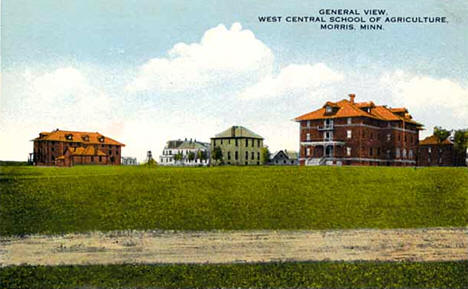
Morris has a vibrant history, filled with the realities of mashing seemingly disparate communities together. From the town’s beginnings where Swedes, Norwegians, Germans, Irish and Swiss came together on this patch of ground to make new lives out of the soil. From these farms came community, churches, schools, identity. Lutherans came together and formed this congregation. Trinity Lutheran in Alberta is celebrating its 100th Anniversary today. We celebrated that many years ago. First Lutheran has its name because it was the first Lutheran congregation in Morris to offer English services. The common language brought people together, and together this congregation had an identity. Later on, the Indian boarding school became the West Central School of Agriculture. In the 1960’s, my Great-Uncle Herb Croom helped bring the University of Minnesota to Morris, where the University has lived and thrived to this day, becoming one of the best liberal arts colleges in the country.


Morris is the town that it is, because of the communities it has brought together. Morris is what it is, because people desiring a growing community came together in a boat, and set sail together. Sure there were storms along the way. What change doesn’t happen without its death-inciting storms along the way? All along, in every merging of realities, in every new identity formed, God was there to rebuke the storms, saying “Peace. Be Still.” In every transition henceforth, in every growth-inducing measure, in every neighbor you welcome to your table, God will be there to quiet the storms in your heart.

In the ultimate quieting of the storms, Jesus hung on a cross to die, so that all of life’s storms could be quieted. So that all are saved by God’s saving grace, in our most troubling times. When the wind and the waves are at their strongest, God will be there to be your sanctuary. When even sanctuaries are no longer sanctuaries, God is still there, in the chaos, in the sadness, in the brokenness. Racism persists to this day, and the tragedies of last week and the last few years have proven that this country is still broken, but not irreparable. Over 150 years have passed since the abolishment of slavery, and we have a black man as president.

The transition from institutional slavery to a black president has been a very hard battle; a very strong storm, but God was, is and will be there to calm the storm. We have not capsized as a nation yet. We have a long way to get to the other side, but forming community right here, in Morris, Minnesota is one way to stem the evil tide of racism. Show Minnesota what forming community in a rural small town looks like. Show the United States what forming community with your Latino neighbors looks like. Extend the welcome to your neighbors, so that all may truly be welcome. God is there to quiet the storm when you hit it. Are you ready to set sail?

Amen.  

Sunday, May 3, 2015

The Good Shepherd of Poverty: Alberta Sermon 3

Last week, I preached at Trinity Lutheran in Alberta, Minnesota for the third time. I had to have it recorded for my Preaching class (so you get an added bonus of a video if you so wish to have this narrated as you read it) and thus I couldn't upload it until my classmates had had a chance to watch it. (We also missed today's sermon due to schedule changes so... without further ado...)

Acts 4:5-12
Psalm 23
1 John 3:16-24
John 10:11-18


Grace and Peace to you from God, our Good Shepherd, who laid down God’s life for us all, to
lead us beside still waters and restore our souls; to dwell in God’s house our whole lives long.
Amen.


“I am the good shepherd. I know my own and my own know me, just as the Father knows me
and I know the Father. And I lay down my life for the sheep. I have other sheep that do not
belong to this fold. I must bring them also, and they will listen to my voice. So there will be one
flock, one shepherd.” (John 10:14-16 NRSV)


How many of you know the 23rd Psalm by heart, or at least most of it? Yeah, it’s a good
one. We love it so much; we have it read at important points in our life. Whether it’s at a
wedding or a funeral at a loved one, we read the 23rd Psalm. We have it read at our hospital beds;
we read it when we want scripture to comfort us. Some of us may have other favorite passages in
the Bible, but there’s just something about that shepherd image. There’s something about the
image of someone watching out for us; when we’re at our deepest depths of sorrow. The Good
shepherd knows us, and we know the Good Shepherd. We know the Good Shepherd is there to
indeed walk with us in our deepest and darkest valleys. We have that faith; that God’s got our
back, even when the wolves of our lives are biting at our heels. When our backs are against the
wall, God is there, with the rod and staff to comfort us.

It can be easy to forget about the Good Shepherd though. It can be easy to not even notice
the Good Shepherd. Some may not even know the Good Shepherd, or know that there’s anybody
watching over. Jesus, however reminds us that he already has other sheep that are not in the fold.
It is Jesus’ job, as the Good Shepherd, to bring in the other sheep. The onus is on Jesus, the Good
Shepherd to gather us all, into one flock, one shepherd. God watches over us all, even if we don’t
know it. Even if we’re unaware of God’s presence, God is there. That’s what makes the job of
being a sheep so easy. It’s not up to us to find the other sheep. As sheepish as that sounds, it’s
true. Being a sheep ain’t so bad after all.

“We know love by this, that he laid down his life for us—and we ought to lay down our
lives for one another. How does God’s love abide in anyone who has the world’s goods and sees
a brother or sister in need and yet refuses help? Little children, let us love, not in word or speech,
but in truth and action.” 1 John 3:16-18

We can’t be the Good Shepherd, that’s up to God. But we can be more than sheep, too.
Finding the other sheep is, always has and will be, up to God. But we can be more than sheep.
Our Second Lesson this morning reminds us that love is found in not only Christ’s death and
Resurrection, but in our laying down our lives for one another. Laying down our lives...

What does that mean for us? Sure, maybe we’ll have the chance to step in front of a
bullet for our friends; but hopefully not. No, laying down our lives for one another means more
than that. It means separating from ourselves the stuff that gets in our way... to really listening to
people; to really being there for people. It means tearing away the barriers inside ourselves that
prevent us from being present to ourselves; to each other.

Let me give you an example: poverty. Homelessness. Underprivileged individuals living
among us. You may be thinking to yourself, “Poverty doesn’t exist here!” “Alberta? There are no
slums here.” And, you may be right. There aren’t slums like you see on TV. THOSE people live
there. Not us. Not us strong and fervent Minnesotans. Not us humble farming folk.
I’m here to tell you this morning, that poverty does indeed exist within our midst. I know
hard-working folks who grew up just miles from here... that spent years living below what the
Federal Government considers poverty. But poverty is hard to spot in these parts. Poverty
doesn’t look like what it does on TV. That’s because the faces of Greater Minnesota’s
impoverished, look like mine and yours. Those of us who grow up and live outside the Twin
Cities overwhelmingly have similar backgrounds. We have similar culture, similar occupations,
similar livelihoods that we keep to ourselves. To call people around here poor... is a slap in the
face. We work hard for our money; for our families. We work hard to keep the meat and potatoes
on the table. We are a hard-working people. We survive the harsh (or not so harsh...) winters
and sweltering summers. We are a tough people, us Minnesotans.


What if I were to tell you – that at least 500,000 people living in Minnesota live under the
Federal Poverty line every year. That’s half of a million people. That’s more than the entire
human population of Wyoming. 2/3 of North Dakota. Half of South Dakota. Yet, in comparison
to other states, we have one of the lowest poverty rates at 11%. The highest state has almost a
quarter of its residents living under the Federal Poverty Line.

We are a tough people. Even when people are clearly in poverty in this state, we don’t
admit it. How many of you were shocked by the numbers I just gave you? 500,000 people don’t
make enough money to be able to feed their families in this state. We struggle on, knowing we
are a proud and strong people. We don’t want to admit defeat. We don’t want to call ourselves
poor, because that’s a sign of defeat. Calling ourselves poor looks bad on ourselves, our parents,
and those tough ancestors of ours that carved out a living out of this soil. This soil that gives us
life; that gives others life. And yet, an estimated 14,000 Minnesotans sleep on the streets or in
shelters every night. Children go without food on their plate. And yet, we’re too proud to admit
when we need help. We’re too proud to admit that our neighbors go without, and we know it. For
we are a strong and hardhearted people.

1 John reminds us that “...by this we will know that we are from the truth and will
reassure our hearts before him whenever our hearts condemn us; for God is greater than our
hearts, and he knows everything. Beloved, if our hearts do not condemn us, we have boldness
before God; and we receive from him whatever we ask, because we obey his commandments and
do what pleases him.”

Jesus laid down his life, by dying on the cross for us all. By the freely-given Grace of
God, we are saved from our sins of this world. We have to hold onto that. Whatever ailment
befalls us, we have to know that there is someone watching out for us. Someone who loves us
enough to lay down their life for us.

God calls us to lay down our lives for one another. For the weak, the lonely, the poor in
spirit. We are all God’s blessed children. We are all beloved Children of God. We are all in
God’s fold. God is there to restore our souls, and lead us on our paths, for God’s sake. When we
walk through the darkest valleys of our lives, God is there to comfort us. Jesus is our Good
Shepherd, and watches over us. The Good Shepherd laid down his life for us, and we must do the
same for others.

So when you’re sitting there reading the 23rd Psalm, and you read about how the Lord is
our Shepherd, and he makes us to lay in green pastures and beside still waters – think of Jesus,
our Lord, our Good Shepherd who guides us through our darkest valleys. For though we walk
through the valleys of our lives, with the shadow of death looming; we may hold in our heart the
comfort of a Savior.

The comfort of a Savior who laid down his life for us all; on a hill named Calvary; so
very long ago. This Savior who rose again the third day, saving us from the sins of this world, to
join him in the next. Laying down our lives for each other may seem like a daunting task.
Breaking the barriers we have in our own lives; so that another’s life in whatever muck they find
themselves in, may be set free. Poverty is rampant in this world. It may not seem like it here in
Alberta, but poverty is around you; it’s just hard to see. Dig down deep, friends. Have no fear,
little flock. Breaking the bonds inside you is hard enough. Breaking the bonds of poverty in this,
the richest country on the planet – now that’s a feat to behold. I dare you, to engage the
conversation of poverty with your neighbors, coworkers, classmates, teachers, students. Learn
from them, teach them. Knowing – that a man laid down his life for us all, once; so too may you
also lay down your life for your neighbor.

Being a sheep is easy. Being more than a sheep; that’s up to you.

Amen.


Link to Video -
https://drive.google.com/file/d/0B7uFAcq5lEgRdWlyZ213cXBib00/view?usp=sharing

Tuesday, February 17, 2015

Of Rocks and Changes - Transfiguration Sunday


This is my sermon that I preached at Trinity Lutheran in Alberta, Minnesota on Sunday, February 17

2 Kings 2:1-12
Psalm 50: 1-6
2 Corinthians 4:3-6
Mark 9:2-9


Grace and Peace to you, from the God of Moses and Elijah; and from God’s Beloved Son, Jesus the Christ, Amen

“Six days later, Jesus took with him Peter and James and John, and led them up a high mountain apart, by themselves. And he was transfigured before them, and his clothes became dazzling white, such as no one on earth could bleach them. And there appeared to them Elijah with Moses, who were talking with Jesus. Then Peter said to Jesus, ‘Rabbi, it is good for us to be here; let us make three dwellings, one for you, one for Moses, and one for Elijah.’ He did not know what to say, for they were terrified.” (Mark 9:2-7 NRSV)

Today is Transfiguration Sunday. Transfiguration is the fancy word for the act of changing into something more beautiful or wonderful than before. (See, there I go teaching to you again…) When important stuff happens; when significant events transfigure us, there are times when we want to record it, so we can look at or watch it again. We want that important time in our lives to last… because this is a big deal, and of course we want that amazing moment to last beyond our ever-shrinking memories…

Like a Butterfly!


How many of you have a cell phone? Okay, so how many of you have a smart phone? We take pictures on our phones. We take videos on our phones. Back in the day, we had to have two separate devices for such things, and they’d take up an entire backpack to fill. Never mind all the film, tapes, batteries, memory cards we had stored with them. Now, they fit in our pocket, and when something important happens, we just whip our phones out of our pocket and hit a couple buttons to accomplish the same task. (Talk about transfiguration!) Some phones even have quick little buttons on the side that are very convenient when you have your phone OUT of your pocket, but not so convenient when it’s still in your pocket… and it starts taking pictures of… well, your pocket.


Even if we’re not truly present at the time of the transfiguring event, we strive to savor it by recording it with our devices. When the baby starts crawling for the first time, there we are watching it happen for the first time… through the lens of a camera, or our phone. We watch our children grow; hitting those milestones like baptism, turning over for the first time, crawling for the first time, walking for the first time, and running for the first time… and then… it’s hard to take pictures of them because they’re always moving… and then… and then….  And then I don’t know what happens next, because Sam hasn’t gotten that far in the book of life yet… but when he does that next thing… Someone will be recording it somehow.

“He did not know what to say, for they were terrified”… When these transfiguring, transformative things happen, we don’t know how to stop and smell the roses. We don’t want to stop and smell the roses, because we’re too busy wanting to preserve the smell somehow. Fumbling with our phones; our cameras, just to get that perfect moment recorded. When we see an old friend, we want to stop and talk with them for a while; to make sure that we get that all-important ‘selfie’ to post on our facebooks and instagrams and twitters later…

Peter, literally the rock on which Christ would build His church seemed to be the disciple that never knew what to say when walking with the twelve. In the Gospel of Matthew, the disciples were out on the boat when Jesus went up to the mountain to pray. That night, the wind was strong and sent the disciples farther out into sea. They awoke the next morning to Jesus walking out on the water, and again, were terrified. Once again Peter, that old rock… (Rocks float right? At least the very small ones do…) Peter that old rock steps out of the boat, and starts walking out on the water… until he notices the wind, that transformative change in weather, and like the Πέτρος that he is, begins sinking. “Oh ye of little faith,” right?


Change happens. In a few weeks, the snow will melt and the ground will thaw, (I know, it may be hard to believe, but it always does…) you’ll get out the tillers and plows and the planters and start planting those crops, and Spring will be right around the corner. Hey, at least one of the groundhogs confirmed it!

But change is coming. Lent is coming. Spring is coming, and Peter shows up again in another memorable scene during our forthcoming Holy Week. For it is Peter that denies Christ three times, just as Jesus predicts. Change had happened rather quickly for Peter, and in that change brought with it the same confusion; the same bumbling as to what to say in that moment; the same broken humanity that he found himself in. Jesus, the man whom Peter had been following around for years, was going to die. Change had happened rapidly, and while ultimately and eventually a very transfiguring experience for the world; this change was too much for Peter to handle. It was too much for the people around them. It was too much; for us.

That transfiguring change on that mountain with Moses and Elijah and his disciples looks very reminiscent to the upcoming scene on a similar hill, with two other individuals and disciples around him. Both scenes depict a transfigured Jesus. Peter wants to sit and take it all in the first time, and denies it the second time. Without the second transfiguring experience however, the secret at the end of today’s Gospel message makes no sense.

“As they were coming down the mountain, he ordered them to tell no one about what they had seen, until after the Son of Man had risen from the dead. So they kept the matter to themselves, questioning what this rising from the dead could mean.” (Mark 9: 9-10 NRSV)

Jesus, the Son of God and Son of Man – our Beautiful, Beloved Savior would die on a hill with two other figures, and disciples watching from afar. What Feast of Love is that; to die for the sins of the world; to die to save us from those sins. Death is not the end for the Son of Man, for the transfiguration experience of resurrection; is where we place our own transfiguring experience. Jews, Muslims, Hindus, Agnostics, and Atheists all agree that Jesus of Nazareth lived, and then died. It is the promise that awaits us on Easter morning; the transfigured, resurrected Christ that we rest our faith in; that we are called and named in the waters of Baptism. That Feast of undying love and salvation that we remember in the celebration of our own Feast of Love this morning.  

Change can be exhilarating. We get caught up in the whirlwind of emotions, and wish to capture it with whatever device can fit in an accessible location, so as to not forget the overflowing of positivity. Peter wanted to hold onto the Transfiguration with using tents to stay a while. We hold onto our transfiguring moments with our own transfigured devices right at our fingertips. We get caught up, without remembering that what is happening out there, is just as important as what’s happening right here. What we feel in the moment of transfiguring, can never be reproduced or recorded, so live in the moment.

Change can be frightening, or even terrifying. Jesus’ disciples were often terrified in the Gospels. Change can look like an unwanted, unwarranted, and unneeded thing. In the moment, it may look unbearable. How can one go on when so much change has happened? How can we remember who we were before; before all the change happened? Without changing who we are, how can we learn to live in this new reality?

Change may happen suddenly or slowly over time. One major change may uproot our sensibilities, but how can we live with this sudden or slow change, and learn to embrace it? How can we learn to see the changes in our lives, so that they can begin to look very similarly to that of today’s Gospel lesson? How is God calling us to be transfigured in our own lives? Changes can seem to overwhelm us completely; causing us to lash out and create barriers, rather than spaces for growth and conversation.

That, my friends, is where we find the hope of Jesus Christ – in the growth areas. For we are all sinful beings; all part of a broken humanity. It is the Grace of God that allows us to live in those growth areas; where conversation can be held, rather than abandoned. If we allow the Spirit to send us forth, into the unknown of silence; we may begin the bridge the gap between change and growth. That gap by the way; is where our own transfiguration happens. Where we change for the better, in order to learn from one another, be with one another, and live in peace with one another.


In this upcoming season of Lent, I hope that we all learn to slow down to smell the roses and hear how God is calling us to change in our lives; to transfigure; to reorient our lives for the betterment of all. To paraphrase Red Green, God’s pulling for us; we’re all in this together. Amen. 

Monday, February 2, 2015

I am Authority (And So Can You!) - a Meme special

My Sermon from yesterday that I gave at Trinity Lutheran in Alberta, Minnesota

Deuteronomy 18:15-20
Psalm 111
1 Corinthians 8:1-13
Mark 1: 21-28


Grace and Peace to you from God our Creator, and our ever-present Teacher, Jesus Christ; Amen.

“He commands even the unclean spirits, and they obey him.” Teachers. How many teachers are out there this morning? How many of you are able to command unclean spirits out from your students? How many of you SMELL something unclean ON your students? In the Gospel lesson this morning, Jesus is teaching in the temple, when he gets interrupted by this unclean spirit-filled man screaming at him. Jesus stops what he’s doing, yells at the spirit, and exorcises the spirit right out of the man. Oh, what authority this Jesus has! He just plucked the spirit right out of the man. Jesus probably went right back to teaching too… As if nothing happened… Perhaps some of you have authority to stop kids from yelling in your classes…


Mark is the shortest Gospel of the four. If you’ll notice, this comes from the first chapter. There’s no Christmas story in Mark, only his baptism and BAM! Jesus begins calling disciples and just gets to work. Epiphany is the season of showing folks what God does in the world; what Jesus’ ministry is like. In the last couple weeks’ Gospel lessons, Jesus was calling disciples to, “Come and See”. Today’s Gospel is Jesus teaching and exorcising. We know that Jesus did much more than these, and continues to do much more in our world. Yet, we must not overlook how powerful such an act as teaching can be.
Teaching, for many, is a calling; a vocation; an act of God that tells us deep inside, that we are made to teach. We were born to teach. Teaching feels so right for us, that it’s second nature. I just taught those of you who didn’t know before, that Mark is the shortest and Earliest Gospel. Okay, so I added the ‘Earliest’ part just now, but like I said, some of us cannot help teaching people. Whether it comes out of intuition or it just feels right; we teach because God taught us. We teach because someone taught us. We teach… because we feel we have the AUTHORITY to... to impart knowledge that we’ve learned to the rest of the world – because we feel that it will be useful to them someday.

Teachers be like...


We don’t know what Jesus was teaching that day in the temple. It probably wasn’t nuclear physics or the intricacies of how Minnesota’s strange weather patterns affect crop yields… but Jesus was teaching in the temple; because Jesus, the newly baptized; had the AUTHORITY to teach. Jesus was ordained by God, baptized in the Jordan River by God, and yet, was completely and undeniably God.
In the reading from Deuteronomy this morning, the author writes, “I will raise up for them a prophet like you from among their own people; I will put my words in the mouth of the prophet, who shall speak to them everything that I command.” (Deut. 18:18 NRSV) Teachers, especially the good ones, are today’s modern prophets. From among their own people. How many of you like hearing someone talk, sing, preach, teach… that is able to speak to you, personally, living similar experiences – they speak as if they have AUTHORITY on the subject, because it’s the same authority you have. You have personal authority over your own life, and when people speak to that authority, and have similar AUTHORSHIP – you can understand what they’re saying, and you feel good about what they’re saying. You may not agree with them, but you can certainly understand where they’re coming from; because they come from where you come from.


I grew up about 10 miles from here. My brothers and I used to ride our bikes on County Road 9 to the ‘Alberta Tar’ – and turn around. At school, I feel like I have AUTHORITY on rural life; because I grew up a block from these farm fields and my father drove tractors and combines most of my life. I took my gun safety in the Alberta school. The open fields and sparse trees are my home.
I never thought that rural ministry would be what I feel called to; but it turns out that I love coming back to the prairie, to share God’s message of Grace, Love, and Mercy to people I grew up with. I love when people at school talk about rural issues, because I feel that they have the AUTHORITY to talk with us about it, because they grew up like I did. When people try to speak about rural issues not having experienced life in a rural community – I get annoyed that they don’t have enough authority to speak about it.

What I feel like saying... too often...


When Jesus was teaching in the temple, he was speaking to his people. Jesus grew up with these people, and having authority to teach in the temple was hard to get. The fact that Jesus was teaching in the temple showed that he was given high authority to do so. This was a big deal for Jesus to do. In all of Church history, women for instance, were not given this authority; to speak in a religious service; until the 1800s. That’s at least 1500 years when half of the Christian population was prevented from speaking openly in worship. There are still many groups of Christians that don’t give this AUTHORITY to women. Many groups of people in churches today are not given AUTHORITY to preach, teach, or even worship… the God that freely bestows Grace, Love, and Mercy to all, no matter what.


The God that gave us a child, born long ago, to save us all… from our sin in this world. That child, Jesus the Christ, was baptized in the Jordan River, and lived among the people of his mother. Jesus was given the authority to teach, exorcise unclean spirits, heal the sick, feed the poor, and calm the storms. And you know what? You’ve been given this authority too. Not only have you been given this authority, but God calls us to go and do likewise.
But Jon, you say, we can’t calm storms or feed thousands with a couple fish and a loaf of bread or exorcise unclean spirits; and I say to you, you’re right. WE can’t perform miracles. But God can, through us.
We can do all things through Christ who strengthens us. God’s Work, Our Hands folks. God calls us to teach one another, feed one another, live with one another, be there for one another, heal one another and LOVE one another. We have been given this AUTHORITY, for we are all beloved Children of God. Paul writes in his first letter to the Corinthians that we read this morning, “…for us there is one God… from whom are all things and for whom we exist, and one Lord, Jesus Christ, through whom are all things and through whom we exist.” (1 Corinthians 8:6 NRSV)
On this day of bowls that are sometimes less than super; with deflated pigskins and scandals aplenty plaguing the league with more problems left unresolved than the United States Congress… With our nation’s authority figures constantly under investigation; causing us to DOUBT their authority… to whom do we still give authority?
Jesus had authority that day in the temple. That authority followed him the rest of his life, and the rest of his follower’s lives. His disciples were given the authority to spread the Good News, and over the nearly 2000 years since, those that put their faith in Christ have become the number one religion in the world; putting Jesus right at the top with the world’s most followers. According to most reports, a full third of the world is a follower of Jesus of Nazareth. A full third of the world gives Authority to the faith we call Christianity. Many experience it differently, and everyone interprets their faith uniquely. We Christians all follow the one Triune God, of which Jesus is of that Holy Trinity; yet we differ on how, why, or when one follows the teachings of this Christ. Yet, we all acknowledge that he taught, and he continues to live in our lives and teach us throughout our lives.
Each of us has a story to tell. Each of us has Authority; or authorship in our own life’s story. Yes, the God upstairs has the copyright, and we’re still writing the pages of our story. That doesn’t mean however, that the story has to continue as it has been. All the news happening these days, may look very familiar. The same stories always appear on the news every night. Another day, another school shooting, political scandal, house fire, plane crash, child missing… the list goes on and on… There are nights when you don’t even want to turn on the news… The pages are still being written folks. Another page is waiting to be filled… Another bad chapter awaits another good one… just waiting to be written. Another night of breaking news; awaits another dawn… breaking just over the horizon of those frozen fields…


I remember riding the bus to school; early in the morning on a frosty morning such as this… scraping the frost off the frozen windows with my fingernails… so I could see that sun peak over the tree lines… On a clear frosty morning, it seemed like no matter what homework I had neglected to do; how many kids had pushed me or called me names the day before… That sun; that light would pierce the darkness of whatever pain I felt… And I could go through that day, remembering that moment, knowing that the sun would rise again tomorrow. There’s always another tomorrow.


For us Christians, God is that yesterday, today and tomorrow. God’s son Jesus is that light in the darkness. Jesus is that Teacher; that Healer; that Savior that saves us from our unclean spirits. “He commands even the unclean spirits, and they obey him.” There are some days, in our darkest times, where we are filled with our own personal unclean spirits. Christ died on a hill called Calvary so those unclean spirits couldn’t take authority over us; so our sin didn’t define us. For no matter what unclean spirits ail us; whatever sin; whatever pain; whatever darkness we find ourselves in… God’s unquenching and unwavering Grace, Love and Mercy for us all; each and every one of us; is more than enough for us. All of us. It’s time to share that God-given Grace, Love and Mercy to our friends, neighbors, coworkers; and yes, even those spirits we deem unclean. For as Paul writes, “…for us there is one God… from whom are all things and for whom we exist, and one Lord, Jesus Christ, through whom are all things and through whom we exist.” Go. Teach the Good News. Be the author you want to be, and claim that authority to do so, because That’s what Jesus would do… Amen

Monday, January 5, 2015

The Light of Christmas

This is my sermon that I preached at Svea Evangelical Lutheran Church, yesterday. Erik was off on his adventures, so he had asked me to preach. 

Sirach 24:1-12
Wisdom 10:15-21
Ephesians 1:3-14
John 1:1-18


Grace and Peace to you from God, the Creator of all things; and The Light of the World, Jesus the newborn Christ. Amen.

The light shines in the darkness, and the darkness did not overcome it. There was a man sent from God, whose name was John. He came as a witness to testify to the light, so that all might believe through him. He himself was not the light, but he came to testify to the light. The true light, which enlightens everyone, was coming into the world.
            Our Gospel this morning tells of John in the wilderness, who in our text a couple weeks ago was the voice crying out in the wilderness calling for the Messiah, and today’s Gospel text is right before that one. Jesus the Christ is whom John is calling out for; is pointing towards. John is pointing towards the Man who was to become our Light; our Savior. The Gospel writer’s poetic description of the Word, of Light, and ultimately about God; speaks volumes in the short sentences held within. Christ is our Light. Christ is the Word made flesh. Christ is our Emmanuel, God is with us; God Incarnate. 
            The author of the Wisdom literature read this morning talks about how Wisdom was that which brought the Israelites out of Egypt, and guided them along their way. Wisdom became their savior. As Jews living before the time of Jesus, this was their way of interpreting God’s power. Most bibles on our shelves at home and in our pews don’t have the two non-New Testament texts read for us today. Sirach and the Wisdom literature come from a set of texts known as the Apocrypha or Deuterocanonical books. When Martin Luther was translating the Bible, he noticed that these books were written in Greek, not in the original Hebrew, and decided to leave them out of the Bible given to the common people. Roman Catholics consider these and other books canon, or on the same authority as found in the rest of the Old Testament. Orthodox Christians have an even larger canon with even more books. Protestants, having taken the basis of their doctrine from Luther and other reformers, don’t consider these books to have the same weight as the other texts found in our Old Testament, but find them useful in understanding context.
            Today’s text from the Wisdom literature makes reference to, as looking at the text through the lens of Christ, the coming of the Messiah; our Savior, Jesus the Christ. Looking at the text through this lens, we as Christians might see that Christ was the guide of the Israelites. God Incarnate was the starry flame through the night, in the darkness of their despair, guiding them to the Promised Land. 
   
            The Light shines in the darkness, and the darkness did not overcome it. It’s been pretty dark out there. While the solstice has passed, and the days are indeed getting longer, it still gets dark before most folks have supper. Some people go to work in the dark, and come home when it’s dark. Way up north, around the Arctic Circle, people only have a few hours or less of daylight these days.  Due to the lack of sunlight in the winter, some people have Seasonal Affective Disorder; causing them to require artificial sunlight for them to emotionally make it through their day. At Luther Seminary’s library, there’s a special part of the library for those with Seasonal Affective Disorder to get their sunlight. People with fair skin use tanning beds more often in the winter to get that ‘winter glow’. The rest of us Scandinavian Minnesotans just blend into the snow piles.
            We have problems with the dark. Have you ever gone out, late at night, in the middle of nowhere, and just appreciated the dark? With too much darkness, your eyes try to adjust to the limited light. We need light to appreciate the color around us. Without light, color just disappears. Like an old black and white movie, when the darkness surrounds us, color isn’t easily distinguished by our eyes. We see what we need to, if we can, and our eyes don’t bother with the color. When we take pictures, and there isn’t enough light for the lens to pick up, the subject of the photo loses the color as well.
            Without light, life loses its color. Without light, life isn’t quite as vibrant.

            How’s Christmas going for you? Yes, according to the Church Calendar, we’re still celebrating Christmas. Technically, Christmas goes until January 6th. There are 12 days of Christmas, and no, I’m not giving you 11 pipers piping, as today is the 11th day of Christmas. Tuesday is Epiphany, or Three Kings Day, and is the celebration of the Magi visiting Christ. Thus, Epiphany is the celebration of when the Magi are shown God’s existence through the birth of a child. God Incarnate was made known to the Gentiles at that moment, and thus the day is known as Epiphany, or Theophany. Christ was made known to the Magi at that moment, which some scholars say was years later, after Jesus’s birth.
                Christmas, beyond being 12 days long in the Church Calendar, is a two month long mad dash to the shopping malls and Targets to buy enough gifts for everyone. Even before trick or treating your way through your neighborhood, you start to notice stores hanging red and green decorations up in the back corners, just waiting for all the spiders and witches to be bought up at rock bottom prices. Christmas is a two month long marathon of radios sneaking in the occasional ‘Jingle Bells’ and ‘Let it Snow’ between the Garth Brooks and Bruce Springsteen. Once the turkey is on the table on Thanksgiving, it’s a ‘No-holds-barred’ race to the shopping malls and Targets again – to score on even better deals for the Pre-Black Friday sales. Black Friday doesn’t even mean anything anymore if stores were open on Thanksgiving anyway.
            So, Black Friday came and went, and the stores found out that opening on Thanksgiving wasn’t as profitable anyway, and Black Friday wasn’t as great as it had been in years prior, and stores were even more packed in the days leading up to Christmas Day. Once Christmas Day happened, I’m sure many of you were relieved to finally reach that day. Finally, all of your hard work paid off. Finally, the looks on your relative’s faces when they opened your gifts were worth the wait and the gifts you spent your hard-earned money on. Finally, you were able to open the boxes under the tree with YOUR name on them. And once you faked the smile at receiving the same tie or pair of socks you did last year, you knew that Christmas was over. The gifts were given, you saw the smiles on your relatives, opened your own gifts and cleaned up the wrapping paper. Maybe you waited until the next day, or even until New Years, but you took the Christmas tree down. You put it in the box or threw it to the curb or hauled it to the dump (or the town dumpster in the parking lot?).
            Christmas is over for most folks, and that’s fine. I was frankly tired of hearing the same 12 songs on the radio and in the stores anyway. We still have our Christmas tree up, but only because I don’t want to bother putting it away. Our family growing up would occasionally keep the tree up until halfway through Lent. No matter how you celebrated it, where you celebrated it, or how long you are celebrating it, it was a time you were waiting for.
            Christmas, no matter what time of year it is, is a time to be waited for. We even have a season in the Church Calendar for the anticipation, known as Advent. Easter falls on a different date every year, but you know exactly when Christmas is. If you wanted to, you could count exactly how many days it would be until Christmas. There are even websites you can access that tell you the very same thing.
            The Jews who wrote the Sirach and Wisdom texts were waiting for the Messiah to come on Christmas. The hope of the Messiah was their light in the darkness. The hope, the waiting, the anticipation of Christmas is our light in the darkness. Christmas, for us Christians is a bright, shining light; symbolized best by the Christmas tree and the Star of Bethlehem, which tops most Christmas trees. December is the darkest time of year, and the Winter Solstice is the darkest day of the year. Hanukkah, Kwanza, Christmas, and the celebration of the Solstice all bring light to this time of darkness.
            We as Christians celebrate Christmas not only for the presents and family gatherings, but with the knowledge that the Christ child that was born on Christmas was destined to live a life full of teachings, blessings and miracles. This Christ child would eventually become the wounded Christ, the dying Christ, and the Redemptive Christ on Calvary. The Redemptive Christ that would die for all of us. The Redemptive Christ; God Incarnate; that saves us all from our sins; so that we all may live, free from the darkness of this world.
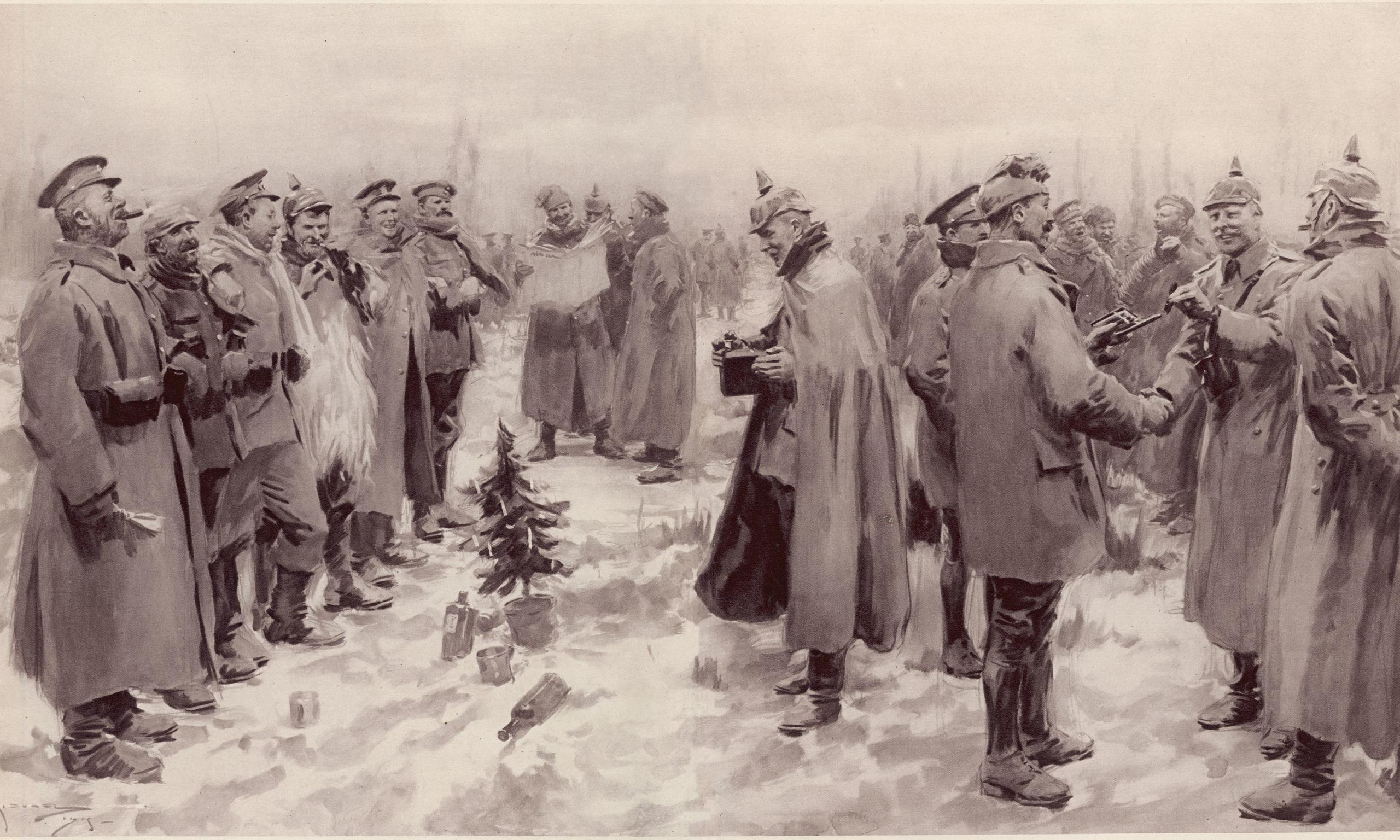
            I leave you with a popular Christmas story many of you may have heard before. It was the Christmas of 1914, and the ‘War to End All Wars’ was waging throughout Europe. In some trenches along the Western Front, all became quiet that Christmas on the Western Front, as men who had shot at each other for weeks, stopped shooting. No Man’s Land became a land of everyone joining in song around the celebration of Christmas. Germans, British and French soldiers came together to exchange food, gifts, and souvenirs. Supposedly, even games of soccer broke out. That Christmas, the light of Christ shone out through the darkness of war into the hearts of those soldiers. 


             Christ, be our light this day. Shine through our darkness today and every day. Merry Christmas. Amen.