Tuesday, August 29, 2017

Boldness

This is my fourth sermon as intern at Living Waters Lutheran. I wrote this before knowing the potential of the destruction of Hurricane/Tropical Storm Harvey. Living Waters will be taking up a donation for Lutheran Disaster Relief for the next couple weeks in response to the damage. 

Gospel: Matthew 16:13-20


Grace and Peace to you from God our Loving Creator, and from our Lord and Savior Jesus the Christ, Amen

    Jesus asks his disciples, “Who do people say the Son of Man is?” Who is this guy you’ve been following around? The disciples reply with… Perhaps your relative, John the Baptist, or a prophet of old, Elijah… Someone important anyway…

And then, Peter... Peter that ol rock… Peter speaks up! Peter declares in a loud voice that Jesus is in fact, the Messiah. Jesus responds by blessing him, and saying that upon this rock, Jesus will build the church. Now, some may assume that Jesus was making a pun - Peter after all comes from Petros, meaning Rock… And Peter did sink like a stone a couple weeks ago… And Peter is a stumbling block a little bit later… And Peter is stone-faced when people ask about Jesus after the Last Supper… Okay, that’s enough stone puns for now.

Either way, Peter speaks up, and Jesus says that he will build his church upon the rock. The first line of our Hymn of the Day... that we will be singing shortly, is Built on a rock the church shall stand, even when steeples are falling… Jesus builds his church on the effort of Peter standing up, speaking up and declaring Jesus as Messiah.

Who is Jesus to you? I think that’s an honest question that we all wrestle with from time to time. 

Here are some images of different depictions of Jesus, maybe some you’ve seen, maybe others you haven’t. Different perspectives, some might seem offensive to you. But the artists who depict Jesus in this way, may want to give people a variety of reactions to them. (I showed the congregation images of Jesus, from different perspectives, Native American, African, Chinese, transgender... etc...)

Jesus is generally depicted, in our Upper Midwestern Lutheran world… as this ( a stereotypical white Jesus). The traditional image of Jesus is this guy that looks like a lot of other bearded men with long hair. Look at a college campus, and there are plenty of Jesus-look-alikes around, as well as pop culture. (Chad Kroeger and Obi-Wan Kenobi)

Alright. So there’s a lot of images that we associate with our Messiah. The disciples had theirs, and Elijah and John the Baptizer were important figures in their life. Jesus is important, and Jesus, like Elijah and John… have influence on the people and are change-makers in their world.

The question right now… is Who is Jesus to you? A few years ago, there was a funky 80’s song going around the internet entitled, “Jesus is my Friend”. I won’t show it to you now, but you can certainly look it up when you get home. The image of Jesus as our friend is certainly planted in us when we’re young, with the image of Jesus sitting or walking with children is first introduced to us. Jesus is our big brother, our friend in times of trouble, our protector.

We have plenty of songs about Jesus, in our hymnals and on the radio, plenty of movies, plenty of posts on social media, and then we have the Bible, our Bible… sitting on a dusty shelf somewhere in our house…

Jesus is the Son of God, he had his ministry on Earth, died and rose again. The Apostle’s Creed, the creed most of us had to memorize in confirmation class… portrays Jesus as a baby one sentence,  “I believe in Jesus Christ, God’s only son our Lord. He was conceived by the Holy Spirit, born of the virgin Mary…” and BOOM “suffered under Pontius Pilate”...

Wait… where did all of the Gospels go? That’s skipping like 20 Chapters in the Gospel of Luke. As I heard a theologian say once, Jesus lept out of Mary’s arms, into the hands of Pilate!
And then we move on to remembering his death and resurrection. Oh, and Jesus saves us all through his death. And the story of Jesus remains in those dusty bibles on the shelf, to be brought up in church, and maybe occasionally in conversation.

I ask again… Who is Jesus to you? Somewhere in the skipped 20 chapters of the Apostle’s Creed… is the life and ministry of Jesus on earth, as told by the Gospel writers. All the teaching, and healing, and feeding, and walking and talking… All the parables, all the little nuggets of wisdom. That’s the Messiah Peter was talking about. The Messiah, the one who saves us all from ourselves. Through the Grace, Love and Mercy of God… you and I and the rest of humanity… have been saved from our sin, our pain, our weakness. That’s the Messiah. That’s the Good News.

All too often though, we think that this Messiah is ours alone. Our own personal Jesus. Someone to hear our prayers, etc. Someone to wield against someone else. Those pictures of Jesus I showed you earlier… Some may have been thought provoking, others maybe offensive to some. But, the artists, the communities and cultures that these images come from - these are examples of them proclaiming their faith that their Messiah, our Messiah - cannot be put into a box, one where there is solely one correct version of Jesus.

Jesus is somebody to everybody. We have faith in this somebody, and we can proudly and boldly proclaim our faith in this somebody. The other disciples threw out what other people thought, but there Peter was boldly proclaiming that Jesus is the Messiah, the Anointed One - the one who saves us all from ourselves.

Jesus says that on this rock I will build my church. The passion that Peter shows is the passion that propelled Christianity through history. Be like Peter. Be passionate in your faith. Be passionate in who you are as a beloved child of God. The walls of church buildings are built to maintain structure, to withstand weather, to provide shelter and sanctuary, and to create a space where God’s word is proclaimed, where the promises of God are shown in the living waters of baptism and in the bread and wine of communion. Where community is held, where people experience the beginning, middle and end of their lives, where we say hello and wave goodbye. Our existence is a bold expression of our faith. And here’s the kicker - the church isn’t this building… it’s you. We are the church. We are the church that Jesus built upon the bold proclamation that Jesus is the Messiah. That’s who we are.
I keep asking you, “Who is Jesus to you?” This is a sermon, and you’re mostly white Minnesotan Lutherans, so dialogue in a sermon might not be all that comfortable for you, and that’s okay. I don’t like it either. But I can tell you how I’d answer that question.

Jesus for me, is the Messiah that boldly lives out his faith in God and humanity by preaching and teaching and feeding and healing those, who in the eyes of those in power, Jesus shouldn’t be preaching and teaching and feeding and healing. The folks like the Canaanite woman last week, or the 5000 people a couple weeks before. Jesus is the Messiah who was born into poverty, born a refugee, and lived his life showing humanity what to do when the deck is stacked against you. Even when the deck is in your favor, Jesus the Messiah, the Christ, the Anointed one does what he’s not supposed to for the benefit of those around him, to teach us all how to live, so that we may go and do likewise. Jesus is the Messiah that even when we as humanity make mistakes, when we mess up, when we are in pain, when we lose our loved ones, when we need a loving presence and the arms of our Savior… Jesus the Messiah is the one who saves us from that darkness, because the light of Christ shattered death and shatters the darkness that we live with.

With the darkness of Charlottesville in our recent memory, with the threat of nuclear war seemingly always on the horizon, when our sea levels are rising and people are crying out in pain… We may not know how to respond. What we can do, is we can boldly proclaim in a loud voice that Jesus is our Messiah. Jesus loves you, loves me, loves us all and we are called by this Messiah to go out into our world and help create a beautiful life for us all. Stand with your neighbors when they need you. Go out and be the church. Boldly proclaim to all the world that you are loved. They are loved. Be bold in your faith, for that is the rock on which Christ built the church. Built on that rock, this church shall stand.

    Amen.

Monday, July 31, 2017

Throwing Around

This is my third sermon preached at Living Waters as part of my internship. Preached on 7/30/17, I wanted to preach a 'safe' sermon to balance out the previous one.

Epistle: Romans 8:26-39
Gospel: Matthew 13:31-33, 44-52


Grace and Peace to you, from God our Loving Creator, and our Lord and Savior, Jesus the Christ, Amen

A mustard seed. A clump of yeast. A treasure in a field. A merchant in search of fine pearls. A fishing net. Parables are tools that Jesus uses to ‘throw around’ ideas of God and the kin-dom of God. In Greek, the word parable or paraboli means to ‘throw around’. When playing catch with a ball or a frisbee, the object is to ‘throw around’ the object, so that another person can go ahead and catch it. The idea isn’t to throw it sooo out of the way that they won’t catch it, but to practice your own skills of throwing, and in return, catching. So that the other person has a better chance of likewise, catching. You throw around the ball for mutual enjoyment, learning, and growing.

Jesus ‘throws around’ these parables, even if some of them don’t make complete sense. When Jesus asks the disciples if they understand what he’s talking about, and they all nod in agreement and say, “Yes.”... I’m gonna go ahead and say that they probably didn't. Because maybe that’s not the point. Because there isn’t a single way of understanding these. Or a single audience.

When you ‘throw around’ a ball, there isn’t a singular way of throwing so that the person will catch it. There isn’t a singular way in which the person can catch it. There isn’t a singular person you can successfully throw to, and the rest just don’t catch them…

Because sometimes you miss. Sometimes when ‘throwing around’ a ball, the ball goes too high, or too low, or the wind catches it, or a bird flies in front of it or whatever. When a ball is thrown around… Limitless possibilities abound as to how that ball will travel, and it’s a matter of determining the best odds as to how that ball can be caught.

Jesus tells many parables to help ‘throw around’ ideas that inform people about God, but none of them complete the whole picture. The kin-dom of God is like… The kin-dom of God may be equated to… You could think of God as… Jesus is like…

Nothing we say will ever give a complete picture of God or the kin-dom of God. Words may get in the way as to how we describe God, but nothing can truly separate us from God. The Apostle Paul asks the question in his letter to the Romans, “Who will separate us from the love of Christ? Will hardship, or distress, or persecution, or famine, or nakedness, or peril, or sword?” He then replies to his own question. Nothing. Paul writes, “For I am convinced that neither death, nor life, nor angels, nor rulers, nor things present, nor things to come, nor powers, nor height, nor depth, nor anything else in all creation, will be able to separate us from the love of God in Christ Jesus our Lord.” (Romans 8:35, 38-39 NRSV)

Last week, Jesus talked about the wheat and the weeds, and how we cannot take the weeds from the wheat, because the wheat would come with the weeds. It’s not up to you to decide who or what or how or whatever - the weeds are. Personally, I believe that we are all made up of wheat and weeds, but you would have had to come to my other internship site to hear that sermon.

One way you could look at these parables is if you place your own self, or your own faith... in the center of them. Your faith is the mustard seed, the yeast, the treasure, the fine pearl… But allow me to put it in another light - what if Jesus is the mustard seed, the yeast, the treasure, the fine pearl? Jesus the mustard seed, grew into a large tree where every kind of bird rests in his branches. Jesus the yeast makes the flour leavened. Jesus the treasure for all. Or your own treasures - your time, your talents, your money - If you think of it with stewardship in mind - that all that we have is God’s, and all that was given to us was given to us by God… Then by sharing the gifts of God - Your gifts, like a mustard seed, grow into a large tree, where they have untold futures of bestowing life to many, in the form of a small mustard seed. A little can go a long way. Or your gifts are what makes flour leavened, into beautiful bread for all to consume. One little ingredient that has a big impact.

Did you notice I saved one of the parables? This one doesn’t as easily translate the same way into a multi-leveled parabolic metaphor the way the others do.

This one is my favorite among the selection that we read this morning. The fishing net. Jesus is a fishing net - that catches fish of every kind… then the fisher draws in the net, separating the good fish from the bad fish. Jesus adds commentary, saying that so it will be at the end of the age… the angels will separate the righteous - hold onto that word, “righteous” - from the evil ones. Then the evil ones will be tossed into the fire where there will be lots of weeping and gnashing of teeth.

I’m gonna go ahead and examine that first part - the fisher throws in a fishing net, catching fish of every kind. Every kind. Jesus the fisher, throws his net into the world, catching fish of every kind (that’s humanity). Let’s skip the separating from the good ones and bad ones to the part where Jesus describes who is separated.

The righteous from the evil ones. The righteous - righteousness in Greek, is equated with the word for justice. Therefore the righteous ones are the just - the ones that fight for justice. In this parable - Jesus is pointing out that the justice-minded folks are the ones that are saved from the fire of weeping and gnashing of teeth.

But what is “justice”? What is this word that gets ‘thrown around’ so much these days? Well, I’m glad you asked. (PS, this is a shameless self promotion for a deeper look into justice - in an eight-week-long study coming this fall - where we will dive into topics of social justice… but more on that later)

Justice can be seen as the application and advocacy of egalitarianism and equity for us all. The idea that was set down for us all by the founders of this country - that we are all created equally, and all equally endowed with a set of unalienable rights. Social Justice, and those who advocate for it, is the idea of people fighting for and maintaining basic rights that are available for everyone else, but inaccessible for some. What some of those points of advocacy are, what the Bible says about justice, and what you can do about it - will be explored later this fall. So stay tuned.

So, Jesus catches fish of every kind, keeps the just and throws out the evil ones… but before you start throwing tables at me - remember what Paul says. Nothing you can do or say, nothing in all of creation - will ever separate us from the love of God. The truth is - is that Jesus saves us all from ourselves, for we are all sinful beings. In some respects, we are all evil, we all do things we shouldn’t. It’s our basic and broken human condition. No one is more broken than another, and it’s not up to any of us to determine the kept or thrown out. God saves us all through the grace freely bestowed on us all, through the life, death, and resurrection of Jesus the Christ. Jesus the Christ who ‘threw around’ stories about God, who taughtpreachedfedhealedwalkedalongside all who needed it.

Jesus the Christ, the yeast, the merchant, the mustard seed, the Savior of us all - ‘throws around’ stories about God that may have many meanings, and are intended for many audiences with many aspects and many perspectives. Jesus the fisher throws a net that catches fish of every kind, and there’s nothing that we can ever do or say, that will ever separate us from the love of Christ.
And that’s the radical truth. That no matter how hard you want to point out who is deserving of the weeping and gnashing, there’s absolutely nothing we can ever do, nothing that will ever separate us from the love of God. Because God is there in the darkest of times, walking alongside you and shining light through the darkness.

Amen.

Tuesday, July 25, 2017

Wheat and Weeds


My second sermon preached at Lutheran Church of Christ the Redeemer. Preached on July 22-23, 2017

Epistle: Romans 8:12-25
Gospel: Matthew 13:24-30


Grace and Peace to you from God our Loving Creator, and from our Lord and Savior Jesus the Christ, Amen

Wheat and weeds. Sower and Seeds. Black and White. Us and Them. Me and You... And who knows which is which… and who is who…

Parables are a great tool. In Greek, the word means to 'throw around'. Think about that. Jesus tells these parables, one after another, to ‘throw around’ ideas about God and the kin-dom of God. The Good Shepherd, the Widow’s Mite, the Prodigal Son, the Mustard Seed… All point at different aspects of God, all point to how we can ‘throw around’ our own conversations about God.

The sower throws wheat seeds on the ground, but then someone comes along and throws in weed seeds. Weeds grow up with the wheat. In today’s modern farm technology, we have pesticides and herbicides. Some were more primitive than the modern versions, which is why we have creatures in this country such as the pheasant, the Asian beetle, and other fauna out and about to prevent crops from becoming full of weeds.

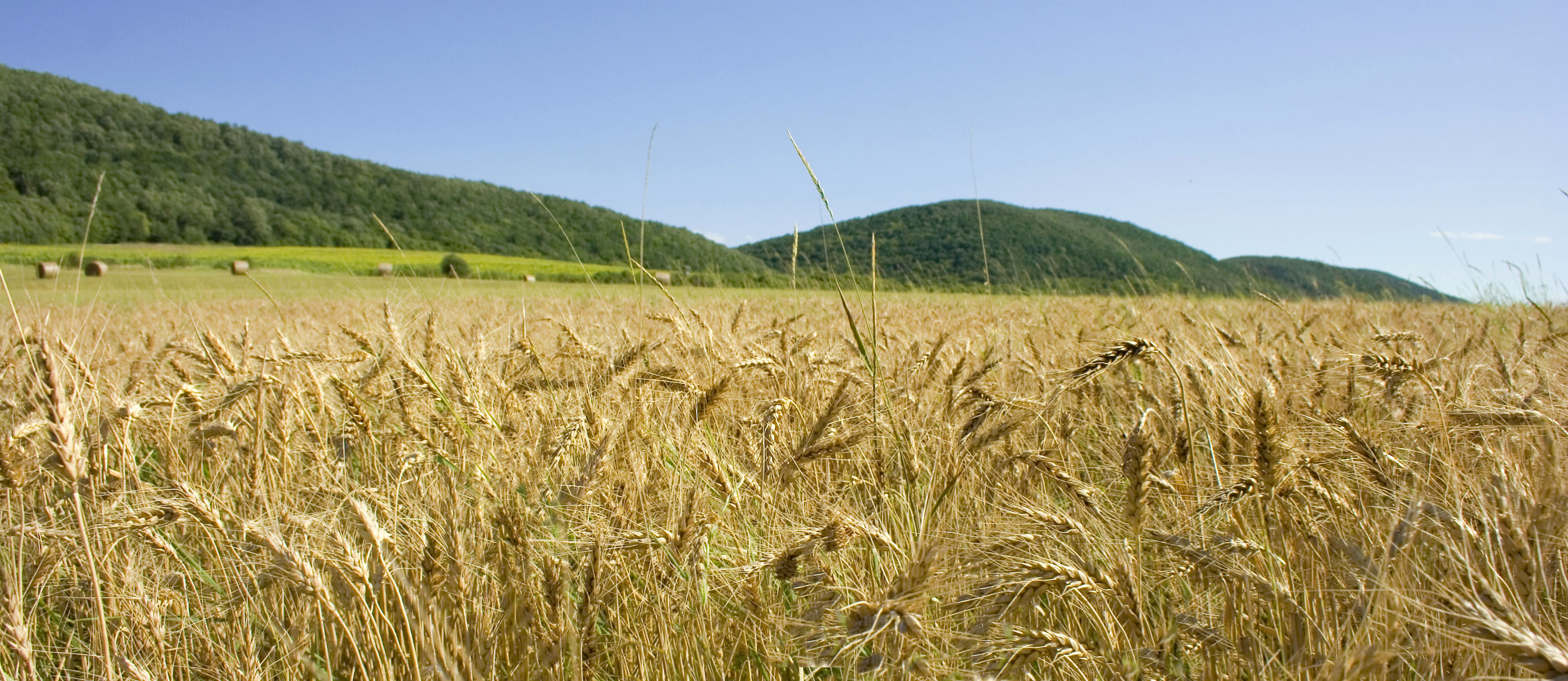
Have any of you seen wheat in the ground? I love driving through the farm fields of western Minnesota in the month of June, when all the soybeans, corn and wheat are in the ground, and the trees are all green… It’s like driving through a giant green carpet. Or in August, when the wheat is in its prime, and those ‘amber waves of grain’ start flowing in the wind.

Wheat and weeds. Harvesters ask if it’s okay to take the weeds out, while they’re still young. No, says the farmer. By uprooting the weeds, so too would you uproot the wheat. Don’t take it upon yourself, he says. It's not up to you.

Wheat for many is a staple in grains, cereals, breads, pastries, etc. It’s a versatile plant, with many uses at home or on the farm. However, it might as well be a weed to others, as there are those who cannot digest the gluten within the wheat, properly. Wheat means life for many, unrest for others.

The symbol we use as our identifying mark as Christians, is a cross. A cross, the torturous device that thousands died upon, including our savior. As Christians, we use this symbol as a rallying identity, the proof that the device used to cause death, is a reminder of our life in Christ. And yet, the cross is still used as a weapon to this day. Physically burned, or figuratively as a symbol of a broken religion, separating those whom some deem unworthy of that life in Christ.

Wheat and weeds. What some may think is unworthy of eating, others may see delicious food. A literal example of this is the common dandelion, a weed that sprouts nearly everywhere, and sticks around. While maybe a nuisance, the plant has been used as food, and herbal medicine. Kale - once thought as mere decoration for salad bars, is now all the rage, to the point McDonald’s is putting it in their burgers. You know you’ve made it big when McDonald’s sells it.

Society as a whole, puts nearly everything on a binary scale of acceptable or not acceptable. Wheat or weeds. Female or male. Queer or straight. Rich or poor. Healthy or unhealthy. Fat or skinny. Good or bad, sin or salvation, law or gospel. Some find identity between these binaries. Some bristle at the thought of such a thing.

But what does Jesus say in this parable? In this ‘throwing around’ of conversation about God? Who are the wheat, who are the weeds, what practices are wheat-like, which are weed-like?

I’m gonna let you in on a little secret. There’s room for the middle. Because what Jesus is getting at - is not that the wheat survives and the weeds burn… but within the combining of the wheat and weeds… it’s not up to you to decide what is and what isn’t. There’s wheat and weeds inside all of us. We are all sinner and saint, all maintain law and gospel.

“We know that the whole creation has been groaning in labor pains until now; and not only the creation, but we ourselves, who have the first fruits of the Spirit, groan inwardly while we wait for adoption, the redemption of our bodies. For in hope we were saved. Now hope that is seen is not hope. For who hopes for what is seen? But if we hope for what we do not see, we wait for it with patience.” (Romans 8:22-25 NRSV)

Paul the Apostle, writing to the Romans, writes of the difference between living for the Spirit, and not our body. Spirit over body. Wheat over weeds. We have hope for work of the Spirit, that which is not seen, for that is the hope on which to hold.

Hope… the fine line between what is and what could be… that is where God is present. In the space between. Hope, faith, belief - the space between what is, and what is possible. Live for what is possible. The possibilities of life abound.

When two separate incidents happen with similar results, and a consequence of both events is the ending of a relationship, what was it that ended the relationship? Something in that middle period. Was it the wheat? The weeds? What caused the end? Something in the middle.

When Christ lived his life, teachingpreachingfeedinghealingwashingsaving all, and then dying on that cross, that symbol of both death and life… Was it the weeds that caused his death? The wheat? Or was it something else? Is it the wheat or weeds that give us new life with Christ? Or is it something else?

Grace. Grace through faith. It is Grace through faith, freely bestowed on us all, to save us all from making the choice between wheat and weeds. To save us all from the weeds that hold us back from the wheat that gives us life.

What the weeds are in your own life, what the wheat is in your own life - that’s up to you. Watching Marvel’s movie Dr. Strange the other day, the main wise character of the movie, the Ancient One throws in a little tidbit that has stuck with me. Talking to Dr. Strange’s compatriot, she says “We never lose our demons... We only learn to live above them.” Sin remains, we are never sinless beings. We learn to live in the middle between sinner and saint. We have faith in a Savior that saves us from our sin, and hope in that Savior that we can learn to live above that sin. We are people, of a broken humanity, bound by both wheat and weeds, holding on to the space between. God is present in the middle. God carries us through the middle periods of our lives. Life is made up of more than wheat and weeds. Entire giant green carpets of God’s beautiful creation exist, and we are made better for it. Go out and enjoy it.

Amen

Monday, July 10, 2017

Rest.

This is my second sermon preached at Camp Nidaros, a pastor's retreat area next to my previous internship site in rural Otter Tail County. A beautiful day under the clouds and trees, next to Otter Tail Lake and Walker Lake.

Psalm 145
Matthew 11:16-19, 25-30


Grace and Peace to you from God our Creator and from our Lord and Savior Jesus the Christ, Amen

“Come to me, all you that are weary and are carrying heavy burdens, and I will give you rest. Take my yoke upon you, and learn from me; for I am gentle and humble in heart, and you will find rest for your souls. For my yoke is easy, and my burden is light.”

Christ the Shepherd of us all, the advocate for all the lost sheep… is telling us all to rest. After summoning the disciples, telling them that he came to bring a sword and not peace, to break up families, rend father from son, mother from daughter, etc etc etc… Jesus the Christ, who has been busy telling us what we are called to do in this world… tells us in our Gospel for today… to just go ahead and cool down. Put on the brakes. Stop and smell the roses.

Rest.

It’s hard to remember to stop sometimes. Those of you who are retired, those of you who need to actually retire, those who are taking the summer off, taking the day off, taking the morning off… taking this sermon off… Rest.

It’s certainly a huge difference from what Jesus had spent the last few weeks talking about. Culminating all of this discussion of what he is calling us to do… to finally say - Rest.

Life can be like that sometimes, when you just rush and rush and rush and then… stop. I’ve heard people tell me that when they work too hard for too long, something goes wrong, and they are forced to stop working. For a few clergy-folk, and it certainly wasn’t only one who’ve confessed this to me - but for those who work too hard for too long, as clergy are wont to do… a major attack on their body is the thing that forces them to take things slow. Usually it involves the heart or blood flow. Working hard and long for extended periods of time can wear a person down, and it’s not just clergy that do this, but plenty of hard-working people do. Our society demands it of us. Parenting, especially for new parents, can be quite taxing on people. School events, sports, then throw on church… self-care… When’s the *rest* supposed to happen again?

Self-care is a terrible habit to get into. Especially when juggling so many balls at once. It’s just one more ball to throw in the mix. And when you finally have the opportunity to just focus on yourself, you feel guilty for doing so. Vacation and retirement are great examples of self-care, as long as you can somehow manage to not think about work. Even now, I’m technically ‘off’ this weekend, and here I am up here. Don’t worry, I feel honored and love being here. But I’m technically ‘working’. And I had a wedding on Friday.

Just to catch you up for those of you who know me, and even those of you who don’t - It’s been a year since I was preaching under these trees, next to these lakes. I’m Jon Rundquist, the former intern of Zion, up the road. I’m currently serving my second internship at Living Waters Lutheran in Sauk Rapids and Lutheran Church of Christ the Redeemer in south Minneapolis. I’m on this second internship due to being postponed in my Approval for ordination. The second internship was part of the recommendations of the postponement. Since I left Amor last August, my family and I have been living in Saint Cloud, where I finished my Master of Divinity, and Tiffany started and finished her Master of Social Work. Raising two kids, working at Target occasionally, Tiffany working her unpaid internship, and on top of all that, I came out as transgender and non-binary in the fall. It’s been a very busy year, and I’m still going.

For some of us, rest doesn’t come by easy. For Jesus, rest doesn’t come by easily for him either. From the moment he hits the ground running, he doesn’t really get a moment to rest. He gets one opportunity to rest in a boat while the disciples are fishing… and then a storm comes and he needs to save them from that anyway. He's got so much in his plate, and yet here he is telling us all… to rest.

But it's hard these days. A new crisis erupts over night, even when we're resting, somebody else is using their device to destroy someone else's life and reputation, or complain about random things or insist that they're more popular than others or incite violence or not do the thing they're supposed to do when everyone else… is resting.

Another act of injustice. Another attack, another life taken, another reason to stand up and say- enough is enough. Every day we get up, there's something to work on, something to fight, somebody to correct, something to cry out for… and still Jesus says… rest.

For his yoke is easy, and his burden is light.

 A colleague of mine asked on Facebook what they could do to help ease the burden of caring for patients in their chaplaincy work, to help center themselves. When I feel overwhelmed, anxious, out of my element…. I seek the one element that binds us all together. I pray. I seek the One who offers us rest and I pray. Because I know and have faith in God, that God's got this.

God, the Creator of all things, of these rocks and trees, lakes and rivers, you and me…

God's got this, because God's had us in God's loving arms since before the lights were in the sky and long after they go out. As the psalmist writes in today's psalm, God endures throughout all generations, Jesus said he is the beginning and the end.

God calls us to care for God's creation, to advocate for the marginalized, to love one another, to upend the status quo, to lead by Christ's example, to keep the faith, extend the faith… and rest.

And when you have rested and begin to be restless, start again. Keep up the good fight. The sun will shine tomorrow.

For his yoke is easy, and his burden is light.

I cannot end this sermon, without addressing the elephant in the room… or trees…
Jesus the Christ offers us with this text, a promise of the ultimate rest, the ultimate laying down of burdens at his feet. There is no life without death. But because of the One who conquered death, there is no death without life. Through the unwinnable and unshakable never-resting power of God's Grace, freely bestowed to all through Christ's life, death, and resurrection… in the Cross, we find our eternal rest.

 Through all the joys and sorrows of life, the fighting of injustices, the daily grind, the working and over-working, the chaos of modern realities… remember to rest. We have confidence and boldness in Christ, knowing that through it all, God's got this.

Amen

Monday, June 26, 2017

Pride, Faith, and Swords

This is my first sermon preached at Lutheran Church of Christ the Redeemer in south Minneapolis, a Reconciling in Christ congregation. This is also my first Pride sermon, and I loved being able to preach such a sermon on such a day.

First Lesson: Genesis 21:8-21
Second Lesson: Romans 6:1-11
Gospel: Matthew 10:24-39


Grace and Peace to you from God our Creator, and from our Lord and Savior Jesus the Christ, Amen

Sarah and Abraham waited for a very long time to have a child. A very long time. So long, that by the time God told Abraham that he’d have a child, both Sarah and Abraham were elderly. Abraham couldn’t wait, and had a child with his slave, Hagar. The child’s name? You can call him Ishmael. (That's a Moby Dick joke, btw...)
Sarah had a son eventually, and his name was Isaac. But wanting Isaac to have a childhood away from Ishmael, she asked Abraham to cast out Hagar and Ishmael. So, in the middle of the night, Abraham did just that.

God reassured Abraham that he was doing the right thing. God talking to Abraham and Abraham maintaining great faith in God - Even when that faith required the ultimate devotion and the ultimate sacrifice - Abraham’s faith didn’t waiver. Abraham’s faith was strong, but caused division. God reassured Abraham that what Sarah wanted him to do was the right thing, even though what it meant was total separation from his child. Abraham followed God’s direction, even to the point of a knife… but that’s another story for another day.

Faith is given, maintained, and shared. Faith is action, and fighting against inaction. Faith is a verb, and not always an easy one to use.

This is Pride weekend. A time for those of us who identify somewhere on the queer spectrum to celebrate the victories we’ve had, the freedom to be ourselves. We hold Pride to remember those who’ve gone before us, who boldly stood proud in the face of adversity. We have Pride to see old friends, to learn more from our queer family, to be among like-minded people that know exactly what it’s like to draw a line in the sand and say that this word - lesbian, gay, bisexual, transgender, questioning, queer and all the other words that fall under and around those words - these words hold importance in our lives. We’re here, we’re queer, and we’re in need of people to listen to us, to hear how these words feel to us, to stand against all those that would oppose us and say in one loud voice - enough is enough.

In today’s Gospel, Jesus was talking to his disciples, right after summoning them to walk with him, telling them all that they needed to do to follow him. In last week’s lesson, Jesus talked about walking with faith, and knowing that even if you leave everything and follow Jesus, that God’s gonna take care of you, and people will welcome you.

In this week’s lesson however, Jesus takes a more pointed look at what it means to be a follower of Christ. Jesus says that your faith will cause division. Mother against daughter, father against son. Christ came into this world to disrupt it.

Christ came into this world to cause division, to break up the status quo. The people of Judea were waiting for a war hero, a Messiah to come and free them from Roman oppression. Jesus caused division, but it wasn’t by what he was supposed to do. He caused division by doing what he wasn’t supposed to do. Preaching in the wrong spot, feeding the wrong people, healing the wrong people, teaching on the wrong day. In the eyes of the authorities, Jesus was causing trouble by not following the rules. Jesus preached in his hometown, told the people of Nazareth that they should be focusing on the people outside the walls of the city, on the poor and blind…

He went into the temple, and tossed tables, cracking a whip in the Gospel of John. Jesus was a revolutionary figure in a time when the people needed someone to lead them. Following this man meant division. His disciples knew this, and followed anyway because they had faith.

Being a Christian in this country isn’t all that revolutionary, in the wide scope of things. Being a Christian who stands for justice of the oppressed, who stands against a culture of exclusivity, who advocates for the marginalized, and fights for peace in the world we live in… That is revolutionary. It shouldn’t be. But it is.

Being a Christian who draws their own line in the sand and says enough is enough. Jesus came into this world to show us how to live with each other, and to upset the status quo.

Now, it’s dangerous to live as a Christian in some countries. In this country, Christians hold a lot of privilege, until we start actually living out our faith as followers of the table-throwing, rule-breaking, status-quo-upsetting Messiah that he was. When we start standing against the status quo, upsetting those we love by being who we are as human beings, proclaiming to the world that the words we use to describe us are diverse and divisive - but necessary. We are who we are because God calls us to live out our truth, our realities as human beings.

Pride is about showing the world who we are as beautiful individuals created in God’s image, and showing them that we will not be afraid.

In today’s second lesson, Paul writes about sin, and how we are freed from sin in Christ’s death, that we were baptized in Christ, we were baptized in his death. Out of baptism then, comes new life in Christ.

When we talk about sin, in the context of who we are as human beings, we are all sinful beings, that’s our human nature. Who we are as queer folks - as allies who stand with us… Our existence itself has been labeled sinful, because of verses in the bible that are misinterpreted and of what people think the bible says. My burden has been pretty light when it comes to being discriminated against for being who I am, and I acknowledge that. Closeted queer folk watch their friends who are out - suffer the wrath of the public by watching it happen to someone else. Allies receive backlash for being supportive of us… But being out puts us in a whole new ballgame. That’s why we have Pride.

Our identities are labeled as sinful, and people like to point to Paul, even these verses and even today’s Gospel - to show what our supposed sin is - and if only we gave it up. I have a new lens for you. What if the sin that Paul is talking about is not our queerness, but our forced-closeting. In the song, The Summons, found in your hymnal, hymn 798 -  the fourth verse reads “Will you love the ‘you’ you hide if I but call your name? Will you quell the fear inside and never be the same?...” Being in the closet is safe. It’s a risk to be you. Or even talk about your identity. Even when you ceremoniously come out of the closet, society expects us to be queer in only certain spaces.
Because it’s dangerous. It’s much better than it was, but if you combine queerness with class, race, ability, religion… When our identities become intersectional in infinite ways… The danger in being true to ourselves, may be more than we can handle. As Christians, and as a society, we have to own that sin. That conditions in our society limit who we can be and where. That sin keeps us hidden, away from who we are.

Jesus came into this world not with peace, but a sword. Our identities are contentious. Our expression of our faith in Christ - is contentious. Our ability, our willingness, our calling to stand up with our queer neighbors, our neighbors of color, our differently-abled neighbors, our impoverished neighbors… that’s contentious.

Even if you don’t identify in the queer spectrum, even if Pride is the last thing on your mind right now, your faith - your connection to the divine and others - your own actions can be divisive, and we have to hold on to the hope, the knowledge that there is a Savior - the Savior of the world - who gave up everything for you and us all. Jesus the Christ lived on this earth, and he preached, spoke, healed, fed, walked among - lived among those who didn’t belong, and saved us all. Jesus the Christ saves us all from ourselves, our sin, our hatred, our bigotry, our ignorance, our inaction, our faithlessness - through faith. Faith in God, through God, from God, for God - Faith that both connects and divides, saves and destroys.

At LCCR, we are an open and welcoming community, open to all, regardless of gender, sexual orientation, race, or wealth. All are welcome to the table to confess our faith, to proudly exclaim to all, from the rooftops - that we belong to God, we are loved by God, and through that faith - we can all come together to take Pride in who we are as human beings. Have faith. It gets messy, but it makes all the difference.
Amen.


Sunday, June 18, 2017

Faith

This is my second sermon on internship, preached at Living Waters Lutheran in Sauk Rapids.


6/18/17
Lesson: Genesis 18:1-15
Gospel: Matthew 9:35-10:8


Grace and Peace to you from God our Loving Parent, and from our Lord and Savior Jesus the Christ, Amen

Janet Mock is an author of two books, with one of them published very recently. She was born in Honolulu, Hawaii, and grew up in multiple places -  sometimes with her father, sometimes with her mother, sometimes with her grandmother. She had a rough upbringing of living with impoverished parents, moving frequently, her father was a drug addict, her mother was not a frequent presence in her life. In high school, she was a sex worker, working to pay for her medical bills. After graduating high school and landing a nice job in television after attending college, she wrote a New York Times bestseller. Her story of rags to riches, from an impoverished family to a national figure writing such a book may seem old hat, but maybe some of you don’t know that Janet Mock is a transwoman of color. Janet Mock is a transgender activist, who wrote her first book, Redefining Realness about her younger years growing up, and  beginning her understanding of her gender and transition. Her newest book Surpassing Certainty,  details her later years until now, and was published last week.


Janet is the child of a black father and a native Hawaiian mother, and as I said before, had a rough upbringing. Her struggles through life, understanding her gender differently than how the outside world saw her, sometimes not knowing where her next meal was coming from or where she’d move next, experiencing racism from all angles, but remaining confident of her goal of becoming the woman she wanted to be - faith - it took tremendous faith for her to get where she is now. Even if she is a bestselling author, an inspiring advocate and activist for so many people, her identity as a transwoman of color - is to this day - a hill too steep to climb for some people.

Faith is not knowing where or how you’re going, but going anyway. In Janet Mock’s case, faith was not knowing how she would achieve her dream of being the woman she dreamed of - but doing everything she could to make it happen.


Faith is sitting in church, in community, hearing the story of Sarah and Abraham as they awaited bearing a child. An old couple with no heir to carry on their livelihood, their traditions, their stuff. They were well past the child-bearing age. Three visitors came to Abraham and Sarah, three messengers of God came to them to form community and told them they’d have a child after all.

Being so old, Sarah laughed at the idea of ever having a child. Why would she ever be able to bear a child at this age? God hadn’t blessed her with a child before this, why now? But, sure enough, Isaac was born to a very old couple. It was faith from God, and in God - that produced Isaac.

It was faith that allowed the disciples of Jesus to follow him. It was faith in Jesus that led them away from their goods, families, and homes. They had faith that all of this would work out. They had responsibilities that they just dropped, and followed Jesus. Faith held the disciples together in community, and faith led them to and beyond the cross.

They had no reason to believe him. They questioned what they were doing throughout all four Gospels, but faith compelled them to carry on. Many times throughout the gospels, they sit and wonder what they’re doing. Many times they wonder what is really going on. There’s no way this person could be healed. No way could Jesus feed so many people with a couple loaves of bread and some fish. No way that he would die and rise again. And yet, they kept going.

Two thousand years later, here we are, in church, worshipping in fellowship and community with other people that share our faith. Worshipping a Triune God, who is the progenitor of faith, the creator of all, and the savior of all. We are here today, because of faith.


 Three visitors came to see Abraham and Sarah. Some scholars agree that the three visitors were the Holy Trinity. Others believe them to simply be God’s messengers. A famous icon depicted the visitors as three men. This one that appeared on my facebook news feed the other day - depicts three women of color. Whether the original is three messengers of God or the Holy Trinity - this picture of the three women of color representing the three figures - is just another way of interpreting scripture - another way of producing art, based on our faith. Whoever the three visitors were, I hope this painting adds another perspective in understanding that the world we live in is not the same for you as it is for me, but that we each look at community, at life, at faith - differently.

It is faith that keeps us going, faith from God, in God, about God, through God, and for God. Faith that moves mountains, that permeates our world, and propels our lives to interact and be there for others, when they understand life differently, and when they need us the most.

In the waters of baptism, we are called and named beloved children of God. We are washed in the same water that washes over all of us. Our faith starts there, with our parents, sponsors, friends, ministers of the sacrament… From the moment we are baptized, we are baptized in water and into community with each other. One cannot baptize themselves, there is a community aspect to baptism. Like community with other people, water connects every living thing, every human being on this planet. Each of us are created in the image of God, and in the waters of baptism, called and named beloved children of God. Your life is beautiful to God. Your life matters to God.

Whether you are black or white or any shade of skin in between. Whether you are female or male or any gender identity outside of or in between. Whether you are asexual, bisexual, homosexual, heterosexual, pansexual, polysexual or whatever sexual reality you identify with. Whether you express your gender in one way or many ways. Whether you’re attracted to one gender, many genders, or nobody at all.
God. Loves. You. Your life matters to God.


 Steve Scalise, a white congressman from Louisiana, along with four of his staff, was shot by a white man, while they were practicing for a congressional baseball game on Wednesday morning. Representative Scalise is still in the hospital, but has been upgraded to serious condition.

A year ago last Monday, this country experienced its worst mass shooting in modern times at the Pulse Nightclub in Orlando, Florida. A club populated by mostly latino LGBT or lesbian, gay, bisexual and transgender people, was attacked, and fifty people were killed that night.

Two years ago yesterday, nine black parishioners of the Emmanuel African Methodist Episcopal church were murdered by a young white supremacist - a member of an ELCA congregation, our larger Lutheran community.

 Philando Castile was a young black cafeteria worker riding in his car, with a young  woman next to him and a child in the backseat, when he was pulled over by a latino police officer last July. Philando Castile was murdered that night, two blocks from Luther Seminary, with the woman next to him filming it, and the child behind him watching it. The Saint Paul area police officer who shot and killed him was acquitted of all charges on Friday.

 When people cry out in anguish, that Black Lives Matter - they do so in faith. Faith that one day - people will listen to those three simple words, and not disagree, but understand. Faith that our justice system will return to what it was meant to be - justice for all. Faith that black lives in this country will begin to matter in the face of a broken justice system that penalizes, imprisons, and murders more people of color at a higher rate than it does white folks.

 Faith is not knowing where or how you’re going, but going anyway. Faith is not knowing when people will begin to listen - when the justice system will turn around - but marching anyway, in faith.
Faith is not knowing when the death and pain and anguish will stop - but knowing that there is a Savior that has bled and died for us all - a Savior that sees the death and pain and anguish - and weeps.

  Faith is knowing that there is no life without death, but also no death without life. Faith is knowing that life will rise out of the ashes. Faith is seeing the beauty in life, through the pain of death. Faith is knowing that through it all - all are saved by Grace through Faith. That one day - black lives matter will be a fact accepted by all, that Janet Mock living her life as a transwoman of color will be a more common reality, that seeing the image of God in one another, with the waters of baptism still streaming from our brows - will be our truth as human beings. Human beings - living together in community, in love, in faith. Amen.

Tuesday, May 30, 2017

You are One with God, and God is with You


This is my first sermon from my internship at Living Waters, and my first Ascension Sunday sermon.

Gospel: Luke 24:44-53


Grace and Peace to you, from God the Creator, and our Resurrected Savior, Jesus the Christ, Amen

Ascension - the act of ascending. To be lifted up. In Spanish, the word for an elevator is ascensor. Today in the life of the Church, it is Ascension Sunday. Traditionally, the Day of Ascension is on the fortieth day after Easter, and signifies the ending of the Church’s season of Easter. That’s right, this will be the last Sunday to use those bulletins of yours, so use them well.

The readings from Acts and Luke today, depict the scene of Jesus’ physical departure from Earth, and where he sends his disciples and us, out into the world. The disciples must have been in a tailspin, trying to figure out all that had been going on. In the last month or so, Jesus had supper with his friends, got betrayed by the people, beaten by the people, stuck on a cross by the people, died… and then came back to life. Now he had been with them for a while, spending time with them and telling people on the road to Emmaus about all that had been going on and now Jesus tells his friends - that he’s leaving again. Jesus, the man that had seen it all, done it all, died and lived again to tell about it - was now leaving, and asking, calling us all to carry on the Message.

The message that Jesus the Christ - was here to save us all - from ourselves. Our sin, our hatred, our bigotry, our dischord, our hurt, our pain, our sadness, our misuse of God’s Creation… On that hill outside Bethany, Jesus called us all to spread the Good News, and ascended to return once again.

But he’s still here, with us, everyday. Jesus is here with you, with me, with us all - everyday. God shows up in everyday life, in the daily interactions we have with people, in the love that we show and share with one another. In Jesus’ life, he taught us how to love, to show God’s love to one another in his actions. In the way he taught among the people in the temple, shared loaves and fishes with the thousands, in his preaching and teaching of parables, in his healing of the injured and curing of the blind. Jesus taught us and showed us what love is. Love to and for our neighbor, love to and for our enemy. Jesus was here on this earth to live among the people, show us how to love, and in the process - save us all from ourselves.

Because there’s a whole lot of hurt out there. People have lost their loved ones. Bombs are going off, killing children. Water is rising on island nations. Water is deadly to drink in some parts of this country. Water is scarce in other parts of the world. Millions of people are in danger of losing their healthcare, jobs, security and safety in this country. Thousands of people are on the street every night, a few dozen of them in this area alone.

Meanwhile, we have some people in power that are either oblivious to some of these realities or helping to cause them. People are in need of a savior on the ground, willing to get in the thick of it and turn things around… and he left… ascended like a dove to be with the rest of the Trinity.

I can easily imagine that there was a lot of hurt around in Jesus’ day as well, with ancient empires still conquering distant lands and waging wars, people still hungry, thirsty, leprous, diseased, blind, and greedy with power and wealth.

The troubles of this world that we live in, are nothing new. We have seen leaders in power ignoring the populace, ignoring the cries of their people in pain, in anguish, and we ourselves have sat on the sidelines watching it all happen around us.

Jesus had just died, miraculously come back to life, walked and talked among his friends and within a month, left again. The disciples, dumbfounded as the day they met their Savior, had one last piece of parting wisdom from their friend and Savior. Go, and Do likewise. Receive the power of the Holy Spirit and GO. Go out into the world and make it a better place for us all. Jesus came to this earth, fulfilling prophecy and living among us, doing all that he did - so that we might in turn Go and Do likewise.

During Lent this year, Living Waters underwent a minor transformation and covered the windows in the sanctuary, leaving all to wonder what was inside. Like the metaphorical wilderness of Lent itself, Living Waters found itself in a journey through an epic tale of both good and evil, light and dark, life and death. Stars were projected on the back wall here, and movie trivia played before the service. Celebrating it’s 40 year anniversary this year, that’s right, it’s Star Wars!

Deciding to meld both a celebration of the 500th Anniversary of Reformation and the epic tales of Star Wars, our intrepid pastors came up with six ways to put them together… forgetting to ask their resident seminarian and amateur Star Wars scholar about how to do this… I’ve decided to give my first sermon as your intern, with an added Star Wars flavor. But I’m gonna go off the beaten path a bit with this, so bear with me…

Like the disciples wondering what they were to do without their friend and Savior, in the realm of Star Wars, the people resisting the Evil Empire lost their Messianic saviors as well, the Jedi. Without giving too much of the plot away, in the realm of the now 8 and soon to be 9 Star Wars movies, the Jedi were all but extinct at the end of Episode 3. Except for a few remaining Jedi who hid after their collective extinction, the Jedi had left the realm of Star Wars.

Rogue One, the beautiful and recent Star Wars movie that fell in between Episode 3 and the original Star Wars movie, tells the tale of the fledgling Rebellion, fighting a war without the mystical Messianic Jedi. Before the dawn of the Empire, the Jedi were the peacekeepers of the galaxy, standing for all that was good in the galaxy. After the Empire came to rule, there was no Jedi around, so the fledgling Rebellion had to figure things out by themselves. Rogue One tells the epic tale of Jyn Erso, the daughter of the lead architect of the Death Star, the ultimate power in the universe. With the help of the Rebellion and a few other Rebels, Jyn travels around the galaxy, finding people and resources she needs to then steal the plans for the Death Star. With the plans for the Death Star, the Rebellion can then battle their way to eventually have Luke Skywalker save the day by utilizing a flaw the architect initially put into the design of the Death Star, so it could be destroyed, saving the galaxy from this machine. Until they make another, and it blows up, so they make a third one, and that one blows up, and on goes the epic of Star Wars.

If I lost you, I apologize. Star Wars is simplistically complicated, and it’s kinda hard to explain in the context of a sermon. If you followed along, that’s great. Either way - here’s the point and the crux of what I’m trying to get to -

Jesus ascended, the Jedi were all killed - and yet - humanity lived on. The disciples were given the power of the Holy Spirit and spread the Good News throughout the land, leaving the giant footprint Christianity is today. The Rebellion survived without the Jedi, and pressed on. Even when their Only Hope, Obi-Wan Kenobi was sought out by the Rebels and killed by Darth Vader, Luke Skywalker took on the role of savior Jedi, alongside the Rebellion to become the powerful force the Rebellion became, saving the galaxy again and again.

Because the truth is - even with Jesus ascending and the Jedi being wiped out - They were never really gone. Jesus ascended, but he didn’t leave humanity. God did not abandon humanity after humanity killed God’s beloved child. Humanity overcame with God there all along. God has been there since before the beginning of time, and will be when all the lights go out. God was there when Jesus was handed over to die a criminal’s death, when all the world went dark and the ground shattered. God was there in death. God was there in life. God was, is, and will be there for us. God experienced death firsthand, so that we could experience life with God. God saves us all, from ourselves. Our sin, our broken humanity - God saves you and me from the darkness of sin, because God has been there with us in the darkest and happiest of times. By God’s grace, that is freely bestowed on all through Jesus’ life, death and resurrection - God is there for you now, because God was there for you then.


One last mention of Star Wars - in the previously mentioned Rogue One, there is a character that has a connection with the Force - the mystical life force that binds all beings together in the Star Wars realm - but he’s not a Jedi. Usually, Jedi are the ones directly connected with the Force, that can wield it to their will. In Rogue One, Chirrut isn’t a Jedi but he has a devotion to the will of the Force. Throughout the movie, Chirrut repeats the phrase, “I am one with the Force, and the Force is with me”. It’s to symbolize Chirrut, and by extension, everyone’s connection to the Force.

When life is dark, God is still there. Jesus, the Emmanuel, may have left the tomb and left his walking shoes, but God is still with us. In the waters of baptism, you are named and called a beloved child of God. You are a beloved child of God. We are all called to be God’s hands and feet in the world, to see God’s face in the face of our neighbors.

When you’re out in the world, having a hard day, or in here having a hard day, remember that you are God’s, and God is with you. I’m going to adapt Star Wars for a bit and ask you to say this with me -
I am one with God, and God is with me. I am one with God, and God is with me.
Now, go out into the world and Proclaim to all you see, that you are a child of God, and God is with you.

Amen